
Africa's Round of 32 Inquisition: The Tactical Decisions That Ended World Cup Dreams
By Nii Wallace-Bruce
The expanded World Cup was always going to become a referendum on FIFA's decision to increase Africa's allocation.
Nine out of ten representatives reached the Round of 32, more than the continent had ever sent to the knockout stages. On that measure alone, Africa answered one question.
It earned its spots. Yet it did not answer another.
Whether Africa deserves even more places remains far less convincing after a knockout round in which seven of nine teams were eliminated, only two advanced, and neither Morocco nor Egypt could finish the job inside regulation time.
The numbers represent parity rather than progression. African football maintained the same number of Round of 16 qualifiers relative to 2022 (Senegal and Morocco) despite having significantly greater representation. It was enough to undermine the ironic argument recently advanced by former Italy manager Gennaro Gattuso that Africa should surrender World Cup places.
It was not enough to demand more. That distinction matters.
The easy explanation will inevitably lean on familiar stereotypes. African football, the argument goes, is blessed with sheer athleticism and technical quality but lacks the mentality, psychology or tournament composure to compete with Europe's elite once the margins become fine.
It is an explanation that has survived for decades because it is simple. It is also increasingly incomplete.
The decisive failures across this Round of 32 were tactical rather than psychological. More specifically, they were failures of in-game management.
Football matches are no longer won solely by preparation.
They are increasingly decided by the adjustments managers make after kick-off—between tactical shifts, substitutions, hydration breaks and changes in momentum.
Time and again, Africa's representatives either failed to anticipate those moments or reacted too slowly once they arrived.
South Africa: Possession Without Protection
South Africa's elimination against Canada became a lesson in mistaking control of the ball for control of the match.
Instead of turning possession into territorial pressure or defensive security, Bafana Bafana continued circulating possession deep into the contest while leaving transitions available to an increasingly desperate Canadian side. The approach invited pressure rather than relieving it.
Canada found the breakthrough in stoppage time through captain Stephen Eustáquio, assisted by a rebound from a deep Bafana Bafana low block.
South Africa had attempted to keep the ball away from danger. Instead, they kept themselves away from the tactical adjustments the match required.
Morocco: Adaptation Saved Them
Morocco were hardly flawless against the Netherlands.
The Atlas Lions needed a dramatic stoppage-time equalizer after struggling to break down an organised Dutch defensive block for much of the evening.
Yet unlike many of Africa's representatives, Morocco eventually found solutions. Five substitutions were made after the second hydration break.
They adjusted. Different passing combinations were used to break through stubborn orange backline. They survived, beating the Dutch through the air to equalize in stoppage time.
They held their nerve through penalties. Their qualification was hardly dominant, but it demonstrated something many others lacked: tactical flexibility once Plan A stalled.
The World Cup does not award points for style.
Côte d’Ivoire: Winning Was Not Enough
Côte d’Ivoire had Norway exactly where they wanted them.
Moussa Diallo's equalizer provided the platform for a famous win.
Diallo was a substitute - that decision should be lauded. However, instead of consolidating territorial advantage through greater compactness or disrupting Norway's rhythm, the Elephants left the contest open. Norway gradually regained territorial control before scoring at the death, with some help from Les Elephants.
Winning goalscorer Erling Braut Haaland appeared sheepish at full-time, perhaps knowing that his team had been let off the hook.
For Côte d’Ivoire there were flashbacks of a similar defeat to Germany in the group stages. Territorial control demanded management and execution.
Instead, it became an invitation.
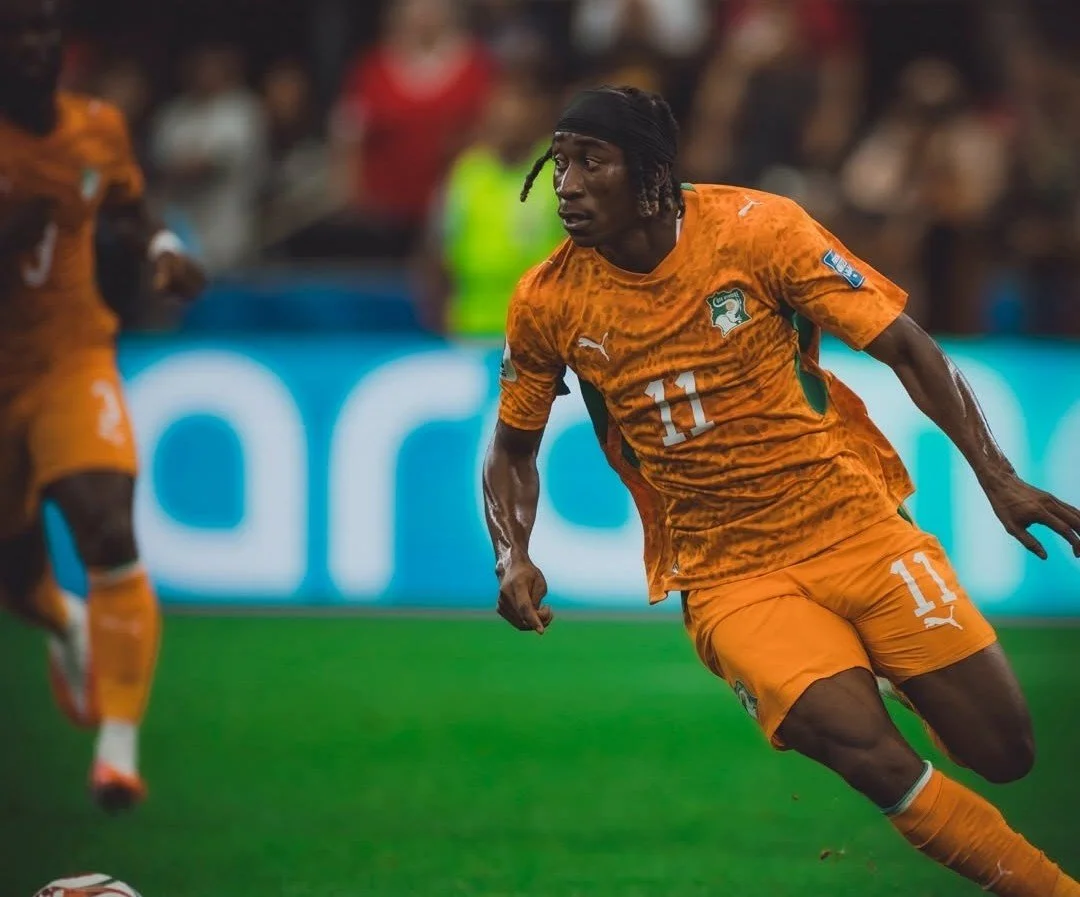
Côte d’Ivoire’s youthful playmaker Yan Diomandé was unable to guide his team past Norway in the Round of 32 (Photo Credit: Grzegorz Wajda)
DR Congo: England Adapted. Congo Didn't.
This may prove to be the most painful defeat of Africa's tournament.
DR Congo pushed early to frustrate England before finding a deserved goal. Their defensive organisation held together for long periods and the Three Lions looked increasingly uncomfortable.
Then came modern tournament football - Thomas Tuchel’s specialty. England used substitutions aggressively. Anthony Gordon in particular. They reorganised during the hydration break.
They attacked different spaces. Tuchel encouraged an Arsenal triumvirate of Saka, Eze and Rice to move the ball on the right side.
Gradually, Congo's defensive intensity faded while England's tactical changes accelerated the match. The equalizer arrived through Harry Kane before the captain struck again for the winner. Both were assisted by Gordon.
England remained unbeaten against African opposition in ten World Cup meetings, yet this statistic increasingly owes as much to African game management as English superiority.
Both Ghana in the group stage and DR Congo in the knockouts placed the Three Lions under sustained pressure. Neither adapted quickly enough once England changed the contest.
England escaped again.
Senegal: The Collapse That Defined Africa's Knockout Stage
No African defeat better illustrated the tournament's central theme than Senegal's collapse against Belgium.
At 2-0, the Lions of Teranga had Belgium exactly where they wanted them.
Belgium looked slow, disconnected and increasingly vulnerable against a Senegalese side in control with organisation while threatening every transition. Then everything changed.
Belgium pushed their full-backs higher, began overloading the half-spaces and pinned Senegal’s midfield deeper. Senegal never found an answer.
Fresh legs altered the rhythm. Tactical tweaks stretched Senegal's defensive distances. The pressure mounted. Senegal did not respond.
Two late goals after the 85th minute transformed certainty into anxiety before Belgium completed the comeback in extra time with Youri Tielemans’ penalty.
Tournament football often hinges upon momentum.
The managers who recognize those moments usually endure.
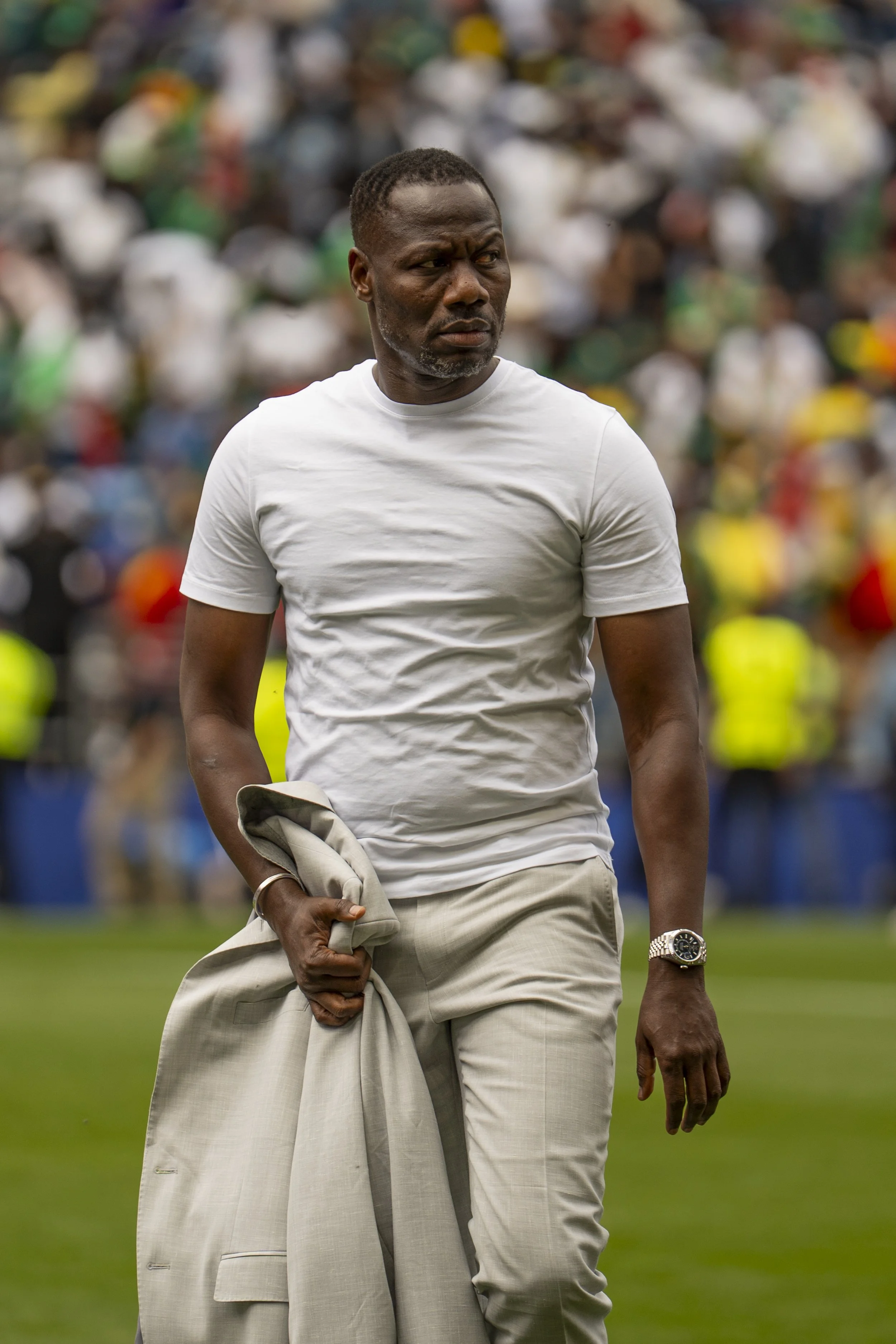
Pape Thiaw may have coached his last game for Senegal after lacklustre defeats against France, Norway, and most importantly, Belgium (Photo Credit: Nico Alba)
Algeria: Outcoached By Efficiency
Switzerland never overwhelmed Algeria physically or technically. They simply solved the tactical puzzle faster.
Vladimir Petković found himself reacting to Switzerland rather than forcing Switzerland to react to him, within the first 15 minutes of play.
As the Swiss altered their structure and passing lanes, Algeria had moments of their own. However, Les Fennecs had the additional pressure of a deficit, being unable to find a way through.
Sometimes defeat comes through superior quality.
This felt more like superior management.
Egypt: Enough To Progress, Not Enough To Control
Egypt struck early against Australia and looked positioned to dictate proceedings.
Instead, the Pharaohs gradually surrendered initiative. Their superior attacking quality never translated into sustained pressure, allowing Australia to recover and force penalties.
Egypt advanced, but only after allowing an opponent back into a contest they controlled for significant portions. Progress was deserved. Control never truly followed.
The next opponent may not be so forgiving.
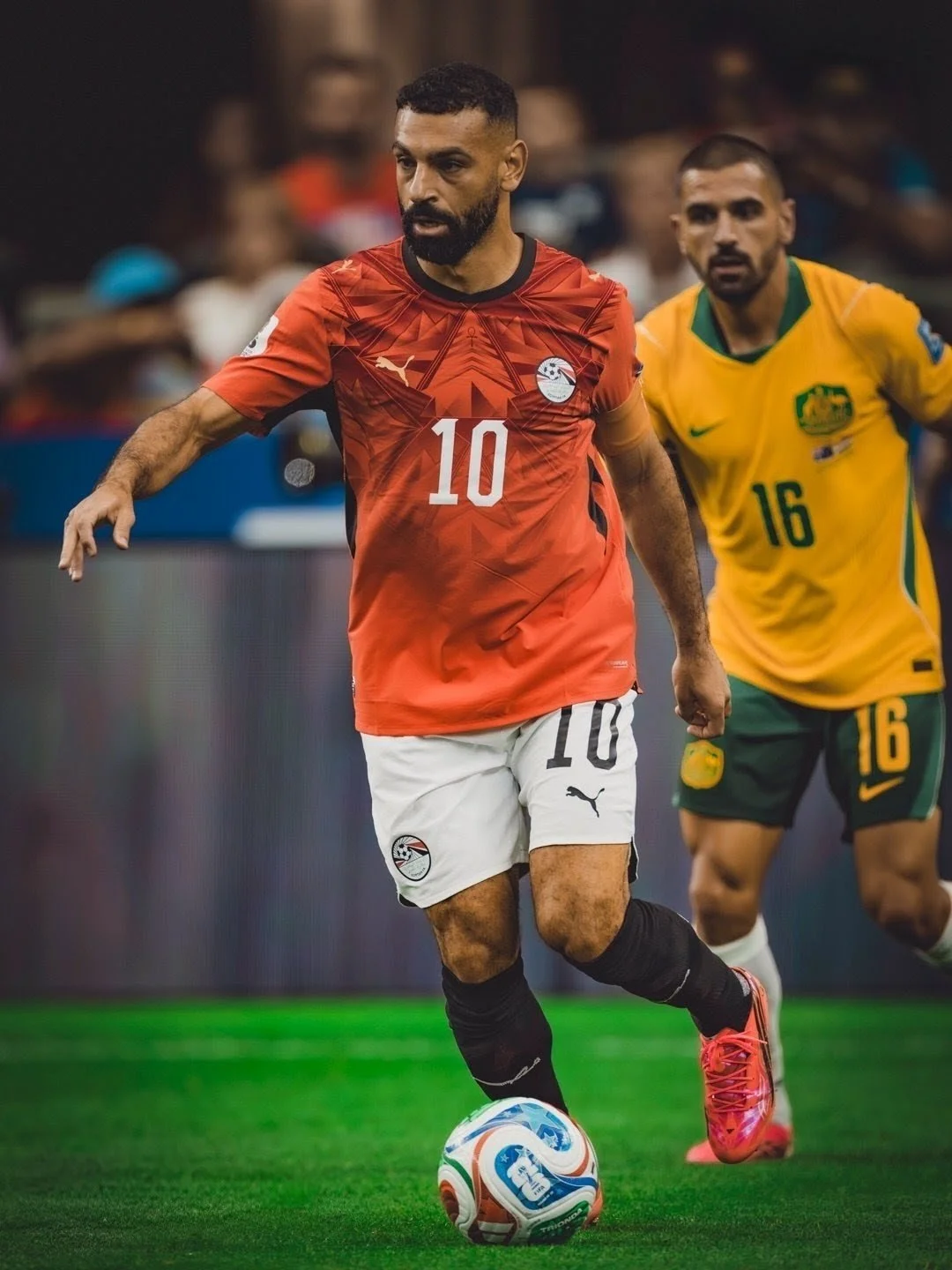
Egyptian captain Mohamed Salah dealt with pressure from Australia and from back home (Photo Credit: Grzegorz Wajda)
Cabo Verde: Defeat With Conviction
Cabo Verde left with perhaps the continent's most honourable elimination.
Against Argentina they never abandoned their principles.
They defended with discipline, progressed possession bravely and remained committed to attacking whenever opportunities appeared.
Even after falling behind, they continued playing rather than retreating into survival mode.
Even in extra time, the Blue Sharks pursued their opponent. Sidney Lopes Cabral’s curling strike to equalize may be the goal of the tournament. An unexpected strike that gave hope to a nation, and a continent that had underwhelmed overall. The late stages of extra time eventually separated the teams by the finest of margins. The hand of a Cabo Verde defender to be exact.
Sometimes tactical execution deserves recognition despite defeat.
Cabo Verde offered exactly that.
Ghana: Defensive Commitment, Offensive Absence
Ghana's defensive performance against Colombia deserved greater reward.
The decisive goal arrived through an individual mistake rather than structural collapse. Defensively, the undermanned Black Stars remained competitive throughout.
The attack, however, barely existed. Not a single shot on target arrived.
That statistic became even more striking considering captain Jordan Ayew failed to register a shot on target across Ghana's four World Cup matches.
Defensive resilience can keep teams alive. It cannot win knockout football if attacking patterns never emerge.
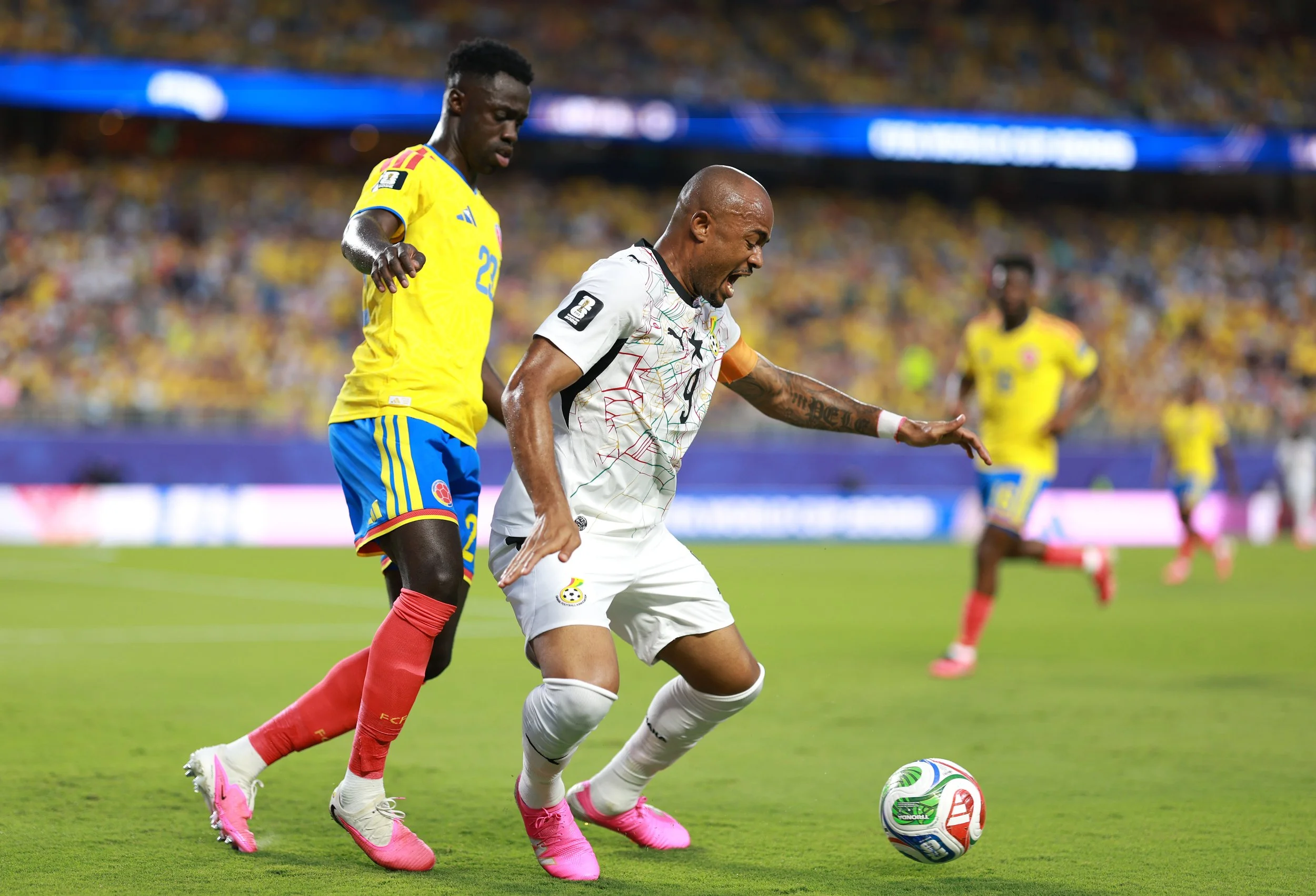
Davinson Sánchez and Colombia kept Ghanaian captain in check, with no shots on target conceded (Photo credit: FCF)
Tactical Evolution Must Become Africa's Next Frontier
If one match encapsulated Africa's knockout campaign, it was DR Congo against England.
Not because of the result. Because it illustrated the difference between reacting and anticipating.
Hydration breaks have become coaching opportunities. Modern substitutions increasingly resemble tactical redesigns rather than personnel changes.
Elite knockout football rewards managers capable of solving evolving problems rather than simply executing pre-match plans.
Too often Africa's representatives remained static while opponents adapted around them. That observation should not diminish what the continent achieved.
Nine teams reaching the knockout stage validates Africa's growing importance within the global game and weakens any argument for reducing its World Cup allocation.
But celebration without examination risks repeating the same mistakes.
It is also notable that no sub-Saharan African nation reached the Round of 16.
That statistic alone will inevitably feed long-standing narratives about African football's ceiling, even if those narratives overlook the more nuanced reality.
This was not primarily a failure of mentality. It was a failure of situational assessment. Africa's technical quality is no longer in doubt. Its physical capacity has never been in doubt.
The next leap will come from the touchline.
The next generation of African success will likely belong not only to the teams with the best players, but to the coaches who recognise that knockout football rarely belongs to the team with the better plan.
It belongs to the team with the better second plan.
Source
Rudi Garcia, Belgium head coach, press conference, 1 July 2026
FIFA Training Centre, South Africa 0 Canada 1 - POST MATCH SUMMARY REPORT, 28 June 2026
FIFA Training Centre,Netherlands (2) 1 Morocco (3) 1 - POST MATCH SUMMARY REPORT,29 June 2026
FIFA Training Centre, Côte d’Ivoire 1 Norway 2 - POST MATCH SUMMARY REPORT,30 June 2026
FIFA Training Centre, England 2 Congo DR 1 - POST MATCH SUMMARY REPORT, 1 July 2026
FIFA Training Centre, Belgium 3 - Senegal 2 - POST MATCH SUMMARY REPORT,1 July 2026
FIFA Training Centre, Switzerland 2 Algeria 0 - POST MATCH SUMMARY REPORT, 2 July 2026
FIFA Training Centre, Australia (2) 1 Egypt (4) 1 - POST MATCH SUMMARY REPORT, 3 July 2026
FIFA Training Centre, Argentina 3 Cabo Verde 2 - POST MATCH SUMMARY REPORT, 3 July 2026
FIFA Training Centre,Colombia 1 Ghana 0 - POST MATCH SUMMARY REPORT, 3 July 2026
Photo Credits:
Yan Diomande, Grzegorz Wajda, 30 June 2026 - Photo courtesy of Grzegorz Wajda and Maciej Rogowski - @ball.raw via Instagram
Pape Thiaw, Nico Alba, 1 July 2026 - Photo courtesy of Nico Alba
Salah and Behich, Grzegorz Wajda, 3 July 2026 - Photo courtesy of Grzegorz Wajda and Maciej Rogowski - @ball.raw via Instagram
Sanchez and Ayew, 3 July 2026 - Photo courtesy of Federación Colombiana de Fútbol
All photos are used with permission. All rights reserved to the creator.

Support PSP Media
If this article resonated with you, consider supporting PSP Media.
Every contribution helps support independent research and reporting