
Kane, Dembélé, and Football's Visibility Economy: Why the Ballon d'Or Road Runs Through World Cup 2026
By Nii Wallace-Bruce
Before the confetti has settled on the pitch in Budapest after the 2026 Champions League Final, attention had already shifted from what had been won to who should be rewarded.
Ballon d'Or season had begun among pundits.
The Ballon d'Or is presented as football's most democratic individual honour: a global assessment of excellence across leagues, competitions and continents.
Yet beneath that ideal sits a quieter hierarchy—one that influences not only who is admired, but how readily their achievements are accepted.
In modern football, greatness is not only performed. It is translated.
Some performances arrive already validated, delivered on stages that command global attention and generate immediate consensus. Others require explanation. They must overcome assumptions about leagues, clubs, competitive environments and the value assigned to success within them.
As the focus of world football shifts toward the 2026 FIFA World Cup, that distinction helps explain why Harry Kane and Ousmane Dembélé enter the next Ballon d'Or cycle from very different starting positions.
The Visibility Advantage
Every Ballon d'Or race develops its own hierarchy of achievements.
The Champions League remains football's most powerful club competition, not merely because of its quality but because of its visibility. Performances there are watched, debated and replayed across the sport's most influential media spaces. Success becomes instantly legible.
Domestic football operates differently.
The Premier League and La Liga sit at the centre of football's attention economy, where strong performances are continuously reinforced through coverage, discussion and narrative. Excellence is not simply recorded; it is interpreted and amplified.
Elsewhere, the burden of translation is often greater.
The Bundesliga, despite its quality, continues to occupy a different position in football's prestige ecosystem. Achievements there are frequently accompanied by caveats about competitive balance, Bayern Munich's resources or the league's overall strength.
Fair or not, those perceptions shape how individual seasons are judged.
And few players illustrate that reality more clearly than Harry Kane.
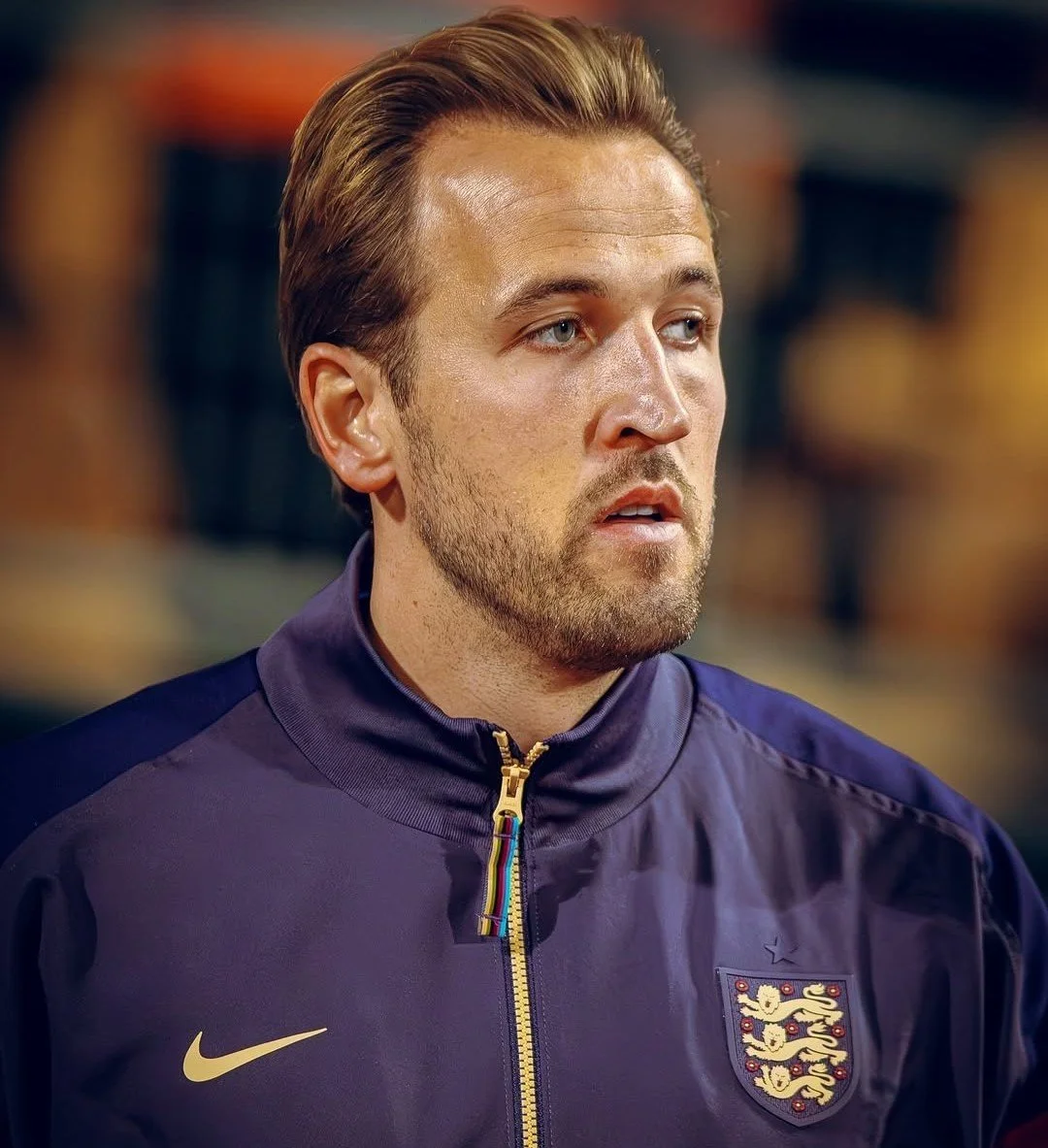
Harry Kane is staring down another difficult path to an elusive Ballon d’Or prize. (Photo Credit: Bismark Nii Kojo Adjei)
Harry Kane's Impossible Standard
There are few players in world football carrying a heavier burden of proof than Kane.
Over the past three seasons, the England captain has done precisely what elite forwards are expected to do: score relentlessly, break records and drive one of Europe's biggest clubs.
Yet every achievement seems to generate another qualification.
Score 30 goals? It's Bayern Munich.
Score 40? It's the Bundesliga.
Win the league? Bayern are expected to win it anyway.
The irony is striking. For much of his career, Kane was criticised for lacking major trophies despite producing elite numbers. Now that silverware is beginning to arrive, the environment in which those achievements occur is often used to diminish them.
His goals continue to be assessed through the lens of where they are scored rather than the quality with which they are scored. An eye-opening 64 goals in 56 games in 2026 nonetheless.
This is not unique to Kane. Ballon d'Or voting has long reflected more than statistical output. It rewards context, symbolism and moments that resonate beyond domestic competition.
That reality helps explain why some players appear to begin each season with a larger margin for error than others.
The Power of Validation
For years, Ousmane Dembélé represented potential more than fulfilment. The talent was unquestionable. The defining achievements were harder to identify.
Paris Saint-Germain's Champions League triumph changed that in 2025. A second consecutive European title elevated it in 2026.
European football's biggest prize does more than add a medal to a player's résumé. It reframes the conversation around them. Individual performances become attached to football's most visible club stage, where accomplishments require little explanation.
Dembélé's season is no longer viewed through the lens of possibility. It is viewed through the lens of validation. That distinction matters.
Where Kane's achievements often invite debate, Dembélé's increasingly invite recognition.
Champions League winners frequently carry that advantage into major international tournaments. Their credentials are already established. Their place within football's elite has already been affirmed.
It does not guarantee future success, nor does it make a player immune to disappointment. Major tournaments have a habit of reshaping football's hierarchy with remarkable speed.
But it does alter expectations.
Dembélé enters the next phase of the 2026 Ballon d'Or race seeking reinforcement.
Kane enters seeking validation.
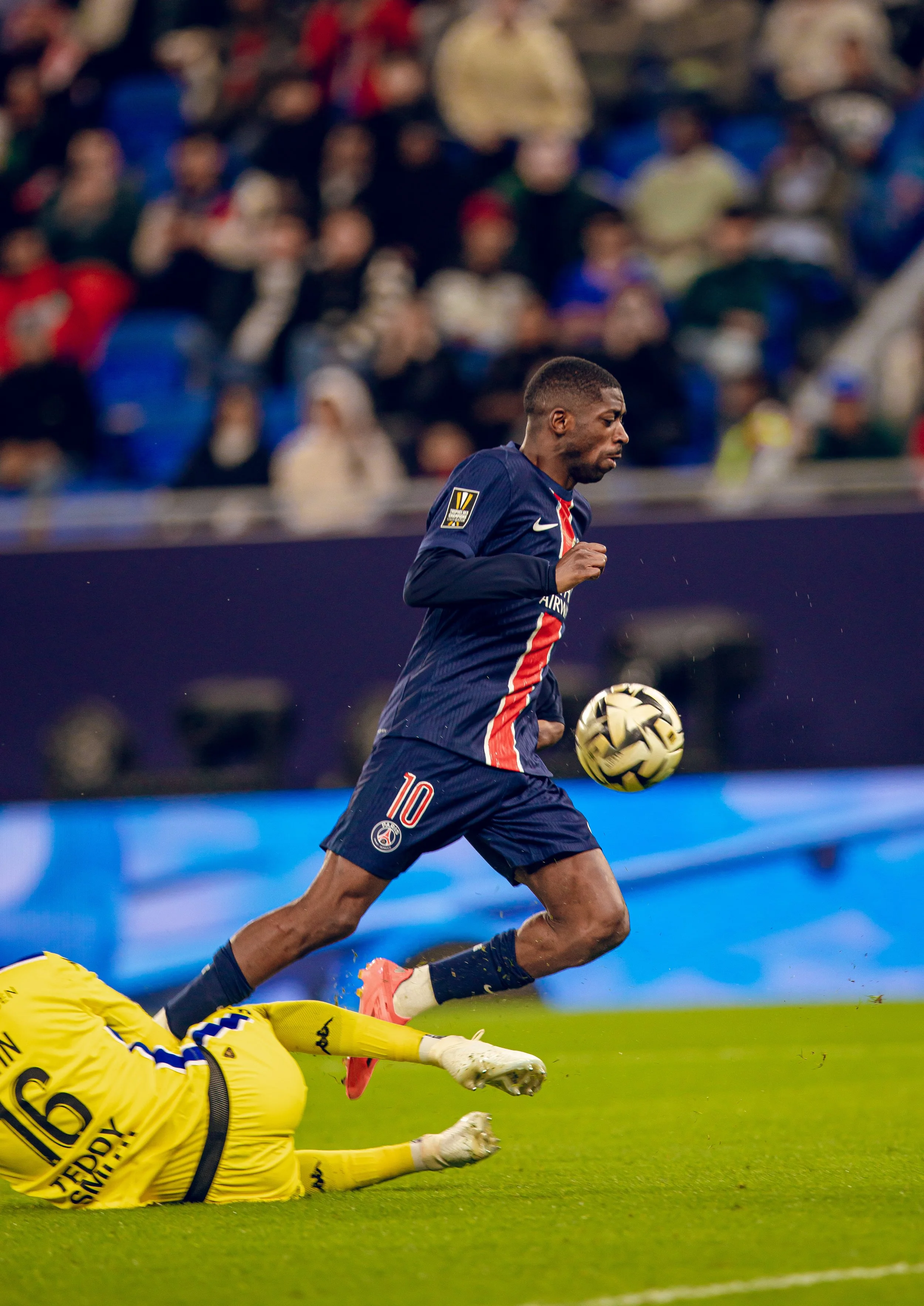
Despite missing significant time for PSG, Ousmane Dembélé is the front-runner for the 2026 Ballon d’Or. (Photo Credit: Bismark Nii Kojo Adjei)
Why 2026 Matters
This is where the World Cup becomes crucial.
For Kane, the tournament may represent more than an opportunity to lead England to their first major men's trophy since 1966. It may offer the kind of universally recognised achievement that cuts through every lingering caveat surrounding his club career.
A prolific Bundesliga season will strengthen his case. Another Gerd Müller Trophy will strengthen it further.
But football history suggests that certain accomplishments carry disproportionate weight in Ballon d'Or voting. A transformative World Cup campaign belongs near the top of that list.
Ronaldo Nazario (2002), Fabio Cannavaro (2006), Luka Modric (2018), and, Lionel Messi (2023) have each won the Ballon d’Or immediately after winning the World Cup or taking their team to the final.
The pattern is hardly new.
From World Cup winners to Champions League heroes, the award has often favoured players whose excellence coincided with football's most visible moments. Statistics matter, but they rarely operate in isolation. They gain power when attached to defining narratives.
For Kane, that may create an almost impossible standard. The expectation is not merely to score goals. It is to produce the kind of tournament that changes how an entire career is remembered.
The kind that transforms an elite footballer into a footballing symbol. Different Burdens, Different Expectations
The contrast between Kane and Dembélé reveals something larger than a comparison between two players.
It highlights how modern football distributes attention.
One player enters the World Cup cycle carrying the expectation of accumulation: more goals, more records, more proof.
The other enters with one of football's ultimate validations already secured.
One appears to need everything.
The other appears to have earned room for imperfection.
That difference is not necessarily fair. Nor is it entirely rational.
But Ballon d'Or races have never been decided by numbers alone.
They are shaped by where excellence occurs, who witnesses it, how often it is repeated on football's biggest stages and whether it coincides with the trophies that command global attention.
The Ballon d'Or is the annual moment when this hierarchy becomes visible.
And as the road to 2026 begins, Harry Kane and Ousmane Dembélé are not simply competing against one another.
They are competing under very different standards of proof.
Sources:
Give Me Sport, “Ballon d’Or 2026 Power Rankings”, Hal Fish, Calum Ritchie, Rob Swan, & Robin Mumford 31 May, 2026
Goal.com, “Ballon d'Or 2026 Power Rankings: Ousmane Dembele emerges as Harry Kane's biggest rival”, Tom Maston, 30 May, 2026
Photo Credits:
Harry Kane profile, Bismark Nii Kojo Adjei, 14 October 2025 - Photo courtesy of Bismark Nii Kojo Adjei
Ousmane Dembélé beating goalkeeper, Bismark Nii Kojo Adjei, 5 January 2025 - Photo courtesy of Bismark Nii Kojo Adjei
All photos are used with permission. All rights reserved to the creator.

Support PSP Media
If this article resonated with you, consider supporting PSP Media.
Every contribution helps support independent research and reporting.