
By Nii Wallace-Bruce
Few nations arrive at the 2026 FIFA World Cup with greater expectation than Senegal.
The Lions of Teranga remain one of Africa's most complete sides, combining physical power, technical quality and the tournament experience accumulated over the past decade. Their victory at the 2026 Africa Cup of Nations reinforced that standing, even as the result remains subject to an appeal before the Court of Arbitration for Sport in Switzerland.
Regardless of the outcome of that process, Senegal want to control the game. Increasingly, they want to control the narrative too. For years, they were discussed as a promising side, then as contenders, then as champions. Now comes the harder task: remaining there.
Long before a ball is kicked, every World Cup asks different questions of its participants. This one begins with a journey. For Senegal, the route to North America has involved not only tactical preparation but the realities of heightened travel controls and increased scrutiny at international borders. The tournament's geography stretches across a continent; its politics occasionally intrude on the game. Yet once the whistle blows, Senegal will be judged by the same measure as every contender: their ability to translate promise into performance.
Pape Thiaw embodies Senegal’s football journey. A member of the side that reached the 2002 AFCON final and the quarter-finals of the World Cup, he now leads a generation seeking to match — and perhaps surpass — those achievements
The Return of Mané
The image of Senegal's 2022 World Cup campaign will forever be linked to the absence of Sadio Mané.
Denied the opportunity to play through injury, the captain watched from afar as his teammates reached the knockout stage before falling to England. Four years later, he returns as both leader and symbol of a generation that has elevated Senegalese football to unprecedented heights.
Alongside Mané, Édouard Mendy and Kalidou Koulibaly remain central figures in the squad. All three have spent recent seasons in Saudi Arabia, raising familiar questions about whether the move ultimately sharpens or dulls elite players ahead of major tournaments. Senegal’s spine arrives with experience many teams would envy. The concern is whether that experience has come at the expense of competitive intensity.
The answer is unlikely to be straightforward. While the Saudi Pro League has improved considerably, World Cup football demands a different intensity. Senegal's veteran core must demonstrate that experience and leadership can outweigh any concerns about competitive rhythm.
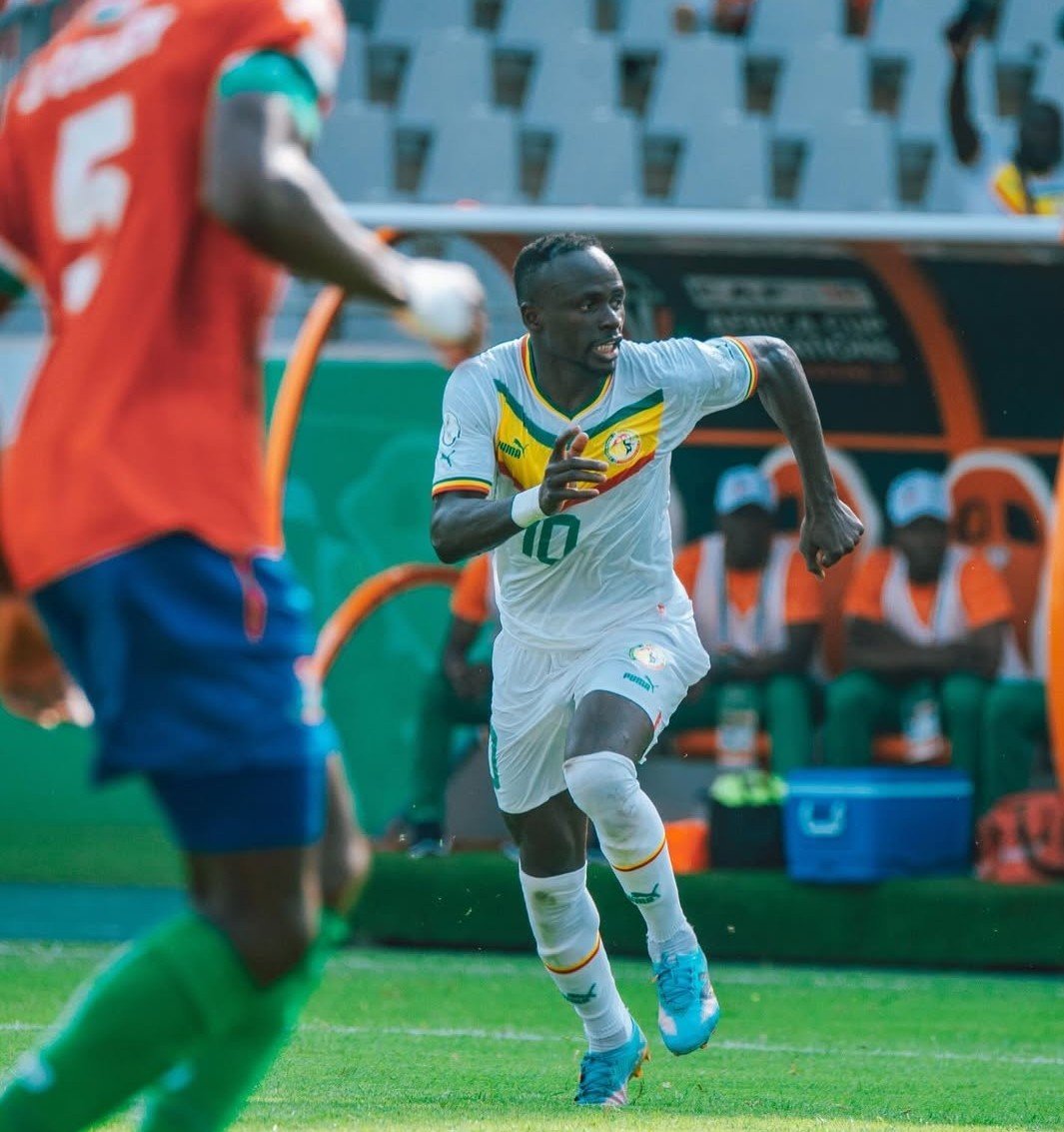
Sadio Mané will have one more opportunity on the global stage at World Cup 2026. (Photo credit: Bismark Nii Kojo Adjei)
A Team Comfortable With The Ball
What separates this Senegal side from many of its predecessors is its ability to control matches. The Lions of Teranga can still overwhelm opponents athletically, but increasingly they prefer to outmanoeuvre them.
One of Senegal’s greatest strengths is their flexibility. They can hurt opponents in transition but they are equally capable of controlling possession and progressing methodically through midfield. The result is a side comfortable operating at different tempos depending on the demands of the match. While Senegal have become increasingly comfortable dominating possession, their most convincing performances still tend to come when they combine that control with vertical directness. The challenge is avoiding sterile dominance against opponents content to defend deep.
Midfielder Pape Gueye is crucial to that approach. Comfortable receiving under pressure and progressing play through central areas, he gives Senegal the ability to play through opponents rather than around them. His range of passing and willingness to shoot from distance add another dimension to the Lion’s attack. Yet control alone does not win tournaments. Senegal's growing maturity in possession is balanced by the invention of Lamine Camara, one of the most gifted footballers produced by the country in recent years. Where Gueye provides structure, Camara provides disruption. Operating between midfield and attack, he has the ability to accelerate a move with a disguised pass, a sudden change of direction or a piece of improvisation that unsettles organised defences.
For a team increasingly comfortable dominating possession, Camara's creativity may prove essential. World Cups are often decided not by carefully rehearsed patterns but by moments that break them. Against opponents willing to retreat into compact defensive blocks, Senegal will need players capable of seeing possibilities others cannot. Camara offers exactly that. His willingness to take risks gives the Lions a different dimension, providing the unpredictability that prevents control from becoming caution.
Gueye’s control and Camara’s imagination are complemented by pace in wide areas, where Senegal remain at their most dangerous. Direct runners stretching defensive lines create opportunities both in transition and against organised blocks, giving the Lions multiple routes to goal.
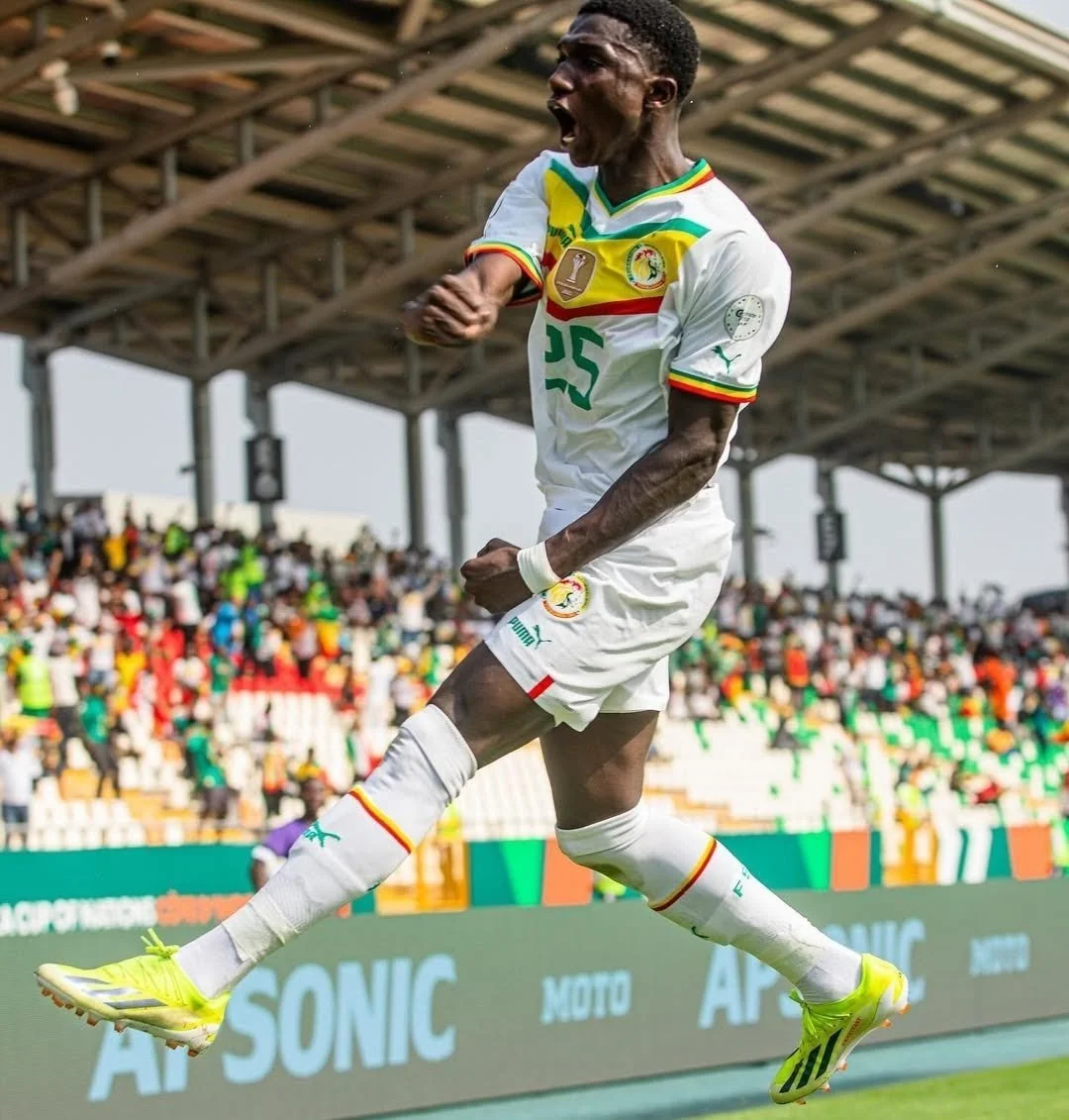
Lamine Camara’s creative energy is crucial for Senegal when moving forward. (Photo credit: Bismark Nii Kojo Adjei)
Opportunity and Danger in Group F
France, Norway, and Iraq present three very different challenges.
France arrive as one of the tournament favourites, armed with elite talent across the pitch and the depth to alter matches from the bench. Senegal will need defensive discipline and composure in possession to compete.
Norway may offer a more intriguing tactical battle. Their structure and attacking quality make them dangerous opponents, but Senegal's speed in wide areas could expose spaces around the Scandinavian side's defensive line. If the Lions can isolate defenders in one-against-one situations, opportunities will follow. The danger lies in transition. If Senegal's recovery runs are slow, players such as Antonio Nusa and Martin Ødegaard possess the creativity to exploit the spaces left behind.
Iraq complete the group as potential disruptors. Organised, resilient and unlikely to be overawed by the occasion, under the tutelage of seasoned World Cup campaigner, Graham Arnold. They possess the qualities required to frustrate more fancied opponents.
Yet the greatest threat to Senegal may come from within their own game.
The Lions commit players forward aggressively, particularly through the flanks. That ambition creates attacking opportunities but can also leave space behind when possession is lost. Against opponents capable of transitioning quickly, those moments become dangerous.
France possess Ballon d’Or quality up front. Norway thrives in open spaces. Iraq are disciplined enough to exploit counter-attacking opportunities when they arise.
Managing those transitions could determine Senegal's fate.
Built For The Moment
Senegal arrive in North America with a squad rich in experience, athleticism and tactical intelligence.
They possess experience at both ends of the pitch, control in midfield and genuine attacking threat. Just as importantly, they have learned how to manage matches when momentum shifts against them.
The path ahead is difficult. The group is unforgiving and the margins will be small.
But if any African side appears equipped to meet those challenges head-on, it is Senegal.
The question is no longer whether Senegal belong. It is how far can they go.
Sources:
BBC Sport, “Senegal to parade Afcon trophy despite title being stripped”, Ian Williams, 26 March, 2026
Photo Credits:
Sadio Mané on the move, 15 January 2024 - Photo courtesy of Bismark Nii Kojo Adjei
Lamine Camara celebrates, 15 January 2024 Photo courtesy of Bismark Nii Kojo Adjei
Video Credits:
John Walker, UEFA Licensed Coach and Scout, 28 May 2026 via Twitter @johnwalker_1986
All photos are used with permission. All rights reserved to the creator.