
The Weight of Memory: Ghana’s Black Stars and the Price of Expectation
By Nii Wallace-Bruce
When Carlos Queiroz finalised his 2026 World Cup squad on June 1, the announcement carried more than names and numbers. The release video opened with goals from Ghana’s 2006 and 2010 campaigns—a deliberate return to an era that still shapes how the Black Stars are perceived. Those tournaments are no longer mere history; they have become a benchmark against which Ghana are perpetually measured, even as the conditions that produced those teams have shifted beyond recognition.
The 2006 debut signalled Ghana’s arrival on the global stage, and four years later, the penalty shootout defeat to Uruguay in Johannesburg became one of African football’s defining modern images. Not just for its drama, but for what it suggested: Ghana were no longer outsiders at the top table. Nearly two decades on, that suggestion still exerts a gravitational pull over expectations, often outweighing present realities.
The Gap Between Reputation and Reality
Since that peak, Ghana’s tournament trajectory has been uneven. The absence from the 2018 World Cup, coupled with inconsistent Africa Cup of Nations campaigns, has revealed a widening gap between reputation and competitive stability. Ghana’s international identity has, in many ways, become frozen in time. The diaspora remembers a side defined by power, pace, and decisive moments in knockout football. But international cycles do not preserve momentum—they reset quickly. What once seemed like emergence has become something closer to reconstruction without continuity.
The question is no longer whether Ghana can recall past glories—it is whether they have successfully replaced them.
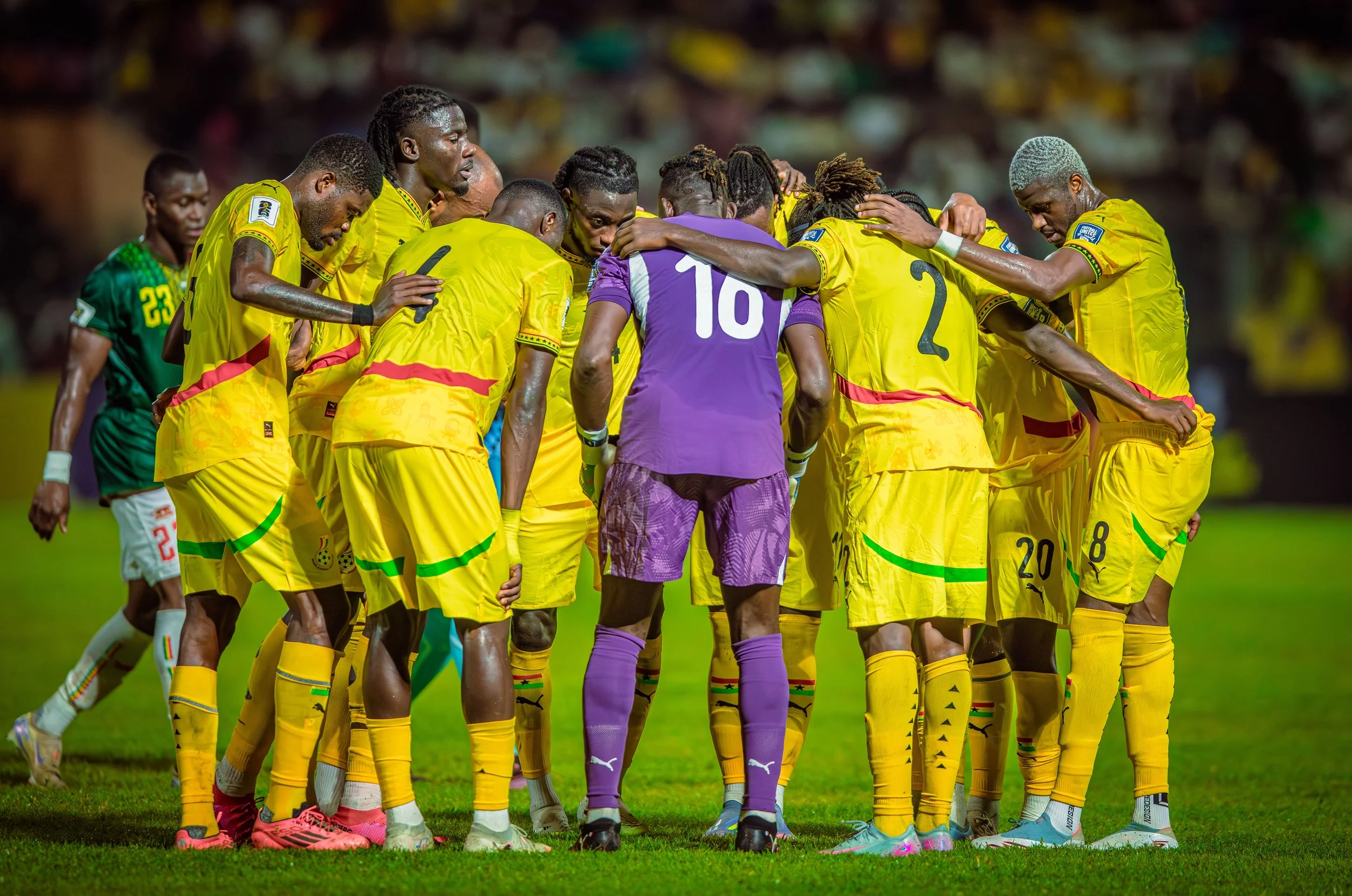
Ghana’s Black Stars must remain united despite instability prior to the 2026 FIFA World Cup (Photo credit: Bismark Nii Kojo Adjei)
Diaspora Pressure and the Players Who Slipped Away
That tension is most visible not only in results, but in recruitment. Modern international football is increasingly determined before a senior debut, as European academies identify and secure dual-national players earlier than ever, compressing the window in which federations like Ghana can act.
This is not simply talent loss; it is competitive repositioning. A generation of Ghana-eligible players has already embedded itself in other elite systems: Jeremie Frimpong has become a key figure for the Netherlands, Kobbie Mainoo has broken into England’s senior squad, and Jérémy Doku’s rise with Belgium highlights how elite environments now shape international futures long before eligibility debates heat up.
Callum Hudson-Odoi and Eddie Nketiah inhabit a different layer—England internationals with Ghanaian heritage, courted by the Black Stars yet still waiting for another chance with the Three Lions. These are not isolated cases—they are structural outcomes of timing, visibility, and federation reach. Players like Josh Acheampong linger in diaspora discussions, while others circulate in the background of eligibility discourse without ever becoming formal options. The pattern is clear: Ghana often reacts after elite identification has already taken place elsewhere.
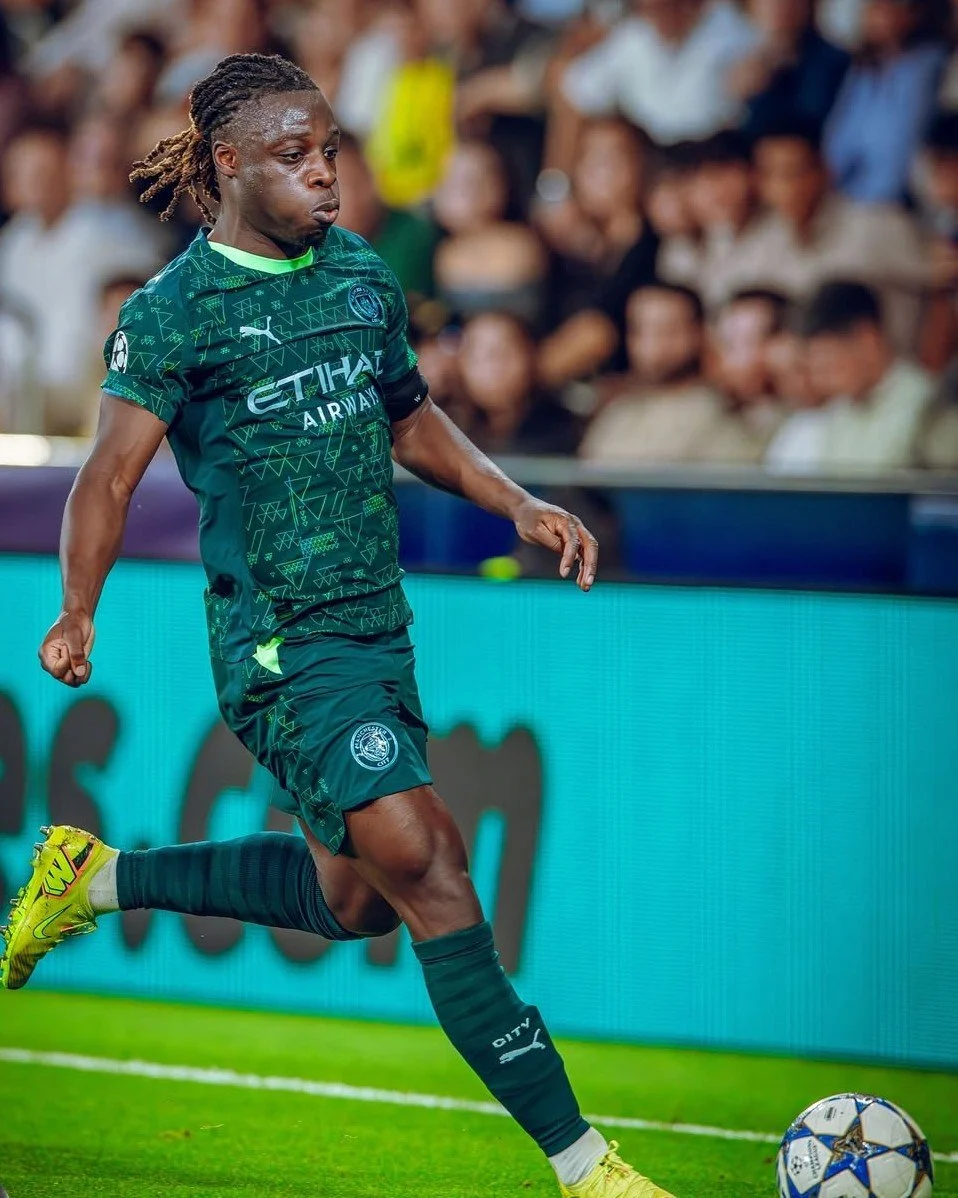
Jérémy Doku, Semenyo’s teammate at Manchester City, will represent Belgium at the FIFA World Cup (Photo credit: Bismark Nii Kojo Adjei)
A Squad Built Under Pressure, Not Continuity
The current Black Stars reflect these constraints. Every qualifying cycle begins with another reset, shaped by late availability decisions, injuries, and tactical recalibrations. Injuries to key figures such as Mohammed Kudus, Alexander Djiku, and Mohammed Salisu expose fragility not just in personnel, but in rhythm and cohesion. These absences are not peripheral—they are structural losses in creativity, organisation, and defensive balance.
When Antoine Semenyo enters camp, he does so not simply as Ghana’s most gifted attacker, but as a bridge between generations. He carries the weight of expectation born not from his own predecessors in the dressing room, but from memories that have been curated and amplified over two decades. In New York, speaking at a World Cup event, Asamoah Gyan framed the pressure perfectly:
“There will be a bit of pressure because of where he's playing now. When you're playing for one of the best teams in the world and you come into the national team, there will be a lot of expectations. He's the face of Ghana football right now because of his position and what he has done for himself. Everything is going to depend on Antoine Semenyo for this World Cup.”
Black Stars all-time leading goalscorer, Asamoah Gyan on Antoine Semenyo at World Cup 2026
Queiroz’s preferred style—rapid transitions, vertical bursts, tight defensive resets—becomes a high-wire act when key cogs are missing. Against elite opposition, moments of individual brilliance can no longer mask lapses in structure. The rhythm of the team, honed in absentia, falters.
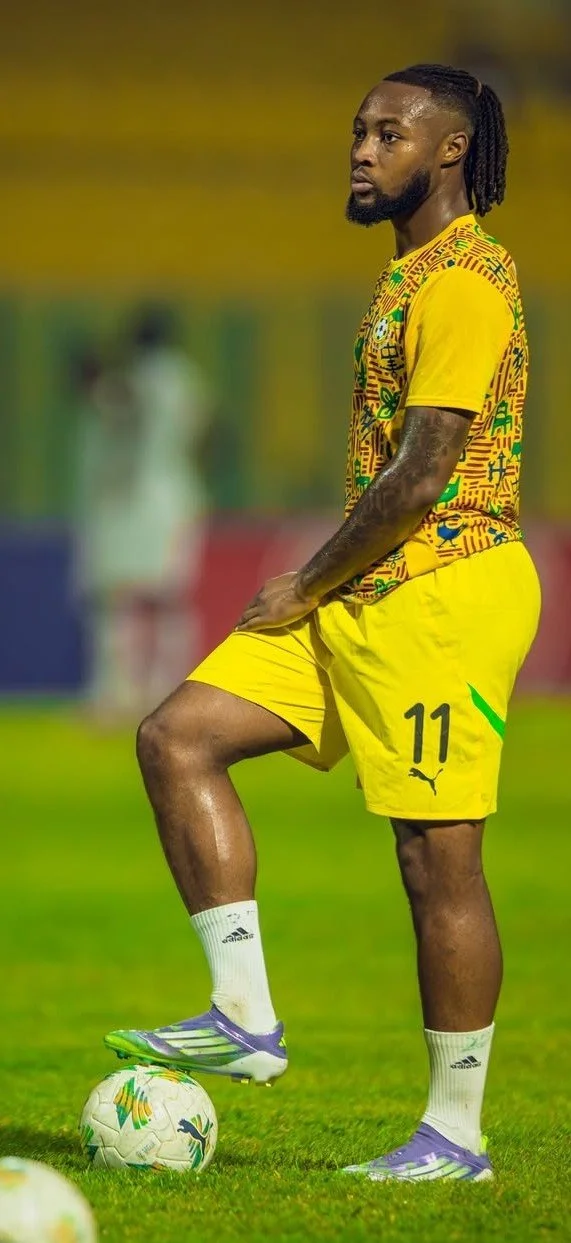
Injuries have thrust Antoine Semenyo into the spotlight (Photo credit: Bismark Nii Kojo Adjei)
Tactical Identity in Transition
On the pitch, Ghana has leaned heavily towards transition football: direct progression, early verticality, and reliance on individual moments rather than sustained control. Effective in short bursts, this style carries predictable risks at tournament level: prolonged defensive pressure, difficulty escaping territorial phases, and vulnerability between midfield and defence when possession is lost early.
England. Croatia. Panama. All opponents capable of exploiting those cracks. The World Cup waits for no one—particularly a team negotiating structural fragility. Literally and figuratively.
Expectation Versus the Present Cycle
The tension defining this Ghana side is temporal. From Accra to Kumasi, memories of 2010 still arrive uninvited. Mention Ghana at a roadside chop house and the conversation drifts inevitably back to Johannesburg, Asamoah Gyan, the ascending Jabulani, the crossbar, and what might have been.
Supporters across Ghana and the wider diaspora relate to a team defined by past achievement, while the current cycle reflects a side in renewal—competing in the present while being measured by the past. That disconnect produces pressure that is difficult to quantify but consistently visible, shaping discourse, selection debates, and expectations that often outrun reality.
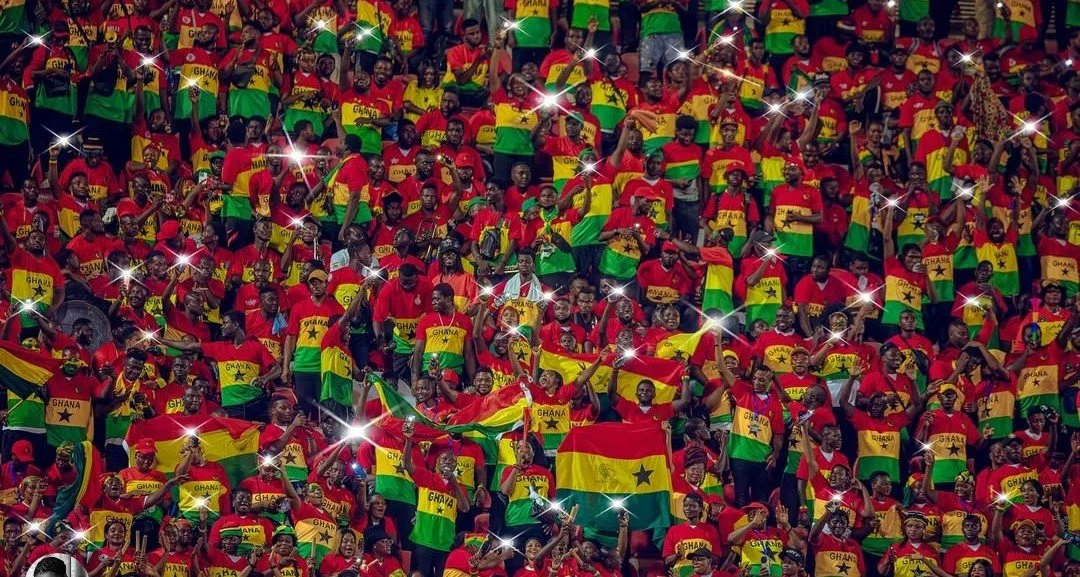
The people of Ghana are passionate about the Black Stars, yet expectant of success. (Photo credit: Bismark Nii Kojo Adjei)
Conclusion: Rebuilding Without Losing Sight of Identity
The question is no longer whether Ghana can reproduce the teams of 2006 or 2010. It is whether they can build something coherent enough to belong in the same conversation on new terms. Memory remains powerful currency in Ghanaian football, but international football does not pay in nostalgia. It pays in systems, cycles, and recruitment timing.
Right now, the Black Stars are still attempting to convert memory into structure—and in Antoine Semenyo, the weight of two generations’ expectation rests on a single pair of shoulders.
Sources:
Sky Sports, “Asamoah Gyan: Ghana legend on Antoine Semenyo influence and facing England at the 2026 World Cup”, Charlotte Marsh, 29 May, 2026
Photo Credits:
Ghana Team hudddle, Bismark Nii Kojo Adjei, 8 September 2025 - Photo courtesy of Bismark Nii Kojo Adjei
Antoine Semenyo warming up, 8 September 2025 - Photo courtesy of Bismark Nii Kojo Adjei
Jérémy Doku dribbling in Champions League, 21 October 2025 - Photo courtesy of Bismark Nii Kojo Adjei
Ghana fans, 8 September 2025 Photo courtesy of Bismark Nii Kojo Adjei
Video Credits:
Ghana Football Association, 1 June 2026via Twitter @GhanaBlackStars
John Walker, UEFA Licensed Coach and Scout, 30 May 2026 via Twitter @johnwalker_1986
All photos are used with permission. All rights reserved to the creator.

Support PSP Media
If this article resonated with you, consider supporting PSP Media.
Every contribution helps support independent research and reporting.