
Reloaded, Not Rebuilt: Why Colombia's World Cup Story Has Been Decades in the Making
By Nii Wallace-Bruce
North America, Then and Now
The United States of America has long occupied a complicated place in Colombian football.
For older supporters, the 1994 FIFA World Cup evokes a tournament that promised so much before ending in heartbreak, followed by events that reached far beyond the game itself.
For younger fans, it is history rather than lived experience.
Their Colombia is one of James Rodríguez announcing himself to the world at the 2014 World Cup in Brazil, of Copa América finals, of Luis Díaz dazzling defenders across Europe and now of another World Cup campaign gathering momentum.
As Colombia prepares to meet Ghana on Friday night, the occasion offers more than the chance to secure a place in the last 16. A reunion with former head coach Carlos Queiroz as a subplot.
It is another step in a journey that has stretched across generations.
This is not a nation trying to rewrite the past. It is trying to write the next chapter.
More Than One Golden Generation
Football has never been Colombia's problem. Few countries outside the sport's traditional powers have produced elite players with such consistency over the past three decades.
Carlos Valderrama gave way to Faustino Asprilla and Freddy Rincón. Mario Yepes and Radamel Falcao followed before James Rodríguez inspired another class of talent.
Today, Luis Díaz has become the standard-bearer, supported by another wave of talent ready to carry Colombian football forward.
Many national teams experience a golden generation before waiting years for another. Colombia has done something different.
Between Valderrama’s final World Cup appearance and Díaz’s emergence, Colombia have rarely gone more than a few years without producing a player capable of starring for Europe’s elite clubs.
Colombia’s challenge has rarely been producing elite footballers. It has been translating that talent into sustained success on the biggest stages.
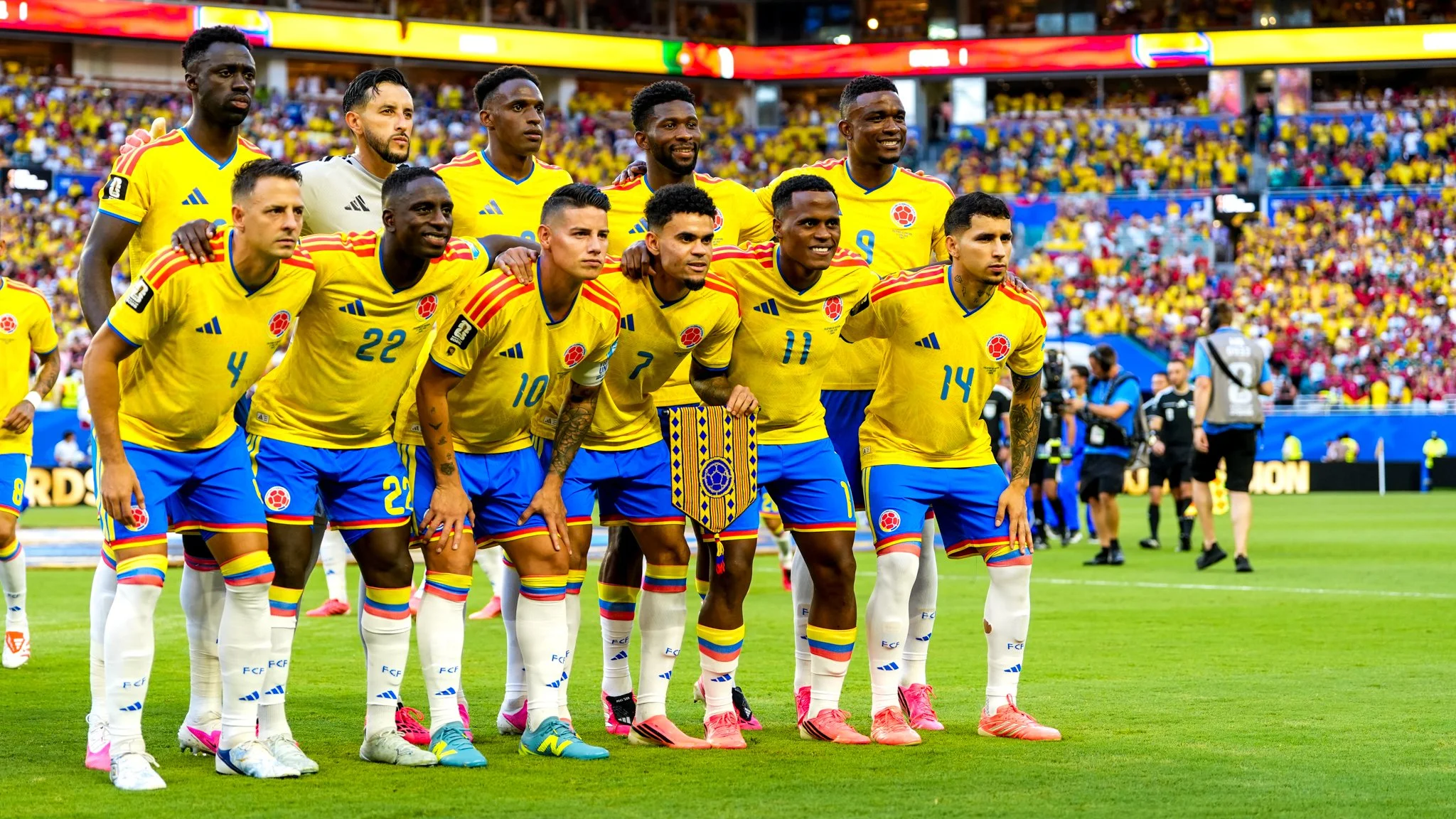
James Rodríguez (#10) and Luis Díaz (#7) are surrounded by a strong cohort of talent for Los Cafeteros (Photo credit: FCF)
Lorenzo's Missing Piece
That is where Néstor Lorenzo's influence has become increasingly apparent.
The Argentinian has led Los Cafeteros since 2022, but his connection with the national team stretches much further back after years spent as José Pékerman's assistant. This gave him an intimate understanding of the culture he inherited.
Lorenzo spoke of the ambition, competitiveness and commitment of James, who has been in the national team since his teen years.
Colombia has retained the technical quality and flair that have long defined its football identity, but there is now a balance that previous sides occasionally lacked.
This team can dominate possession without becoming vulnerable. It can defend patiently before attacking with speed in transition. It has learned to adapt rather than insisting every match be played on its own terms. Using his players’ strengths has made Colombia dangerous when operating out wide. Chances are created through crosses as well as pace from players such as Muñoz.
Those qualities are not accidental. Lorenzo has built them over time, refining his ideas through triumphs and setbacks alike. Near misses have informed the next step instead of defining it.
That evolution has been forged in South America's unforgiving qualification campaign.
Few tests in international football are tougher than CONMEBOL qualifying. Altitude, travel, intense rivalries and relentless quality leave little room for complacency.
Despite this, Colombia finished above Brazil in third place in qualifying for 2026.
Surviving that marathon demands resilience.
The World Cup presents a different challenge.
It is a sprint.
One knockout match can define four years of work.
Built for Tournament Football
Victories over DR Congo and Uzbekistan have demonstrated different sides of Colombia's game. Both matches saw Colombia tasked with breaking down a low block from the opponent.
Daniel Muñoz has become one of the symbols of Lorenzo's Colombia. Nominally a full-back, his willingness to attack the final third has provided an additional source of creativity, while goals against DR Congo and Uzbekistan eased the creative burden on James Rodríguez and Luis Díaz.
They have shown equal comfort controlling possession against deep defences and remaining organised without the ball against technically gifted opponents.
The scoreless draw with Portugal may ultimately prove Colombia's most encouraging group-stage performance. They restricted Cristiano Ronaldo through disciplined defensive work, compressed space with alternating mid and low blocks, and showed enough courage in possession to spend long periods inside Portugal's penalty area. Only a finishing touch—and perhaps a penalty decision—prevented victory.
Now Ghana offers another examination, not simply because of its defensive quality but because it represents the type of opponent Colombia must overcome if this tournament is to become something more than another respectable campaign.
The objective is not simply reaching the knockout rounds. It is proving Colombia belongs among the genuine contenders rather than the perennial outsiders admired for their talent.
This squad appears better equipped than many of its predecessors to make that leap.
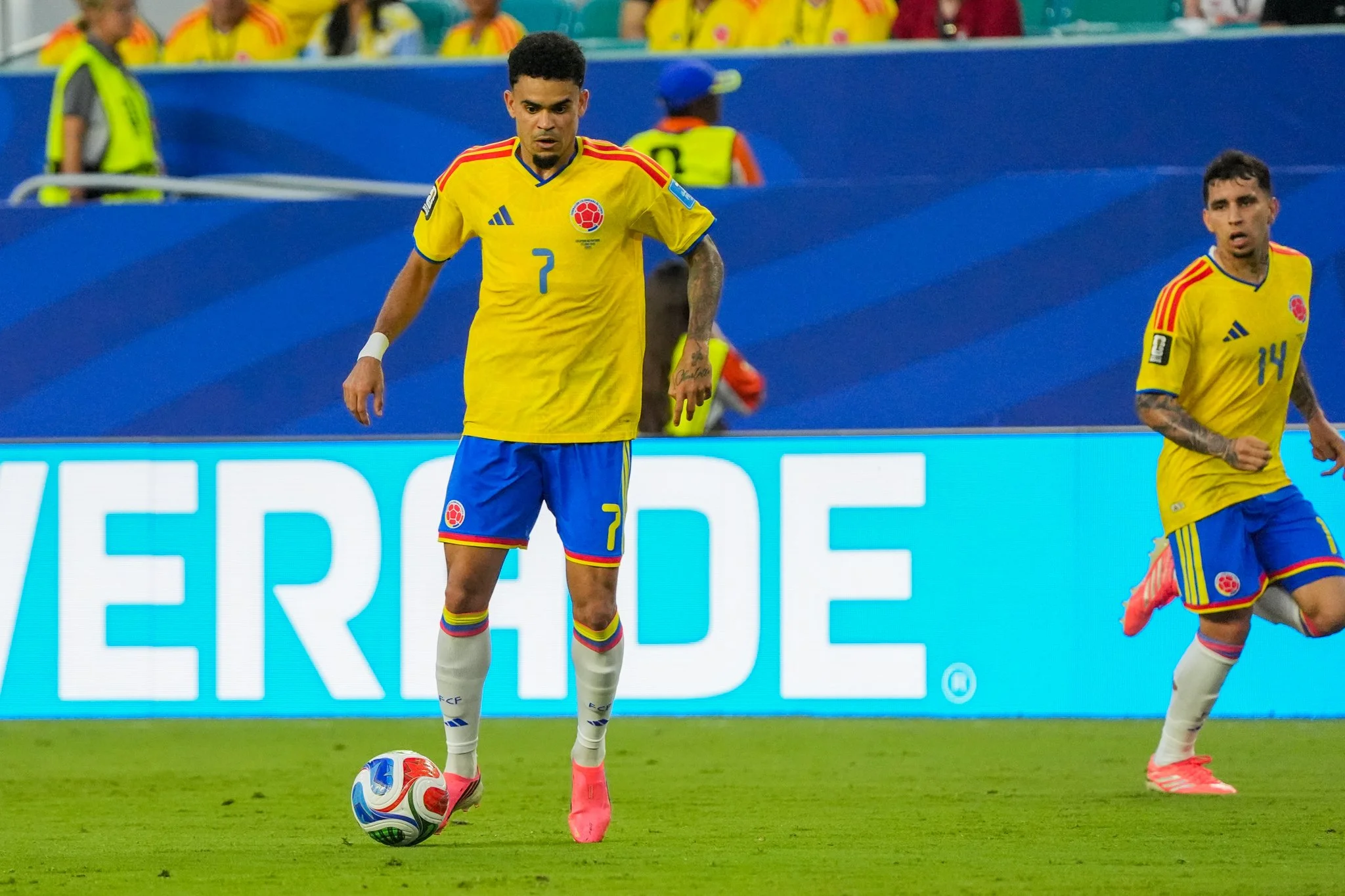
Luis Díaz (left) has developed an understanding with fellow ball carriers such as Gustavo Puerta (right) in Colombia’s build-up play (Photo credit: FCF)
The Next Chapter
Every World Cup asks a different question. For Colombia, this one is not whether the talent exists. That was proven in 2014. Historical results have answered that many times.
The question is whether this cohort can match technical brilliance with tactical maturity, consistency and belief when the margins become smallest.
North America once became the backdrop to one of Colombian football's most painful moments and yet it has also provided recent hope.
More than three decades later, the continent offers a different possibility. Not redemption for the past, because football cannot rewrite history.
Instead, it offers the opportunity to confirm what Colombian football has quietly been building for years: a team that understands what tournament football demands.
Ghana is the next test.
What follows may determine whether this Colombia side is remembered alongside the nation's finest—or as the group that finally fulfilled the promise so many others carried before it.
Sources:
Nestor Lorenzo, Colombia Head Coach, press conference, 27 June 2026
FIFA Training Centre, Colombia 0 Portugal 0 - POST MATCH SUMMARY REPORT, 27 June 2026
FIFA Training Centre, Colombia 1 Congo DR 0 - POST MATCH SUMMARY REPORT, 23 June 2026
FIFA Training Centre, Uzbekistan 1 Colombia 3 - POST MATCH SUMMARY REPORT, 17 June 2026
Photo Credits:
Colombia team photo, 27 June 2026 - Photo courtesy of Federación Colombiana de Fútbol
Luis Diaz, 27 June 2026 - Photo courtesy of Federación Colombiana de Fútbol
All photos are used with permission. All rights reserved to the creator.

Support PSP Media
If this article resonated with you, consider supporting PSP Media.
Every contribution helps support independent research and reporting