
Egypt at World Cup 2026: Racing Against Time
By Nii Wallace-Bruce
Few nations possess a footballing history as rich as Egypt's.
Seven Africa Cup of Nations titles have established the Pharaohs as one of Africa's great powers. Yet that dominance has rarely translated to the World Cup. While Egypt have repeatedly conquered their continent, they have struggled to leave a lasting impression on football's biggest stage.
North America offers a chance to change that.
For Egypt, World Cup 2026 is not simply another tournament. It is an occasion to rewrite a story that has stubbornly refused to change.
The Final Journey of Salah
Every great football nation eventually reaches a crossroads between generations.
For Egypt, that moment revolves around Mohamed Salah.
For nearly a decade, Salah has carried the expectations of a nation. His achievements at Liverpool elevated him beyond football, transforming him into one of the most recognisable sporting figures in the world. Premier League titles, European glory and individual accolades followed. Few African players have assembled a comparable résumé.
Yet international football has remained unfinished business.
The Africa Cup of Nations has brought heartbreak as often as hope. The World Cup has offered limited possibility to build a legacy commensurate with his club achievements.
Time now feels increasingly precious.
By the time Egypt arrive in North America, Salah will be entering the closing stages of an extraordinary career. There may yet be more trophies to chase with club and country, but World Cups are unforgiving. Opportunities disappear quickly.
This tournament carries the sense of a final pursuit.
For all that Salah has won, the chance to lead Egypt beyond the limitations of their World Cup history may prove among the most meaningful challenges of his career.
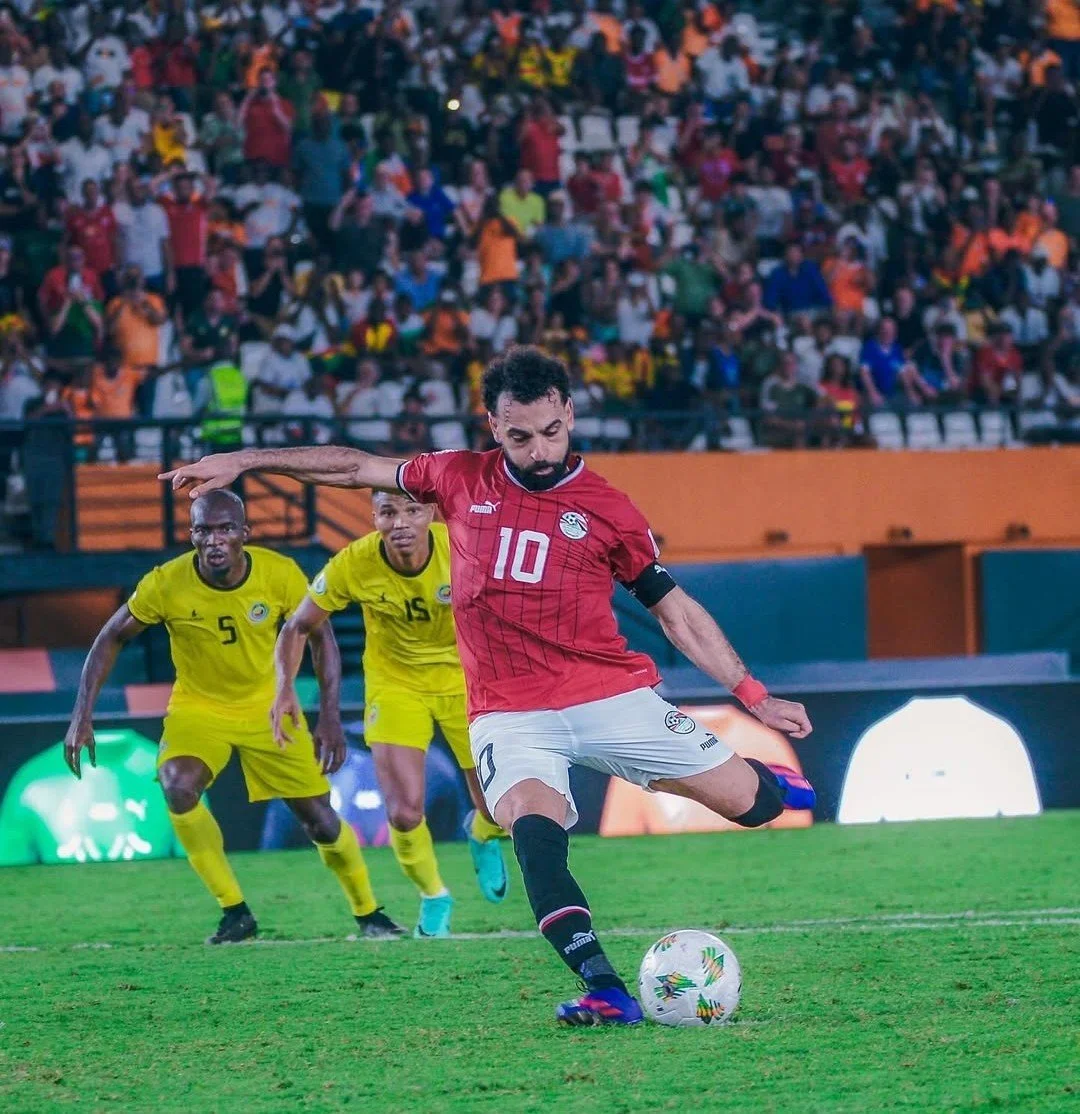
Egypt’s Salah has one more shot at making a name on the world stage. (Photo credit: Bismark Nii Kojo Adjei)
Hossam Hassan and Al Ahly's Influence
Few figures loom larger over Egyptian football. As a player, Hassan became a symbol of longevity, competitiveness and national pride. His appointment as manager was as much an emotional decision as a footballing one. Hossam Hassan’s twin brother, Ibrahim, is the director for the national team.
But sentiment alone does not secure qualification.
Egypt’s squad remains heavily influenced by Al Ahly, the country’s dominant club and a perennial contender in African football. More than a third of the squad either currently plays for or developed through the Cairo giants, giving Hassan a core of players already accustomed to winning together.
Under Hassan, Egypt have developed a defensive discipline that has often been missing in previous cycles. Their World Cup qualifying campaign was built on organisation, concentration and an ability to limit opponents' opportunities.
Only one goal conceded from open play throughout qualification speaks to a side that understands its responsibilities without the ball. The discipline coupled with electric transition can be brutal for unsuspecting opponents. That defensive foundation could prove invaluable at the World Cup.
International tournaments are rarely won through attacking brilliance alone. They are often decided by a team's capacity to remain compact, survive difficult moments and minimise mistakes.
Egypt arrive with those qualities intact.
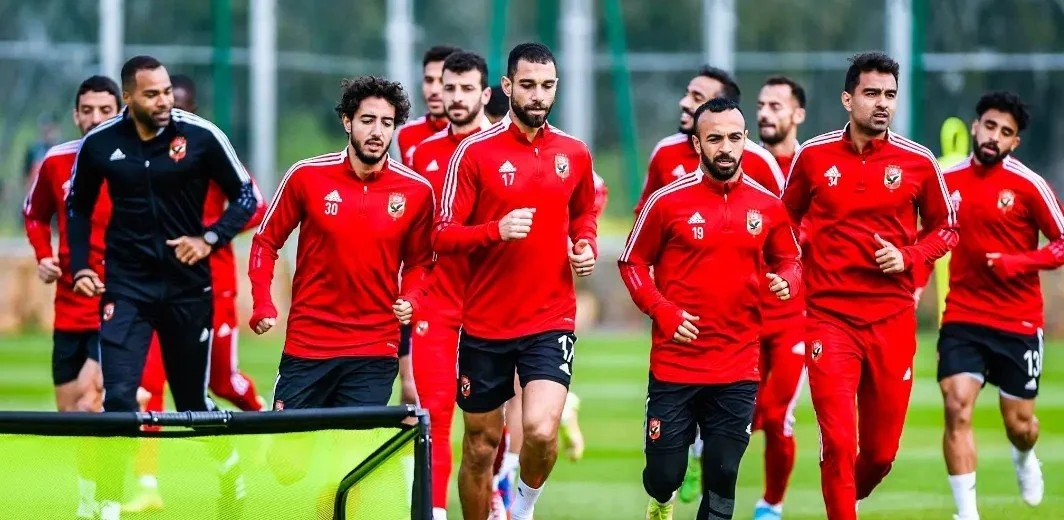
Cairo’s Al Ahly: Successful in Africa on and off the pitch. (Photo credit: Fernando Abalo)
Marmoush and the Future
If Salah remains Egypt's defining footballer, Omar Marmoush may be their most important.
His emergence gives the Pharaohs something they have lacked for years: a second attacker capable of deciding matches at the highest level.
Marmoush stretches defences, attacks space aggressively and creates uncertainty. His presence prevents opponents from focusing exclusively on Salah and offers Egypt a route into the post-Salah era.
The future may belong to Marmoush. Egypt need him now.
Finding Creativity
The central question facing Egypt is not whether they can defend. It is whether they can create.
Salah remains the team's most gifted attacker and the player opponents fear most. Trezeguet continues to offer directness and experience from wide positions. Marmoush provides pace, movement and unpredictability.
Individually, the pieces are there. The challenge lies in assembling them into a coherent attacking structure.
In qualifying, Egypt were able to rely on moments of individual quality. At the World Cup, those moments become harder to find. Defensive lines are organised. Space disappears quickly.
The Pharaohs will need more than isolated flashes of brilliance.
Much may depend on the relationship between Marmoush and Salah. Both prefer drifting inside from wide starting positions creating overloads between the touchlines rather than hugging the touchline. The challenge for Hassan is ensuring those movements complement rather than duplicate one another.
The overall success of their tournament may depend on whether Hassan can find the balance between caution and creativity.
Too much conservatism risks wasting the talents available to him.
Too much ambition could undermine the defensive platform that has brought Egypt this far.
Pathway in Group G
Belgium, Iran and New Zealand present a group filled with possibility.
Belgium remain dangerous, but unlike previous iterations led by Eden Hazard, Kevin De Bruyne, and Romelu Lukaku, this squad arrives without a clearly established hierarchy. Talent remains abundant; certainty does not.
Iran bring tournament experience and defensive organisation. They have consistently proven difficult to break down and will expect every match to be fiercely contested.
New Zealand complete the group as dangerous outsiders. Their physicality, structure and collective discipline make them difficult opponents, particularly in matches where margins are small.
For Egypt, progression is achievable.
Unlike some African representatives who find themselves confronting immediate heavyweights, the Pharaohs enter a group where qualification is a realistic expectation rather than an ambitious dream.
That opening brings its own pressure.
Anything less than a place in the knockout stages would feel like another missed chance.
A Chance to Leave a Mark
Egypt arrive in North America carrying familiar ambitions and unfamiliar possibilities.
Their defensive record suggests they can compete. Their attacking talent suggests they can progress.
Hossam Hassan has supplied organisation. Omar Marmoush offers a glimpse of the future. Mohamed Salah remains the figure around whom everything revolves.
For decades, Egypt have dominated African football while searching for relevance on the global stage.
This group has a platform in 2026.
The question is not whether Egypt can compete at the World Cup.
It is whether they can finally leave a mark on it.
Sources:
Africa is a Country, The twins who shaped Egyptian football, Ahmed Assem, 4 January 2026
Photo Credits:
Mohamed Salah penalty, Bismark Nii Kojo Adjei, 14 January 2024 - Photo courtesy of Bismark Nii Kojo Adjei
Al Ahly training, 7 February 2023 Photo courtesy of Fernando Abalo
Video Credits:
John Walker, UEFA Licensed Coach and Scout, 26 May 2026 via Twitter @johnwalker_1986
All photos are used with permission. All rights reserved to the creator.

Support PSP Media
If this article resonated with you, consider supporting PSP Media.
Every contribution helps support independent research and reporting.