
The 48-Team World Cup Didn't Settle the Expansion Debate. It Changed the Question.
By Nii Wallace-Bruce
When FIFA expanded the World Cup to 48 teams, the argument appeared deceptively simple.
Supporters spoke of opportunity. Critics warned of dilution. Both assumed that the tournament itself would eventually produce a verdict.
Instead, the first expanded World Cup has complicated almost every assumption.
The group stage delivered fresh stories, unfamiliar flags and genuine jeopardy. Smaller nations won points.
Traditional powers looked vulnerable. Several debutants proved they belonged on football's biggest stage. Then the knockout rounds arrived.
Suddenly, the conversation shifted.
Qualification Is Easier. Progression Isn’t
The Round of 32 did not expose the expansion as either triumph or failure.
It revealed something more interesting: qualification and competitiveness are no longer measuring the same thing.
That distinction may define this era of World Cups. Expansion has always been presented as a development project as much as a sporting one.
FIFA did not simply add places because every confederation had demonstrated equivalent strength. It expanded because football's geography demanded broader representation.
That has consequences.
West Asia endured perhaps the tournament's harshest reckoning. Jordan, Uzbekistan, Qatar, Iran, Iraq, and Saudi Arabia all departed in the group stage without recording a single victory. Qualification represented remarkable national milestones, but once the tournament accelerated, none established sustained competitive footing.
Oceania experienced a familiar reality.
New Zealand reached the finals carrying the hopes of an entire confederation yet ultimately discovered that qualification and competitiveness remain separated by a considerable distance. The Oceania champions were organised and committed, but rarely looked capable of dictating matches against stronger opposition.
CONCACAF exposed a different imbalance.
Strip away the three hosts and the remaining qualifiers accumulated only a single point between them (Curacao).
The confederation remains simultaneously wealthy and uneven; home to some of the world's most developed football ecosystems and others still searching for consistency. Expansion magnified that divide rather than disguising it.
These outcomes will inevitably fuel arguments against further expansion in 2030.
Yet they should not be interpreted as evidence that places were undeserved. That assumes FIFA's primary objective was to reward existing excellence. It was not.
Expansion has always been an exercise in balancing competing ambitions: geographical inclusion against sporting merit, long-term development against immediate performance, participation against progression. Those tensions have not disappeared.
They have simply become visible.
Europe's supposed decline also proved more complicated than the early headlines suggested.
Several traditional powers stumbled through the group stage, reinforcing familiar narratives about the narrowing gap between football's established elite and the rest.
Yet as the tournament progressed, UEFA's structural advantages reasserted themselves.
Squad depth, tactical continuity and experience of knockout football ensured Europe remained heavily represented in the latter rounds.
Rumours of the continent's competitive demise, as ever, were premature
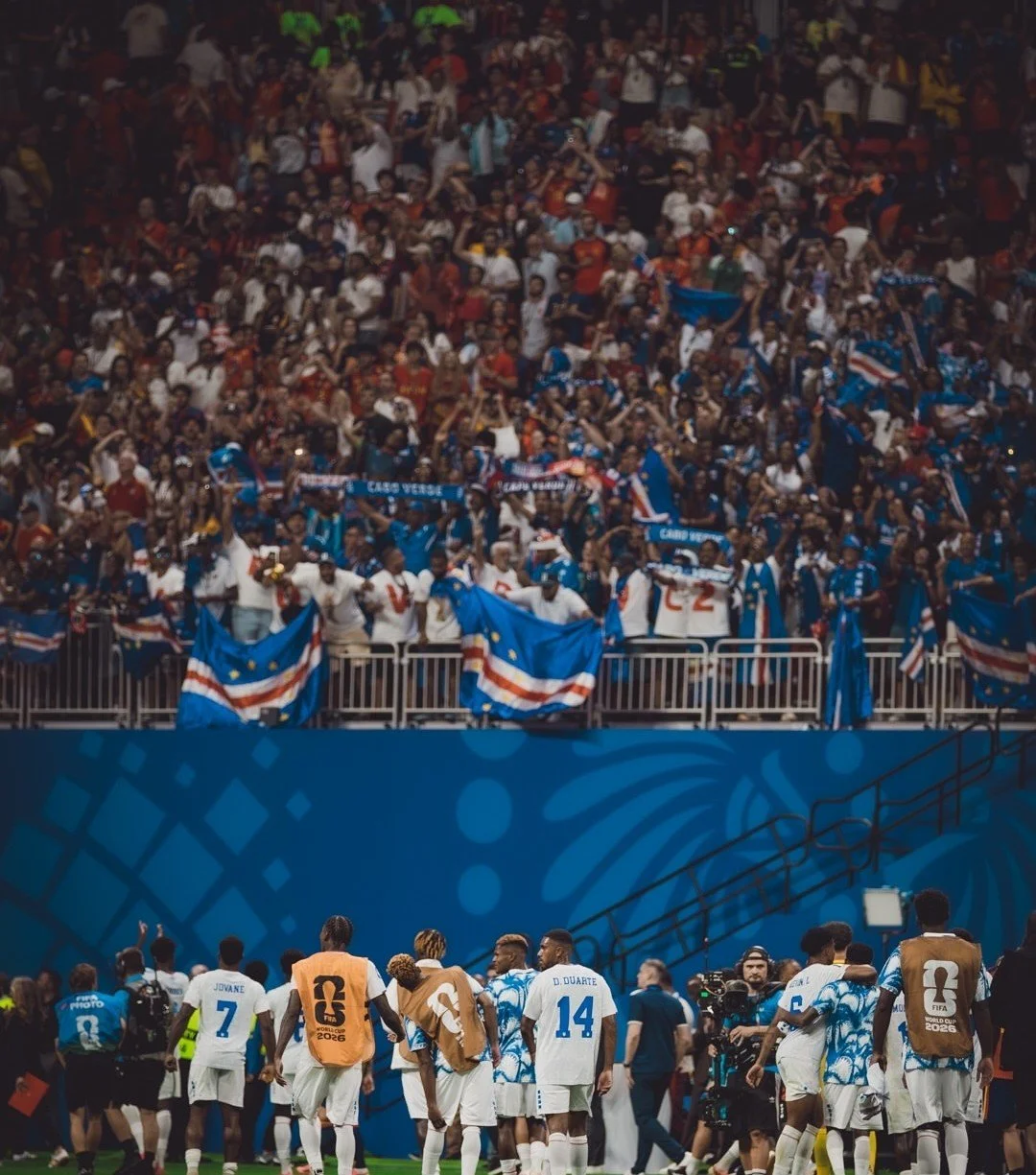
Cabo Verde’s run to the Round of 32 was a standout performance by a debutant team. (Photo Credit: Grzegorz Wajda)
Africa Became Expansion's Greatest Contradiction
No confederation illustrated the complexity of expansion more vividly than Africa.
On paper, the group stage looked like validation. Nine advanced into the Round of 32, a level of representation unimaginable under previous tournament formats.
For several weeks, CAF appeared to embody FIFA's vision. Then came the knockout rounds.
Only two African nations survived the first stage. A reminder of how unforgiving knockout football remains.
The establishment wasn't disappearing after all.
Early shocks created the impression that the traditional hierarchy was finally collapsing. By the quarter-finals, however, much of the old order had reassembled.
The expanded field had widened access to the tournament, but it had not fundamentally redistributed power.
The game's established nations still possessed the qualities that matter most once knockout football begins: depth, continuity and the experience to manage decisive moments.
Expansion did not manufacture that reality.
It merely exposed it more clearly.
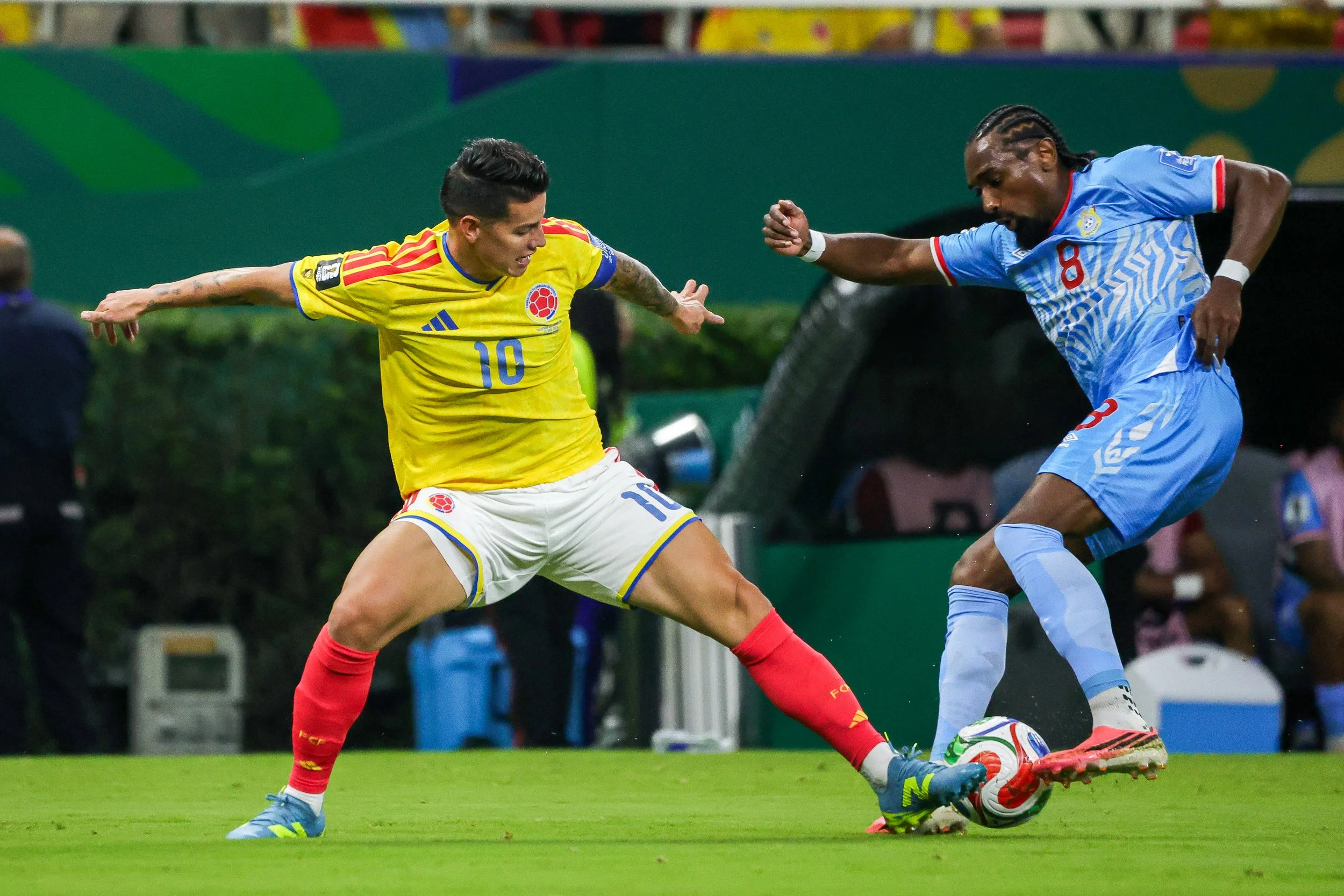
Samuel Moutassamy (#8) and DR Congo went from Intercontinental Playoffs to the Round of 32, challenging Colombia and others along the way. (Photo credit: FCF)
The World Cup’s New Competitive Pyramid
There is a temptation, after every World Cup, to construct sweeping narratives from a handful of knockout matches.
This tournament deserves greater patience. The 48-team format represents a systemic change rather than a statistical one.
The debate before 2030 is therefore unlikely to centre on whether the World Cup should remain a 48-team tournament. That battle has effectively been settled.
Instead, attention will shift to how those 48 places are distributed.
UEFA will argue that competitive depth justifies additional berths.
CAF will point to its breadth of competitiveness.
AFC may struggle to defend its expanded allocation after a difficult tournament, while CONCACAF faces questions about whether hosting masked underlying weaknesses. Expansion may be permanent. Its geography is not.
One tournament cannot establish whether expansion has created stronger global competition or merely enlarged its perimeter.
Knockout football has always compressed meaning.
One mistake, one refereeing decision, one penalty shootout can reshape perceptions of an entire confederation.
That volatility becomes even more pronounced when more nations are entering the tournament through broader qualification routes.
The first expanded World Cup therefore leaves us with an unresolved question. Did expansion succeed because more teams proved competitive?
Or did more teams appear competitive because the structure itself widened the boundaries of competitiveness?
Those are not the same argument. Nor do they necessarily produce the same answer.
Perhaps the real lesson of 2026 is that the World Cup now contains multiple competitive tiers operating simultaneously.
Qualification is no longer the definitive benchmark it once was.
Survival is.
Progression is.
Sustained competitiveness under knockout pressure is.
Only future tournaments will reveal whether today's newcomers steadily climb those thresholds or whether the Round of 32 becomes the new ceiling for much of the expanded field.
For now, the evidence remains incomplete.
For nearly a century, qualifying for the World Cup represented football’s ultimate threshold.
Expansion has lowered that barrier without diminishing the difficulty of what comes next. The tournament no longer asks simply who belongs. Increasingly, it asks who can stay.
The expanded World Cup has not settled football's oldest argument.
It has simply given it a more complicated vocabulary.
Photo Credits:
Cabo Verde fans, Grzegorz Wajda, 15 June 2026 - Photo courtesy of Grzegorz Wajda and Maciej Rogowski
23 June 2026 - Photo courtesy of Federación Colombiana de Fútbol
All photos are used with permission. All rights reserved to the creator.

Support PSP Media
If this article resonated with you, consider supporting PSP Media.
Every contribution helps support independent research and reporting.