
Croatia’s Blueprint: What Panama Can Learn From Football’s Ultimate Overacheivers
By Nii Wallace-Bruce
A Meeting of Two Journeys
Toronto has always been a city shaped by movement.
People arrive carrying languages, histories and identities before spending years deciding what to preserve and what to become.
It was an appropriate setting for a World Cup meeting between two nations whose football stories are rooted in similar questions.
Croatia arrived carrying expectation. Panama arrived carrying possibility.
One knows exactly who it is. The other is still deciding.
Seven days after the final whistle, the result matters less than what the fixture represented. It brought together two nations at very different stages of football development. Croatia arrived as one of the world's most consistent overachievers. Panama arrived searching for the next step after establishing themselves among CONCACAF's emerging powers.
The contrast offered something more valuable than ninety minutes of football.
It offered a blueprint.
Croatia's Inheritance
Croatia's football record should not exist.
A nation of fewer than four million people has reached a World Cup final, claimed two bronze medals and become a fixture in the latter stages of major tournaments.
Nations of that size are expected to produce one exceptional generation. Croatia has produced several.
The miracle is no longer the success itself.
The miracle is the consistency.
That consistency did not begin with Croatia's independence. It began much earlier.
Croatia inherited more than talented players from the former Yugoslavia. It emerged from an established football ecosystem built on renowned clubs such as Dinamo Zagreb and Hajduk Split, sophisticated coaching education and one of Europe's richest tactical traditions.
The Yugoslav school exported its ideas around the world, with its coaches leading national teams at World Cups across North America, Asia and Africa. Croatian figures including Miroslav Blažević, Slaven Bilić and Zlatko Dalić became custodians of that same philosophy after independence.
Players such as Zvonimir Boban, Davor Šuker, Robert Prosinečki and Aljoša Asanović became symbols of a new nation, but they were products of a system that already knew how to produce elite footballers.
Independence gave that system a new purpose.
Football became intertwined with nation-building. Every tournament offered Croatia another chance to define itself internationally.
The chequered shirt became synonymous not only with resilience and technical excellence, but with Croatia itself.
That continuity has become Croatia's greatest competitive advantage.
Panama's Climb
Panama's path could hardly be more different.
Where Croatia inherited decades of football tradition, Panama has spent much of the past generation building its football identity.
For much of the twentieth century, baseball occupied a more prominent place in the national sporting landscape.
Football's rise has been comparatively recent, driven by growing investment in coaching, youth development and domestic competition.
Qualification for the 2018 FIFA World Cup transformed perceptions of what was possible. It validated years of progress and established Panama as more than an occasional regional challenger. Further, Thomas Christiansen has been head coach of the national team since 2020. That continuity and patience has underpinned the rise of Los Canaleros.
Deep runs in the Gold Cup and CONCACAF Nations League are proof.
Since then, the task has changed.
Croatia demonstrates what Panama's next twenty years might require: not another golden generation, but a system with the ability to produce them repeatedly.
That challenge extends beyond the national team. It depends on stronger domestic competitions, improved player pathways and producing footballers capable of succeeding abroad before returning to strengthen the national side. It will take time for the Primera División (LPF) to become a pipeline of talent for Los Canaleros. Christiansen hopes that this World Cup experience will enable some Panamanian players to find clubs with more playing time, improved training facilities, and more competitiveness.
Panama is still constructing those foundations.
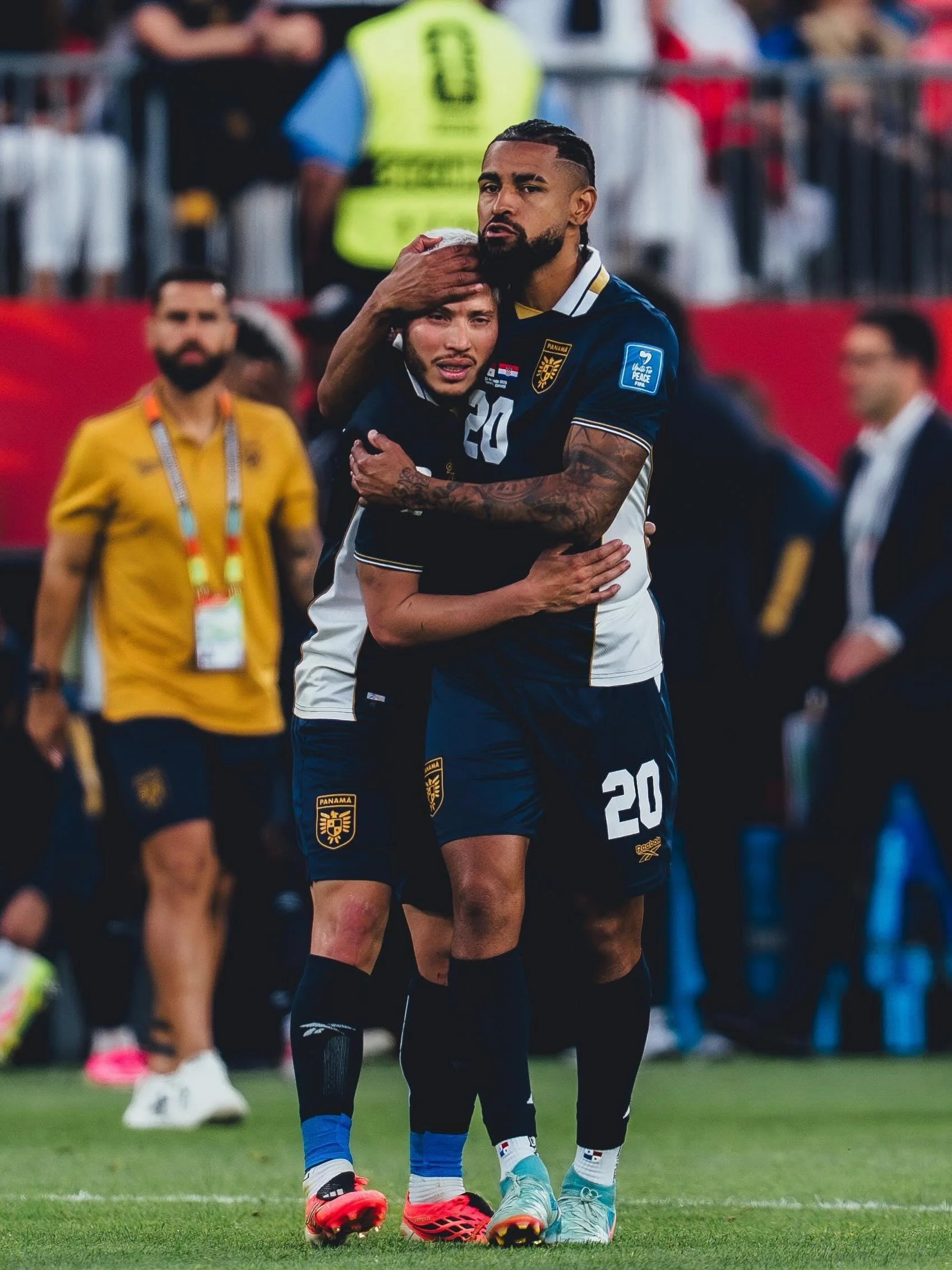
Cristian Martinez (left) will have to lead the journey to 2030 without Anibal Godoy (right) who is retiring after this World Cup (Photo credit: Bahho Kara)
The Blueprint
That is why Croatia's story resonates far beyond Europe.
Panama are not chasing Croatia's achievements. They are chasing Croatia's certainty.
Talent matters, but talent alone rarely sustains success across generations. Croatia's greatest export is not world-class midfielders. It is institutional memory.
Every generation takes on a football identity. Players understand the technical demands of the national team long before they receive their first call-up.
Coaches work within a recognisable philosophy. Domestic clubs continue producing players capable of competing at Europe's highest levels while remaining central to the national team .
It becomes part of the DNA. Luka Modrić's generation inherited those standards. Mateo Kovačić and Ivan Perišić reinforced them. The next generation will be expected to uphold them. Kovačić and Zlatko Dalić both described Luka Modrić as a role model for young Croatians in terms of preparation, work ethic, and conduct for the national team.
The names change.
The standards do not.
Population size becomes less significant when development is consistent.
That is the lesson Croatia offers every emerging football nation.
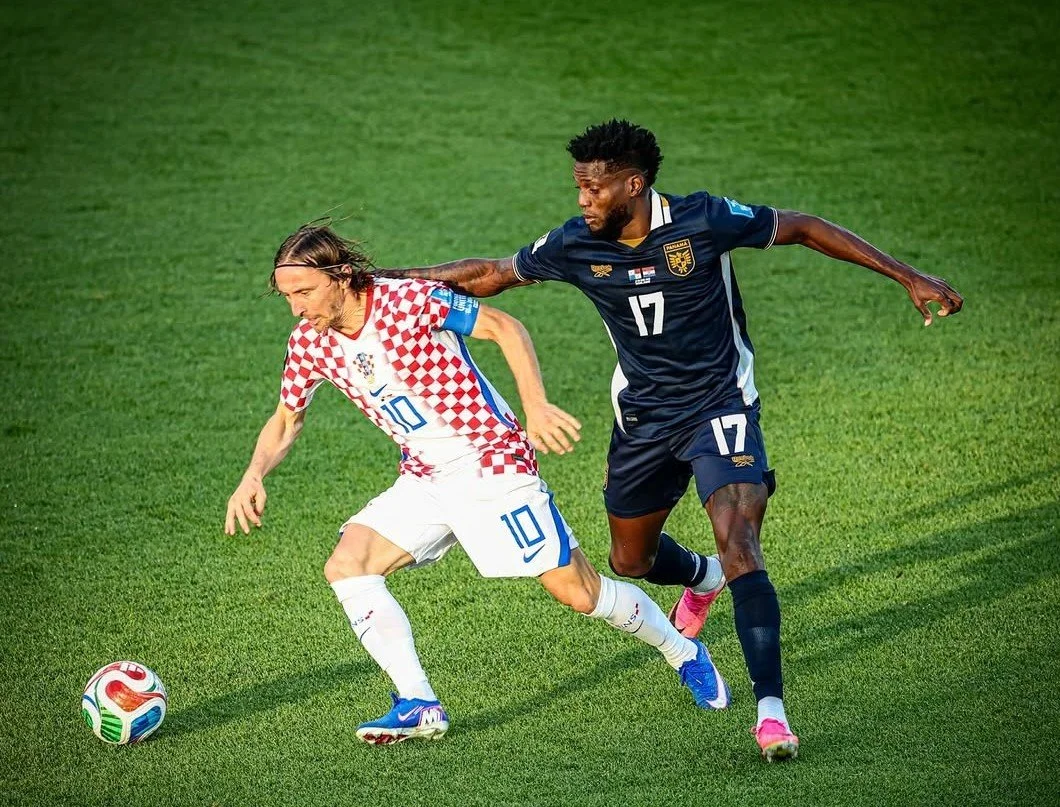
The evergreen Luka Modrić has upheld the Croatian national team standard for over 20 years and 200 international caps. (Photo credit: Cheick Haidara)
Where Panama Goes Next
That was the significance of this meeting in Toronto.
Croatia arrived defending one of modern football's most remarkable sporting stories. Panama arrived trying to begin one.
On the pitch, Croatia displayed the composure, technical quality and accumulated experience that have defined them for three decades. Panama showed the athleticism, resilience and ambition of a nation still climbing. In the end, Ante Budimir’s finish made the difference as the only goal of the game.
The comparison mattered more than the result.
Croatia have spent thirty years proving that small nations can compete with football's traditional powers when identity, coaching and development reinforce one another.
Panama's challenge is different.
Its breakthrough has already happened. Now comes the harder part.
Building a sustainable football culture that can survive beyond one successful generation.
Few cities could have staged that encounter more appropriately.
Toronto has long been shaped by successive waves of immigration, including Croatian and Panamanian communities whose identities now coexist within the same neighbourhoods.
For one evening, their football stories did too.
Croatia left carrying a blueprint refined over decades. They will return to Toronto for a Round of 32 match against Portugal.
Panama left with a clearer picture of what it must become. Croatia offered more than an opponent. They offered a glimpse of what football looks like once identity becomes tradition.
Panama's challenge is no longer reaching the world stage. It is ensuring that future generations arrive expecting to belong there.
Sources:
Thomas Christiansen, Panama Head Coach, press conference, 23 June 2026
Mateo Kovačić, Croatia player, press conference, 22 June 2026
Zlatko Dalić,Croatia Head Coach, press conference, 22 June 2026
FIFA Training Centre, Panama 0 Croatia 1 - POST MATCH SUMMARY REPORT, 23 June 2026
Photo Credits:
Godoy consoling Martinez, Bahho Kara, 23 June 2026 - Photo courtesy of Bahho Kara
Modric and Fajardo, Cheick Hardara, 23 June 2026 - Photo courtesy of Cheick Hardara
All photos are used with permission. All rights reserved to the creator.

Support PSP Media
If this article resonated with you, consider supporting PSP Media.
Every contribution helps support independent research and reporting