
The Referee Has Become Part of Football's Evolution
By Nii Wallace-Bruce
Every World Cup leaves behind refereeing moments that dominate debate. A disputed penalty. A missed dismissal. A VAR review replayed from every angle.
Yet those incidents risk obscuring the tournament’s most significant officiating story.
In 2026, FIFA has quietly begun asking referees to change not simply the outcome of individual decisions, but the pace of the game itself.
Under the leadership of Pierluigi Collina and FIFA's refereeing department, officiating has increasingly become an exercise in game management rather than simple law enforcement. In practice, this approach extends beyond identifying infringements.
It is to maximise effective playing time, reduce unnecessary interruptions and preserve the tournament's natural intensity.
Viewed through that lens, many of the tournament's most noticeable refereeing trends no longer resemble isolated rule changes.
Instead, they reveal a coordinated effort to reshape how the game is played.
The Game Has Become Faster Because the Ball Is Staying in Play
The philosophy begins with a straightforward premise: football is most entertaining when it is being played.
Several procedural changes introduced ahead of the tournament reflect that objective.
Referees have enforced five-second restarts more consistently, substitutions have been expedited, players receiving on-field medical treatment have generally been required to spend a minute off the pitch before returning, and unnecessary delays have been managed far more proactively than in previous competitions.
Taken individually, none of these measures fundamentally alters the Laws of the Game.
Together, however, they reduce the number of avoidable stoppages that have gradually crept into elite competition over the past decade.
Collina noted that across 72 group matches, there were only fifteen time violations involving goal kicks (4) and throw-ins (11).
The intention is not punitive. FIFA has consistently framed these initiatives as mechanisms to protect the spectacle rather than sanction players.
Every quicker restart, every efficiently managed substitution and every reduction in gamesmanship contributes to longer periods of uninterrupted gameplay.
The cumulative effect has emerged throughout the group stage.
Matches have developed greater continuity, allowing tactical patterns to emerge more naturally and forcing teams to sustain concentration over longer passages of play.
The cumulative effect extends beyond aesthetics.
Longer passages of uninterrupted play place greater physical demands on players, reward teams capable of sustaining high pressing and reduce opportunities for opponents to disrupt momentum through gamesmanship.
A Lighter Whistle Reflects a Deliberate Philosophy
Similar thinking has shaped referees' interpretation of physical contests.
Officials have shown a greater willingness to allow challenges that might previously have resulted in routine free kicks.
Minor contact has more often been judged insufficient to halt play, while referees have demonstrated greater confidence in applying advantage whenever attacking opportunities remain alive.
That does not represent a relaxation of player safety. Dangerous challenges continue to attract firm sanctions.
Rather, the threshold for interrupting play has shifted, favouring continuity over frequent whistles.
As a result, matches have unfolded with greater continuity, longer attacking sequences ,and more transitional moments—characteristics that have also emerged as defining tactical themes of the tournament. That connection is significant.
FIFA's Technical Study Group has highlighted the increasing importance of transitions in the modern game, identifying rapid attacks following turnovers as one of the sport's dominant tactical trends. The refereeing philosophy complements that evolution almost perfectly. Coaches seek opportunities to exploit transitional moments.
Referees are increasingly allowing those moments to develop instead of stopping them at the first sign of minor contact.
The technical report and the refereeing report ultimately describe the same tournament from different perspectives. One analyses how teams are playing. The other explains why those tactical patterns are being allowed to flourish.
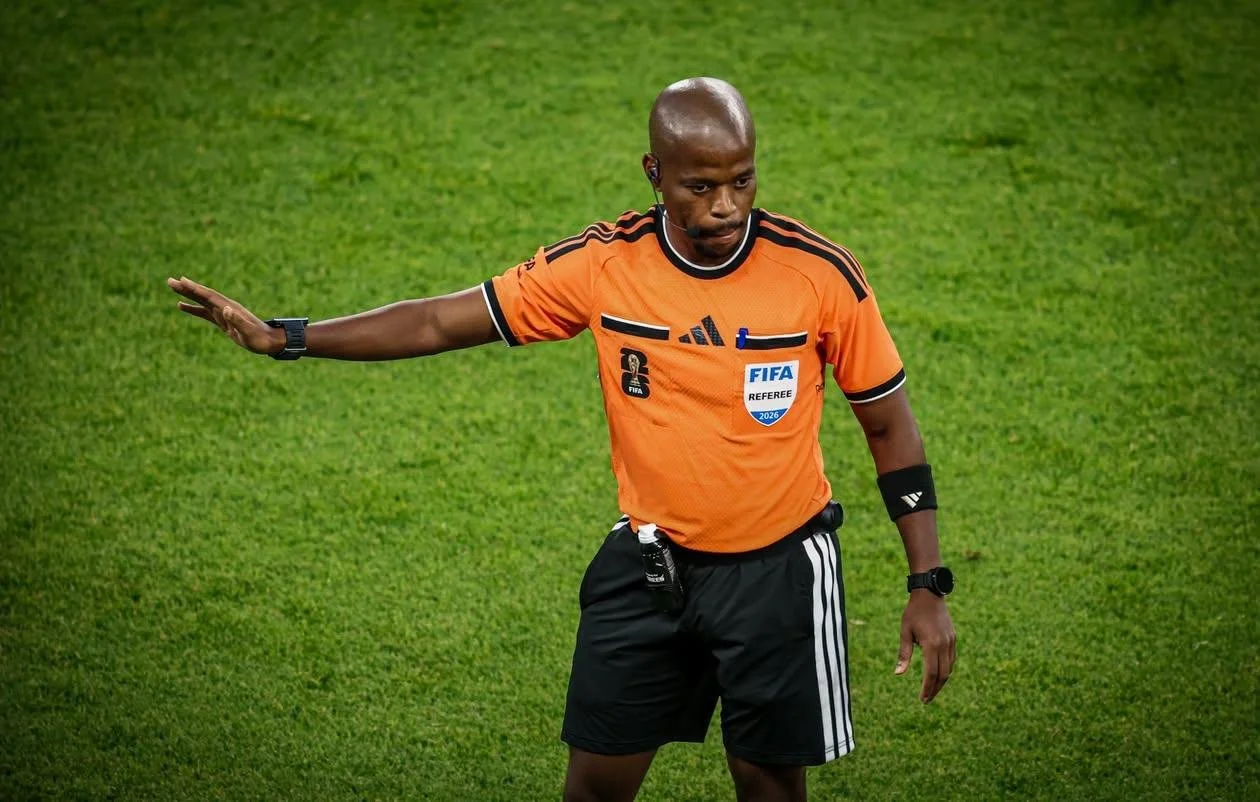
(Chieck Hardara)
Time-Wasting Is Becoming a Losing Strategy
The clearest evidence that FIFA's approach is influencing behaviour rather than merely policing it comes from its efforts to discourage time-wasting.
Pre-tournament discussions centred on whether stricter enforcement would generate a surge in disciplinary action. Instead, the opposite has occurred.
Only a small number of violations have required formal intervention despite dozens of matches being played.
That outcome reflects successful behavioural adaptation. Players have adjusted remarkably quickly to the expectations established by referees.
Delaying restarts has become increasingly ineffective because officials now address such tactics consistently and predictably.
This is the most meaningful form of officiating success. Rules become most effective when they no longer require constant enforcement because participants have already modified their behaviour.
Rather than producing confrontation, the tournament has illustrated how consistent application can quietly alter long-established habits.
The Referee Is Becoming an Elite Athlete
Perhaps the least visible transformation has occurred away from the stadium.
Modern international referees now prepare using methods increasingly comparable to those employed by elite footballers.
Physical conditioning, sports science and performance analysis have become central components of tournament preparation.
A FIFA representative told PSP Media that the organization assembled a support structure comprising more than 150 referees and assistant referees alongside approximately 50 specialist staff dedicated to their preparation and welfare during the World Cup.
A multidisciplinary medical team oversees every aspect of physical readiness, including sports psychophysiology, physiotherapy and individual performance monitoring.
Preparation begins months before the opening match. Referees selected for the tournament underwent comprehensive medical screening that included blood analysis, biomechanical assessments, bioimpedance and hydration testing, alongside psychophysiological evaluations designed to optimise each official's condition individually.
Training programmes are tailored rather than standardised, recognising that every referee faces different physical demands and performance requirements.
GPS monitoring, extensive video review, structured recovery protocols and individual conditioning plans now form part of everyday preparation.
The objective is clear: officials are no longer simply expected to keep pace with elite footballers. They now prepare as elite athletes.
That evolution illustrates the demands of the contemporary game. As the elite level becomes quicker, more tactically complex and increasingly transitional, referees require the physical capacity and mental sharpness to make accurate decisions while covering greater distances at higher intensity than ever before.
A Quiet Revolution in Plain Sight
The game rarely changes overnight. More often, incremental adjustments accumulate until one tournament makes their collective significance impossible to ignore.
The 2026 FIFA World Cup shows refereeing has reached such a moment.
The conversation has inevitably gravitated towards individual incidents, but those episodes risk obscuring the broader transformation unfolding beneath them.
FIFA's officials are being asked to do more than interpret the Laws of the Game.
They are being encouraged to shape the game's tempo, preserve its rhythm and enhance its spectacle without becoming its protagonists.
Whether that philosophy survives beyond this tournament remains to be seen. If it does, the lasting legacy of the 2026 World Cup may not be remembered for a controversial decision or a dramatic VAR review, but for the moment officiating evolved from simply controlling the matches to actively helping define how the modern game is played.