
The Names Change. The Standards Stay the Same: Why Portugal and Croatia Keep Producing Greatness
By Nii Wallace-Bruce
A Farewell That Isn’t Really About Farewells
The instinct, in the late noise of a World Cup knockout night in Toronto, is to write about endings.
Cristiano Ronaldo. Luka Modrić. Two figures so large they distort the frame itself. One last tournament.
One last walk into the tunnel under lights that feel slightly softer than they used to.
The standing ovation comes easily, almost automatically now, as if football has developed its own ritual language for saying thank you.
Thursday’s Round of 32 fixture invited that reading again: the sentimental gaze, the idea of closure, the temptation to see history folding neatly into farewell.
But it never really is about endings with nations like Portugal and Croatia.
It is about succession.
Great Nations Don’t Replace Legends
Most countries get one golden generation, if they are fortunate. A brief alignment of talent, coaching, timing, and belief.
Then the cycle breaks, and the story becomes nostalgic rather than continuous. The great football nations behave differently.
They do not depend on extraordinary individuals to carry identity. They depend on systems that survive them.
That is why Portugal and Croatia feel so structurally distinct when the biggest names fade from view. The shirt changes.
The principles do not.
Portugal’s Line Never Breaks
Portugal’s story is often told through its icons, but it begins earlier—in something less visible and more durable: belief.
Eusébio, long before the modern machinery of Portuguese football, gave the country its first global football imagination.
The 1966 World Cup did not just produce goals—it produced possibility. A nation learned, permanently, that it could compete at the highest level.
Decades later, that belief was institutionalised rather than episodic.
The 1991 Youth World Cup-winning generation did not immediately translate into senior dominance, but it confirmed something deeper: Portugal’s talent was no accident.
Then came the figures who defined eras rather than moments.
Luís Figo carried the nation into modern European elite football with a blend of elegance and authority that made Portugal feel permanently present in big tournaments. Cristiano Ronaldo followed, not as a replacement for Figo, but as an escalation of expectation itself—an athlete who turned individual excellence into a structural assumption.
Around them, and after them, the production line did not slow. Nani represented continuity. João Moutinho the tactical intelligence of a maturing system.
And in the present cycle, Vitinha, João Neves, and Nuno Mendes suggest something even more significant: a national team no longer waiting for a saviour, but rotating responsibility across a collective.
The foundation is not accidental. Sporting CP, SL Benfica, and FC Porto operate as three pillars of a single developmental ideology.
Different cities, different identities, but a shared understanding of technical education, positional intelligence, and competitive readiness.
Portugal no longer produces isolated stars—it produces iterations of itself.
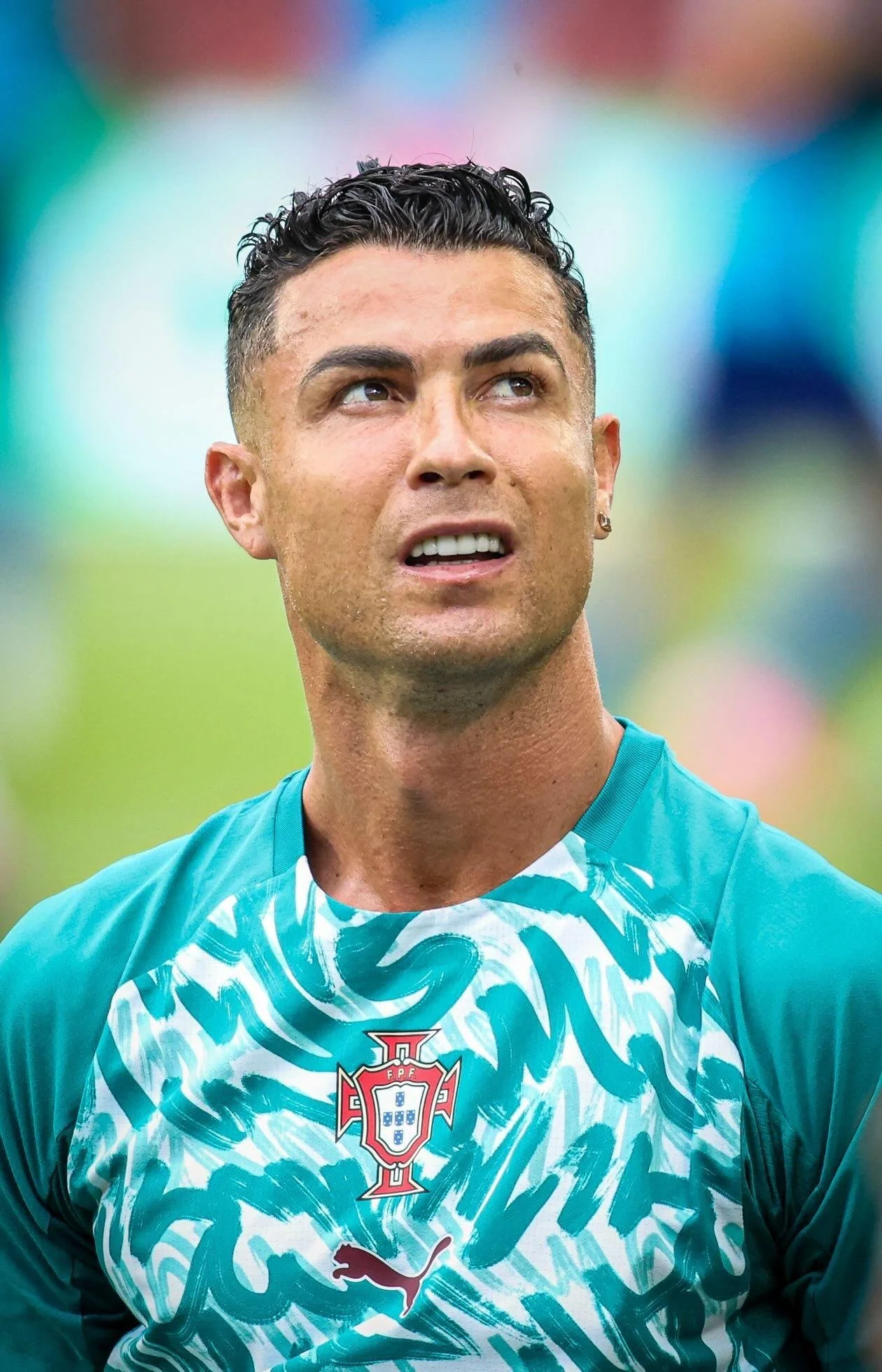
Cristiano Ronaldo will face life after international football after this summer (Photo credit: Cheick Hardara)
Croatia’s Greatest Inheritance
Croatia’s football identity cannot be separated from what it inherited, refined, and preserved after the dissolution of Yugoslav football’s wider ecosystem.
The old system—rooted in Dinamo Zagreb and Hajduk Split, and a coaching culture that prized technique, intelligence, and improvisation—created a football language that survived political rupture. What remained was not structure in the administrative sense, but structure in the educational sense: how players were taught to think.
That lineage runs through the modern era almost uninterrupted.
Zvonimir Boban gave Croatia its early international identity—combative, intelligent, expressive.
Davor Šuker provided the clinical authority that defined their 1998 emergence as a global force.
And Luka Modrić, spanning generations and systems, refined that tradition into something more controlled, more enduring, more quietly dominant.
Now there is already another layer forming beneath him.
Martin Baturina carries the old technical clarity in a modern attacking frame.
Petar Sučić offers midfield intelligence shaped by the same cultural instincts that once produced Modrić.
Not replicas, not successors in a linear sense, but expressions of a footballing expectation normalised over decades.
The crucial point is not that Croatia can produce another Modrić. It is that Croatia knows what the next version must look like.
That is a very different kind of footballing security.
The Pipeline Matters More Than the Superstar
Great players inspire countries. Great systems sustain them. That distinction is everything.
Portugal and Croatia do not rely on bursts of generational brilliance to reset their identity.
They rely on continuity embedded in coaching education, youth national team structures, and club philosophies that align closely with the national game model.
The youth teams are not separate from the senior teams in philosophy. They are earlier versions of them. Players are not “discovered” and adapted late.
They are formed early and refined gradually.
In Portugal, that means technical fluency is non-negotiable. In Croatia, it means intelligence under pressure is embedded from the start.
In both cases, the national team is not a collection of individuals—it is the final stage of a long, shared curriculum.
That is why transitions rarely feel like ruptures.
They feel like updates.
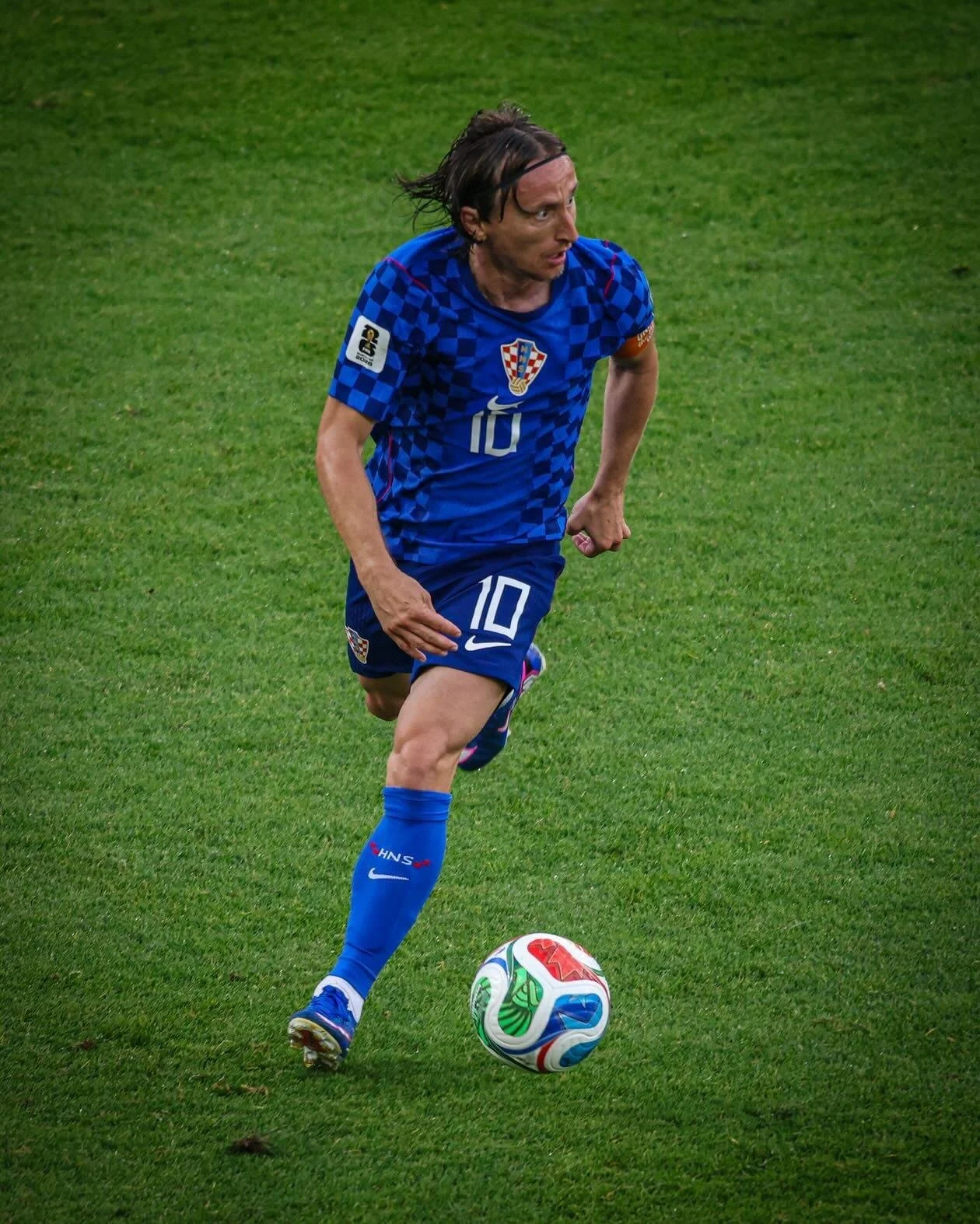
Luka Modrić exits the international stage as Croatia’s most capped and most decorated player of all time (Photo credit: Cheick Hardara)
Toronto’s Two Football Communities
On Thursday in Toronto, the game did not just belong to the players on the pitch. It belonged to the streets around it.
Portuguese bakeries on Dundas West carry more than nostalgia. They carry infrastructure. Sporting CP’s academy presence in Toronto reflects a broader truth: that elite football systems now extend beyond their borders, embedded in diaspora communities that remain connected to Lisbon, Porto, and Zagreb as much as to Ontario.
The same applies to Croatia’s football culture, where youth camps and scouting networks tied to Hajduk Split and Dinamo Zagreb continue to filter players through a shared technical language far from the Adriatic coast. And increasingly, these systems do not only produce players for themselves.
The Canadian men’s national team midfield reflects that reality.
Niko Sigur’s development at Hajduk’s academy feeds into a Croatian football education system that values intelligence and positional discipline.
Stephen Eustaquio’s formative years in Portugal—and later his move to FC Porto—place him within a football culture that prizes structure, technique, and tactical clarity.
On Thursday, this was no longer just a meeting of nations. It was a convergence of footballing pathways that had already crossed borders long before kickoff.
The Real Legacy
Eusébio became Figo.
Figo became Ronaldo.
And Ronaldo, in his final international tournament, did something that is often missed in the mythology: he did not leave a vacuum when going off the field.
He left a structure in motion. A national team that understands itself beyond him.
Boban became Šuker.
Šuker became Modrić.
And Modrić, leaves behind a midfield culture already fluent in his language of control, tempo, and resistance to chaos.
This is the quiet achievement that sits beneath the spectacle. The names change. The standards stay the same.
Thursday’s match may ultimately be remembered through the lens of one last appearance, one last bow, one final moment under lights for Luka Modrić.
It will be framed, as it always is with figures of this scale, as an ending.
Yet Portugal and Croatia have spent decades ensuring that no player—however extraordinary—becomes irreplaceable in the structural sense.
Their greatest achievement is not producing legends.
It is producing the conditions for the next one.

Support PSP Media
If this article resonated with you, consider supporting PSP Media.
Every contribution helps support independent research and reporting
Source:
Cristiano Ronaldo, Portugal captain, press conference, 6 July 2026
FIFA Training Centre, Portugal 2 Croatia 1 - POST MATCH SUMMARY REPORT, 2 July 2026
Photo Credits:
Cristiano Ronaldo, Cheick Hardara, 2 July 2026 - Photo courtesy of Cheick Hardara
Luka Modric and Renato Veiga, Cheick Hardara, 2 July 2026 - Photo courtesy of Cheick Hardara
Luka Modric, Cheick Hardara, 2 July 2026 - Photo courtesy of Cheick Hardara
All photos are used with permission. All rights reserved to the creator.