
Panama at the Crossroads: From World Cup Guests to Protagonists
By Nii Wallace-Bruce
The Return to Familiar Horizons
There was celebration the first time. Flags, disbelief, joy without expectation. Eight years on, the tone is different: quieter, more assured, less forgiving.
The language has shifted. Players and staff no longer speak only of experience gained, but of benchmarks to be met. Improvement on 2018 is stated openly, not whispered carefully.
That in itself signals a turning point: underdogs do not usually measure themselves against previous World Cups. They simply hope to survive them.
So the question emerges, gently but persistently: when does an underdog stop being grateful merely to be present?
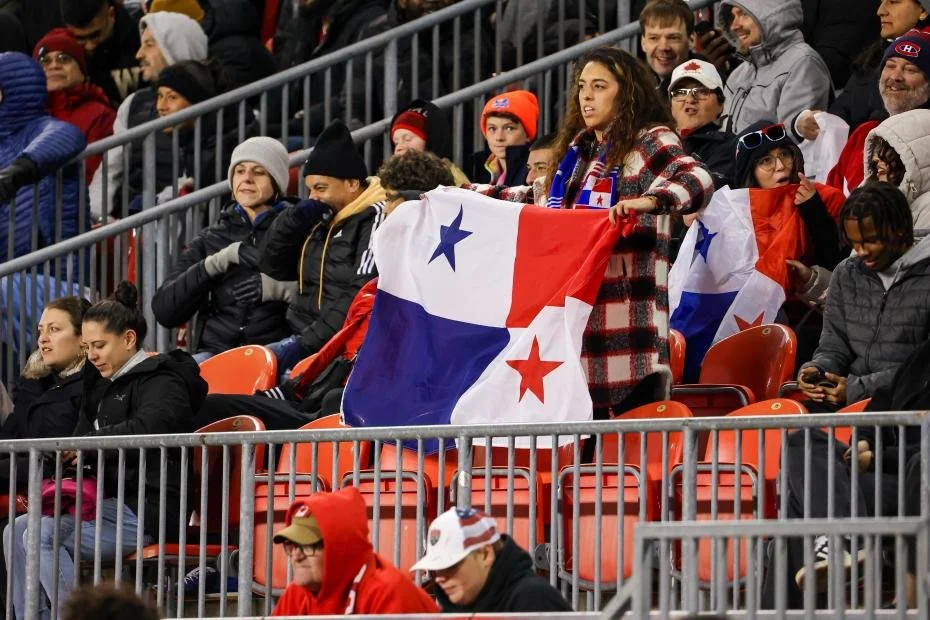
Panamanian fans will be familiar with Toronto Stadium, where Los Canaleros will play two games at World Cup 2026 (Photo credit: Indrawan Kumala)
Christiansen’s Long Project
The tenure of Thomas Christiansen has stretched into unusual international longevity—six years, a lifetime in a job defined by volatility. That stability has not been ornamental.
It has shaped a team capable of reaching consecutive finals in regional competition, with runner-up finishes in both the Gold Cup and Nations League.
Even after the breakthrough Gold Cup result in 2023, Christiansen remarked that there is a long trajectory to winning such a major tournament.
The Dane operates in his own way, without much consideration for outside opinions.
There is structure now. Said structure revolves around patient build-up play and positional rotations, particularly through the wing-backs.
Christiansen's preferred back-three system prioritises composure and spacing over improvisation.
Panama are dangerous aerially and increasingly comfortable in possession, but against opponents such as England they will need defensive discipline in transition.
Patterns. A sense of continuity that once felt absent. Yet international football is not always generous to incremental progress. It prefers rupture, statement, spectacle.
The Shadow of 2018
The memory that still clings most stubbornly is not qualification, but exposure. The 6-1 defeat to England in 2018 remains shorthand for the gulf between ambition and reality.
One of the chief tormentors from that afternoon, Harry Kane, will be in Panama’s near future as the tournament progresses.
That match, more than any victory or qualification, has framed perception since: brave newcomers overmatched by established powers.
It is a narrative Panama continue to carry, even as their performances in CONCACAF suggest a side more composed, more mature.
And yet global recognition lags behind regional credibility.
Regional Strength, Global Doubt
In CONCACAF, they have become persistent. Competitive. Consistent enough to suggest that their place is not accidental.
At present, the region’s three World Cup hosts constitute the “Big Three”, with Panama seeking to add their seat at the table.
This argument has been punctuated by famous victories over the United States in both the Gold Cup and the Nations League semi finals. But outside the region, respect is slower to arrive.
Like opponents such as Ghana and Croatia before their own breakthroughs, Los Canaleros operate in that space where “overachieving” becomes both compliment and limitation.
It implies surprise rather than establishment.
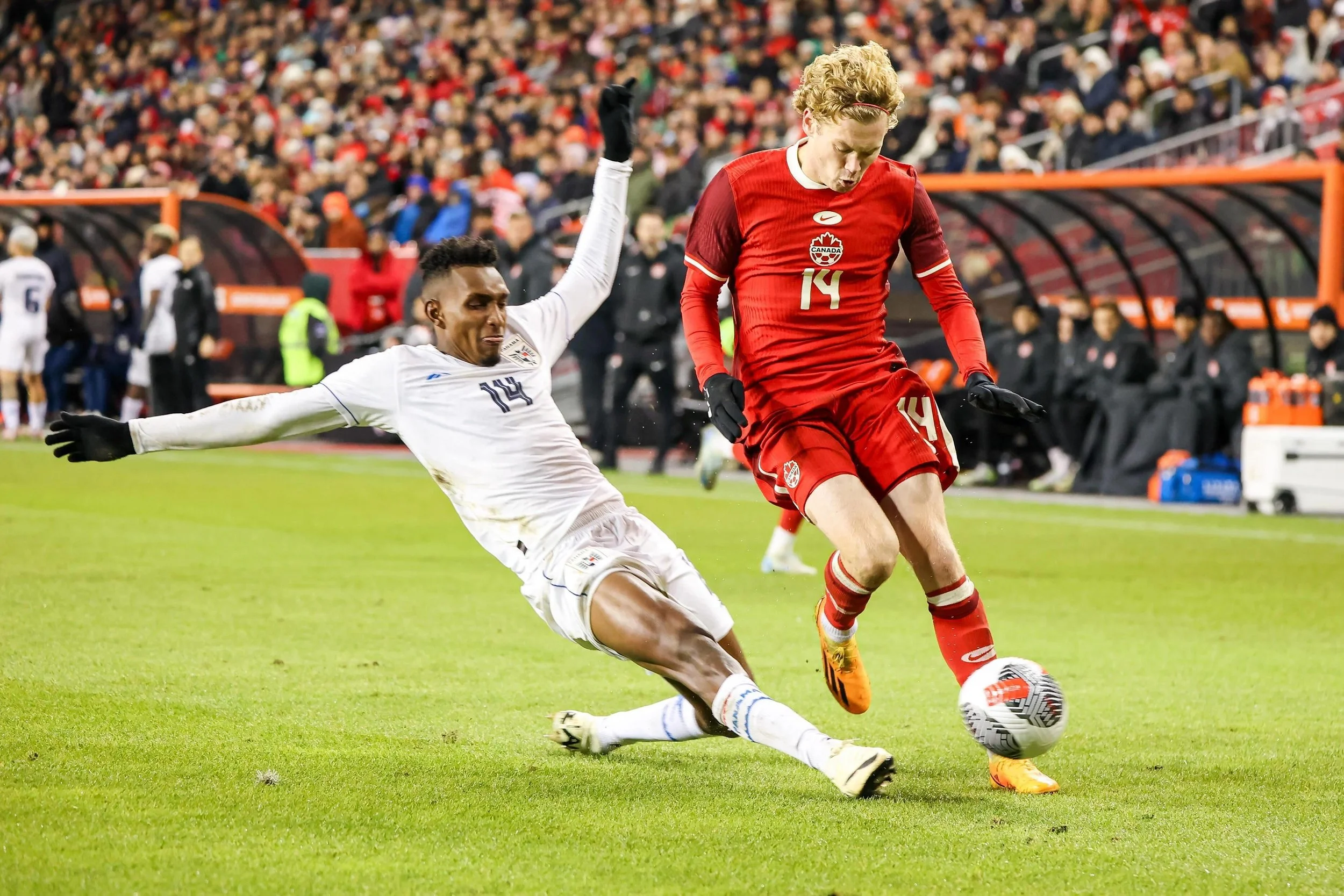
Panama defenders including Jiovany Ramos will need to make their presence known for success on the big stage (Photo credit: Indrawan Kumala)
A Nation of Transit, Now Permanence?
Geography has long placed Panama between worlds.
A bridge between North and South America, it has become something similar in football: a nation caught between outsider status and establishment. Qualification is no longer the destination.
The journey now is from participant to protagonist.
In the lead-up to the game against Ghana, Christiansen mentioned that the team was doing very well and with a lot of confidence in their ability to win. Confidence comes from preparation.
The identity is evolving: from qualification as achievement to qualification as baseline. From arrival to expectation.
The Fork in the Road
A nation famous for Mariano Rivera understands that arrival and completion are not the same thing. Panama have reached the World Cup before. What comes next is learning how to close.
The question is whether they embrace that shift fully—or whether the world still insists on seeing them as grateful guests at a table they have already earned a place at.
Sources:
Thomas Christiansen, Panama Head Coach, media availability, 16 June, 2026
Thomas Christiansen, Panama Head Coach, media availability, 20 May, 2025
Photo Credits
Panama fans, Indrawan Kumala, 15 October 2024 - Photo courtesy of Indrawan Kumala
Ramos and Shaffelburg, Indrawan Kumala, 15 October 2024 - Photo courtesy of Indrawan Kumala
Video Credits
John Walker, UEFA Licensed Coach and Scout, 15 June 2026 via Twitter @johnwalker_1986
All photos are used with permission. All rights reserved to the creator.

Support PSP Media
If this article resonated with you, consider supporting PSP Media.
Every contribution helps support independent research and reporting.