
The Potter Effect: Sweden’s Quiet Rise into World Cup Relevance
By Nii Wallace-Bruce
There was a moment, not particularly long ago, when Sweden looked directionless.
The bottom-place finish in their UEFA qualifying group carried more than disappointment; it carried a sense of exasperation. The cycle that had sustained Sweden in previous campaigns through pragmatism, structure and collective reliability appeared to have finally emptied itself. Switzerland, Kosovo, and, Slovenia bypassed them too easily. Transitions looked slow. Attacking ideas felt improvised rather than engineered. For perhaps the first time in a generation, Sweden looked like it needed the leadership in the mould of all-time goal scoring leader, Zlatan Ibrahimovic.
And yet tournament football has a habit of rewarding teams that evolve quietly while attention drifts elsewhere. A dominant Nations League campaign in 2025 gave the Blågult a backdoor into qualifying playoffs for World Cup 2026. Attacking wizardry and moments of magic in March 2026 vaulted Sweden to the summer tournament in North America.
Graham Potter’s Quiet Influence
Potter’s appointment in October 2025 arrived without the fanfare attached to elite international hires. Questions lingered after difficult spells with Chelsea and West Ham United, but Sweden knew him differently: as the coach who transformed Östersund and won multiple Coach of the Year awards during a seven-year stay. There were no declarations of revolution, no sweeping promises of attacking reinvention. The mood was closer to cautious curiosity. Potter inherited a national side low on confidence but rich in untapped attacking profiles — a squad arguably more modern than the football it had been attempting to play. Potter’s predecessor, Jon Dahl Tomasson, had the distinction of being the first foreigner to coach Sweden while the Dane also had the unwanted footnote of being the first coach to be dismissed in the history of the Blågult. Perhaps a low bar for Potter.
The playoff victories over Ukraine and Poland offered clues. Neither performance was flawless. Sweden still revealed the structural vulnerabilities that stronger sides will target in the tournament, particularly defensively when pressed into retreat. Yet what stood out was something Sweden had lacked for much of the previous cycle: attacking elasticity.
They suddenly looked capable of hurting opponents in multiple ways. At the centre of it all is Viktor Gyökeres.
Why Viktor Gyökeres Looks Different for Sweden
Few international forwards currently exist in stranger contrast between club and country identities. At Arsenal, Gyökeres adapts within rigid positional choreography, his game calibrated to collective structure. For Sweden, he becomes something looser, more forceful and emotionally central. He attacks space with greater aggression. He carries transitions personally. Potter’s arrival has given Gyökeres license to lead the line again. Sweden increasingly attack on his terms. The game bends toward him rather than around him. A striker whose game now appears fully formed, refined by the demands of elite football.
International football frequently amplifies personality over system, and Sweden increasingly feel like Gyökeres’ emotional team.
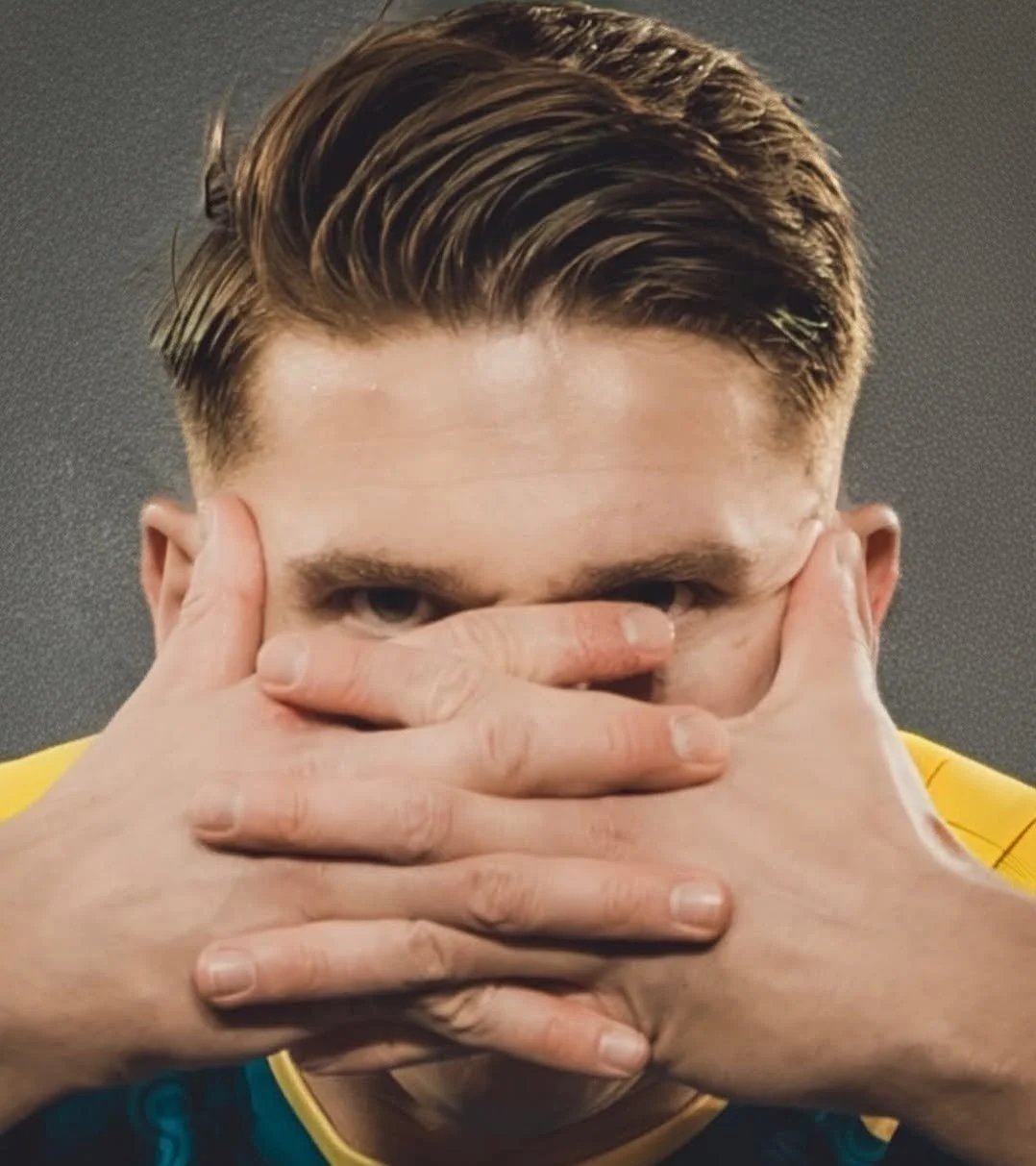
Viktor Gyökeres brings out his performances and mask celebrations in a Swedish jersey. (Photo credit: Łukasz Germaniuk and Maciej Rogowski)
Alexander Isak Changes the Entire Equation
The return of Alexander Isak changes the geometry entirely.
Suddenly defenders cannot simply collapse toward one reference point. Isak drifts naturally into zones that destabilize defensive lines, particularly between full-back and center-back channels. His movement creates the very instability Gyökeres thrives upon. Together they offer Sweden something rare outside the elite tier of international football: two forwards who can both create and destroy space.
Potter appears to understand this instinctively.
Rather than forcing Sweden into sterile positional football, the early indications suggest he is building around controlled chaos in attack. Sweden’s shape frequently stretches into asymmetry during possession. Wide runners attack aggressively. Vertical transitions are encouraged earlier. There is noticeably less hesitation in advanced areas.
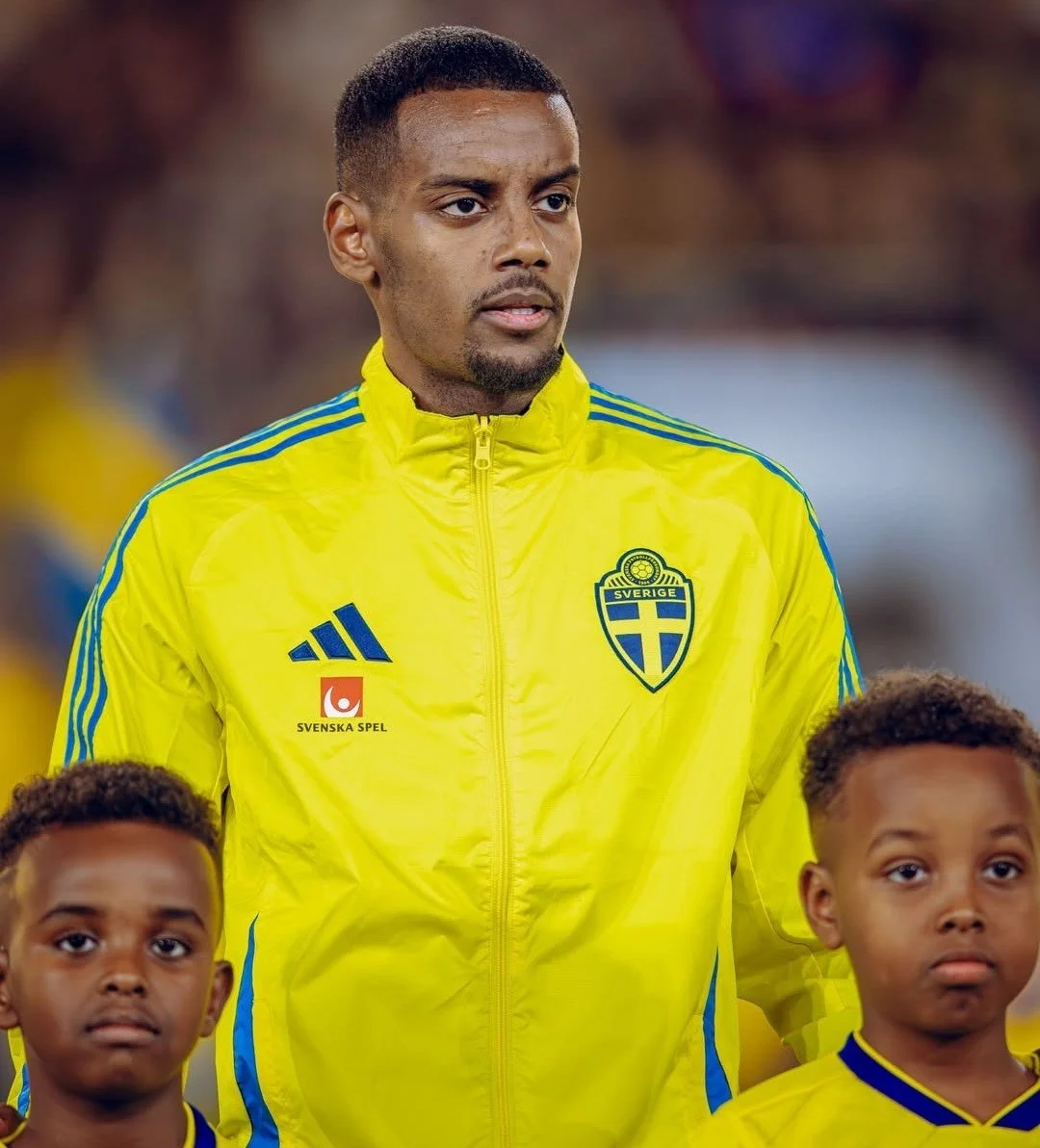
Many eyes will be on Liverpool striker Alexander Isak, making his way back from a long layoff. (Photo credit: Bismark Nii Kojo Adjei)
Elanga, Nygren and Sweden’s New Transitional Identity
Anthony Elanga’s acceleration becomes devastating in this context.
The Nottingham Forest winger has long threatened to become more influential internationally than his club status sometimes suggests. Under Potter, his directness suddenly feels less isolated and more connected to a larger attacking ecosystem. Build-up play often includes a direct pass into the middle, where 4-5 players wait to create crowded chaos. Defenders retreat deeper against Sweden now, fearful of transitional speed in behind. Group opponents such as the Netherlands and Tunisia will be on notice with this threat.
That, in turn, creates room for Benjamin Nygren. An addition due to a forced subtraction.
While Gyökeres and Isak naturally command attention, Nygren’s importance may ultimately become tactical rather than symbolic. The Celtic playmaker joins Sweden’s World Cup squad with 20+ goal involvements from his 2025/26 club season. Intelligent between the lines, comfortable receiving under pressure and capable of progressing attacks quickly, he increasingly looks like the connective tissue holding Sweden’s forward structure together. The balance matters because Sweden remain imperfect.
Dejan Kulusevski’s injury is enormous, perhaps more significant than many outside Scandinavia appreciate. He remains Sweden’s most complete attacking footballer, the player capable of slowing or accelerating matches according to rhythm. Without him, Sweden lose composure as much as creativity.
They also remain vulnerable defensively.
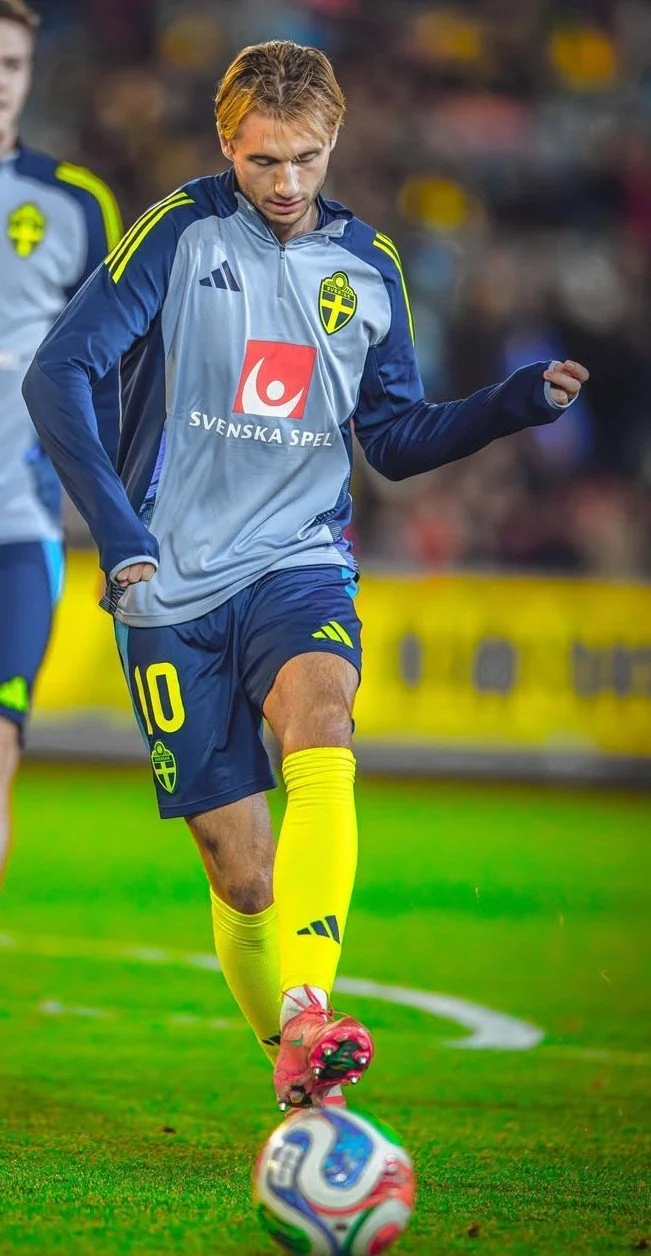
Benjamin Nygren will be asked to step up in the absence of Dejan Kulusevski. (Photo credit: Bismark Nii Kojo Adjei)
Defensive Flaws Still Exist — But So Does Tournament Chaos
The Greece friendly exposed this at times. Sweden’s spacing without possession still fluctuates too dramatically. Based on a small sample size, Graham Potter will likely deploy 3 central defenders in addition to 2 wing-backs out of possession in a fluid 3-5-2 / 5-3-2 set up. The central defenders have man-to-man coverage which can be isolated during transitional moments. Further, there are gaps between the centre-backs and wider defenders. During the playoffs in March, Ukraine (once) and Poland (twice) profited from sweeping balls into the box, using the gap created by Sweden’s asymmetric line. The Netherlands, Japan, and Tunisia could all take advantage via short passes or crosses into the six-yard box. Captain Victor Lindelöf and Isak Hien will need to be alert to keep Sweden in contention.
But tournament football does not always reward perfection. Sometimes it rewards momentum, emotional clarity and forwards capable of deciding matches before systems settle.
That is what makes Sweden dangerous.
Why Sweden Feel Dangerous Again
Potter’s greatest achievement so far may not be tactical at all. It may be psychological. Sweden no longer play like a side burdened by recent failure. There is looseness again, ambition again, unpredictability again. The football feels less inherited and more alive.
That matters in tournaments. Especially for teams lurking just outside the genuine contender conversation.
Nobody sensible is placing Sweden alongside the world’s elite. The comparison to 1994 remains premature, perhaps even romantic. That Swedish side possessed defensive resilience and tournament maturity this group has not yet demonstrated.
But dismissing this version entirely would ignore the evidence beginning to emerge.
A coach with tactical flexibility. Two elite-level forwards capable of altering matches independently. Transitional speed. Emerging attacking chemistry. A growing emotional identity.
Sweden may not become the story of the World Cup.
But they increasingly look capable of becoming somebody else’s problem.
Photo Credits:
Alexander Isak standing for anthem, Bismark Nii Kojo Adjei, 17 October 2025 - Photo courtesy of Bismark Nii Kojo Nii Adjei
Viktor Gyökeres Mask, Łukasz Germaniuk, 26 March 2025 - Photo courtesy of Łukasz Germaniuk and Maciej Rogowski - @ball.raw via Instagram
Benjamin Nygren warming up, Bismark Nii Kojo Adjei, 17 October 2025 - Photo courtesy of Bismark Nii Kojo Nii Adjei
Video Credits:
John Walker, UEFA Licensed Coach and Scout, 23 May 2026 via Twitter @johnwalker_1986
All photos are used with permission. All rights reserved to the creator.

Support PSP Media
If this article resonated with you, consider supporting PSP Media.
Every contribution helps support independent research and reporting.