
World Cup 2026: Two Finalists, One Football Education
By Nii Wallace-Bruce
When the final whistle blows at New York New Jersey Stadium on Sunday, either Argentina will retain the men’s FIFA World Cup or Spain will reclaim it for the first time since 2010.
By then, La Masia will already have won.
The natural storyline is impossible to ignore.
Lionel Messi, the greatest graduate of Barcelona's academy, faces the player many believe could become its next defining figure in Lamine Yamal.
It is an irresistible narrative of master and apprentice, of one era fading as another announces itself.
Yet it also obscures the richer story.
This final is not merely a meeting between two extraordinary footballers.
It is the culmination of an educational philosophy that has quietly shaped both the modern game and the tournament's showpiece occasion.
One of the roads to New Jersey runs through a modest academy in Barcelona.
More Than An Academy
La Masia has never measured success solely by the number of elite footballers it produces. Its ambition has always been to cultivate a way of thinking. Technique is expected. Intelligence is indispensable. Former director at La Masia, Xavi Vilajoana, described the importance of valuing the sporting area. Viljoana played a significant role in recruiting Yamal when rival club Espanyol expressed interest. This recruitment also involved taking care of living expenses due to hardship experienced by the Yamal family at the time.
Long before graduates are taught how to beat an opponent, they are taught how to understand space: where to stand, when to move, which shoulder to scan over before the ball arrives.
Possession is not an objective but a means of manipulating the pitch, creating advantages that appear inevitable only after they have unfolded.
Those lessons have outlived generations.
Johan Cruyff laid the philosophical foundations, teaching trust and desire for the ball.
Pep Guardiola refined them into perhaps the most influential football model of the modern era.
Messi demonstrated just how devastating that education could become when married to singular talent.
Today, Spain carry that language onto the world's biggest stage.
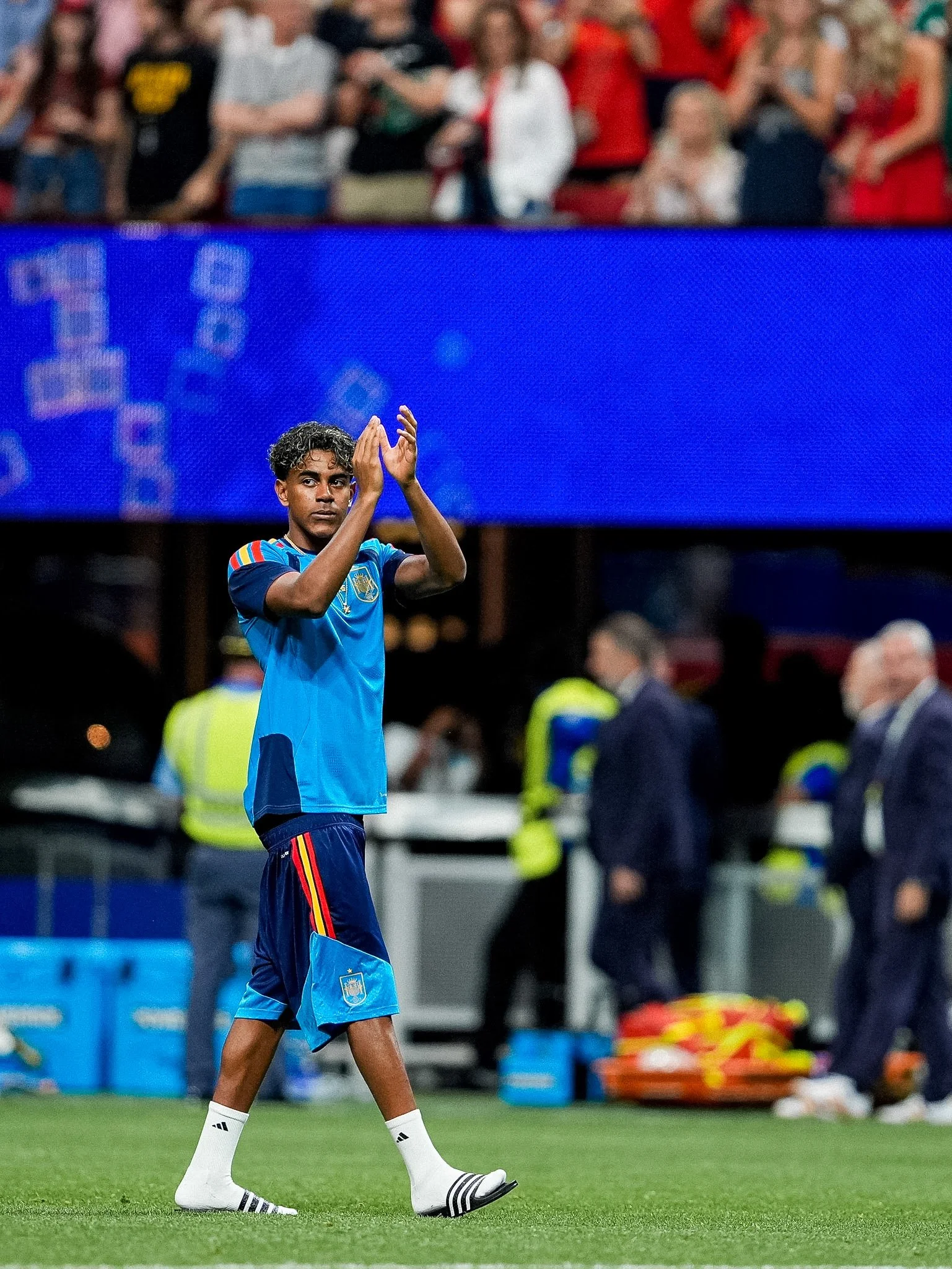
Lamine Yamal walks into the World Cup Final with the world at his feet (Photo credit: Sofia Cupertino/Soccer Down Here Network)
The Football Barcelona Exported
Spain's spine bears the unmistakable imprint of La Masia.
Dani Olmo advances Spain’s attacks with composure that seems to slow the game around him. Gavi injects aggression without sacrificing technical precision.
Pau Cubarsí defends by anticipating rather than reacting. Lamine Yamal offers the unpredictability that every positional system ultimately requires.
Former Barcelona coach and La Masia graduate Xavi Hernandez described Cubarsí and Yamal as having character and passion early on as they progressed through the blaugrana ranks.
They are not copies of Messi. Nor are they replicas of Xavi or Andrés Iniesta. They are products of the same football vocabulary, adapted for a different generation.
Barcelona no longer monopolises elite football as it once did.
Financial turmoil, changing recruitment strategies and the globalisation of youth development have altered the landscape. Former Barca player and manager Carles Rexach acknowledged that La Masia players sometimes became first-team debutants because the club was unable to sign players - a reality that the current squad has experienced in recent years.
Yet La Masia’s influence has proved remarkably durable, less because it produces identical footballers than because it teaches principles that can evolve with the game itself. Former director of methodology at La Masia, Joan Vila, described the importance of uniting talent with a wider game idea.
The academy itself has evolved.
Its graduates are generally more athletic, more vertical and more willing to attack open spaces than the Barcelona sides that mesmerised Europe a decade and a half ago.
The principles remain intact, but the expression has changed with the demands of the modern game.
The result is a Spain side capable of controlling matches without becoming captive to possession.
Two Identities, One Philosophy
The irony of this final is that Argentina and Spain arrive carrying different interpretations of the same education.
For two decades, Messi represented the ultimate expression of La Masia's ideals.
His genius often appeared spontaneous, yet it rested upon habits formed in Barcelona: receiving between lines, recognising overloads before they emerged, exploiting the smallest defensive imbalance.
Argentina, particularly under Lionel Scaloni, built a team that liberated those instincts.
Julián Álvarez's relentless movement, Enzo Fernández's progressive passing and Alexis Mac Allister's positional intelligence have gradually eased the creative burden that once rested almost entirely on Messi's shoulders. Their structure exists not simply to serve him, but to ensure he no longer has to carry every attacking idea alone. Former Argentina and Barcelona teammate Javier Mascherano acknowledged that Los Albicelestes exhibits a similar style to the blaugrana, even though there are few Argentines currently playing for the club nowadays.
Spain have travelled the opposite path. Their collective is the star.
Positional discipline, constant rotation and relentless circulation create opportunities that no single individual is expected to manufacture alone.
Where Argentina still look first to one extraordinary graduate in decisive moments, Spain distribute responsibility across several.
Different conclusions.
The same classroom.
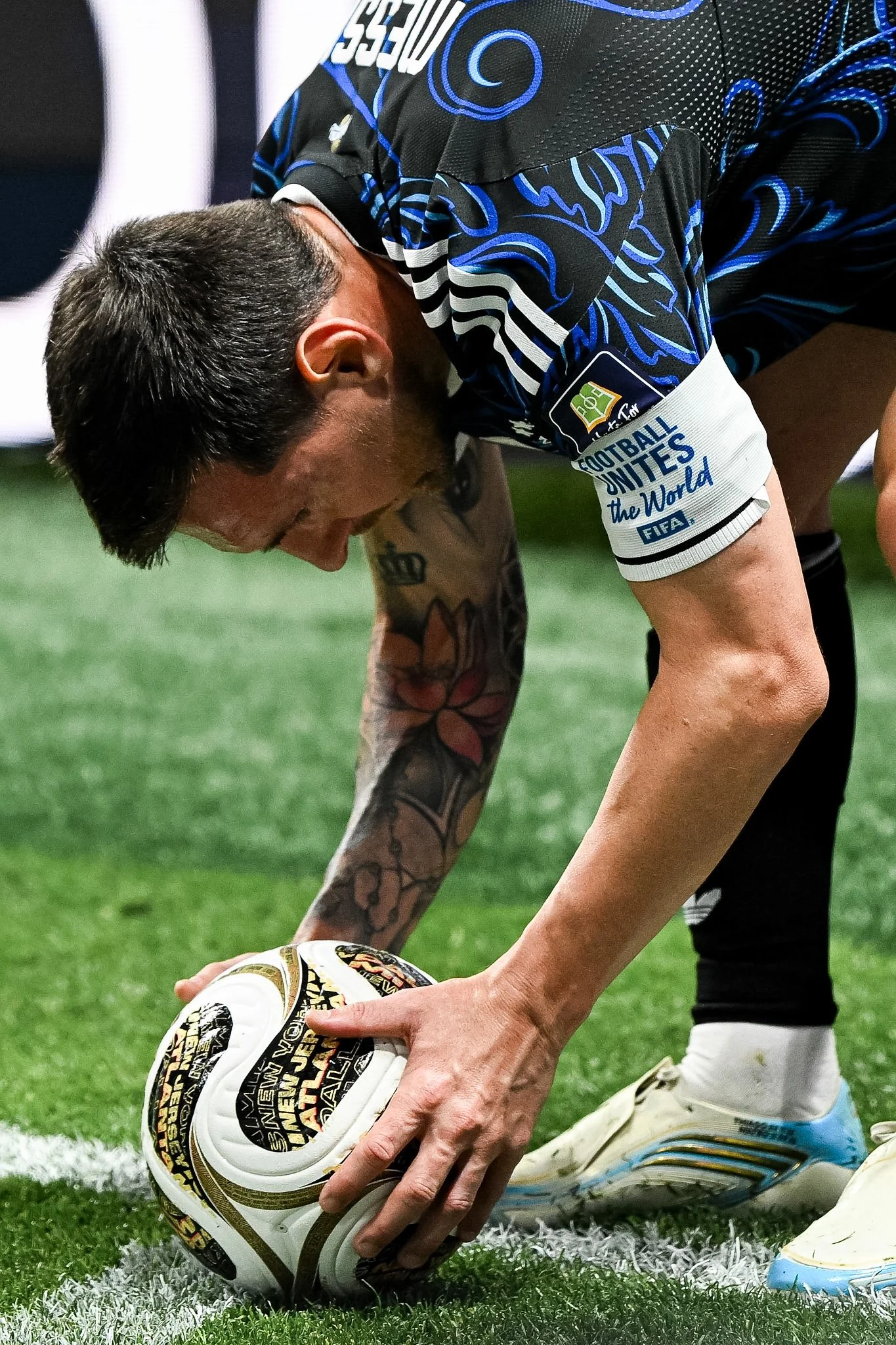
The stage is set for one last major performance from Lionel Messi at the FIFA World Cup (Photo credit: Sofia Cupertino/Soccer Down Here Network)
The Academy That Outgrew Barcelona
Perhaps La Masia's greatest achievement is that its influence no longer belongs exclusively to Barcelona.
Its principles have escaped the confines of Camp Nou, shaping national teams, club academies and coaching methodologies across continents.
What began as an institutional philosophy has become part of football's global vocabulary. That is why this World Cup final feels unusually familiar.
Along the way, both survived the challenge of a fearless Cabo Verde side. Both navigated different routes to New Jersey. Yet beneath those separate journeys runs the same thread: an academy whose ideas have long outgrown the walls that first contained them.
If Argentina prevail, the greatest graduate in La Masia's history will have authored one final masterpiece.
If Spain lift the trophy, a generation raised on the same principles will announce that the future has already arrived.
Either way, the story does not begin in New Jersey.
It begins in the narrow corridors and training pitches of La Masia, where generations of children learned that football is less about running faster than an opponent than seeing the next pass before anyone else. On Sunday, the world will watch Argentina and Spain contest the FIFA World Cup.
Beneath the floodlights, another victory will already have been secured: the quiet triumph of an academy whose influence stretches far beyond the city that built it.
Sources:
John Walker, UEFA Licensed Coach and Scout, 18 July 2026 via Twitter @johnwalker_1986
Reuters, “Barca fingerprints and Messi magic all over Spain-Argentina final, say Xavi and Mascherano”, Fernando Kallas, 17 July 2026
Ara, “A Final to place La Masia at the centre of the world”, Toni Padilla, 18 July 2026
FC Barcelona, FC Barcelona’s World Cup Final connections, 18 July 2026
FIFA Training Centre, “Spain v. Argentina: A tactical preview ahead of the final showdown”, 17 July 2026
Photo Credits:
Lamine Yamal, Sofia Cupertino/Soccer Down Here Network, 15 July 2026 - Photo courtesy of Sofia Cupertino
Lionel Messi, Sofia Cupertino/Soccer Down Here Network, 21 June 2026 - Photo courtesy of Sofia Cupertino
All photos are used with permission. All rights reserved to the creator.

Support PSP Media
Every contribution helps support independent research and reporting.