
Which Ange Postecoglou Has Al-Nassr Hired?
By Nii Wallace-Bruce
Part Two of a three-part series surrounding the appointment of Ange Postecoglou at Al-Nassr
His football has never stood still. Every failure has reshaped it. Riyadh will discover whether two decades of evolution have produced the complete coach.
The Myth of Angeball
The popular image of Ange Postecoglou has become strangely fixed.
Mention his name and the same ideas surface almost instinctively: a defensive line on the halfway line, inverted full-backs, relentless pressing, possession pursued almost as an article of faith. His football has become shorthand for conviction.
Yet there is a contradiction at the heart of that reputation. Few modern coaches have evolved more than Postecoglou.
His principles have remained remarkably consistent, but the way he applies them has changed after almost every significant chapter of his career.
Failure has rarely forced him to abandon his ideas. Instead, it has taught him when to bend them.
That is why Al-Nassr's appointment is more intriguing than it first appears.
The Saudi Pro League is not receiving the coach who transformed Brisbane Roar or captivated Yokohama F. Marinos.
Nor is it inheriting the manager who arrived at Tottenham promising to attack anyone, anywhere.
It is getting the sum of those experiences.
And that may be the most important signing of all.
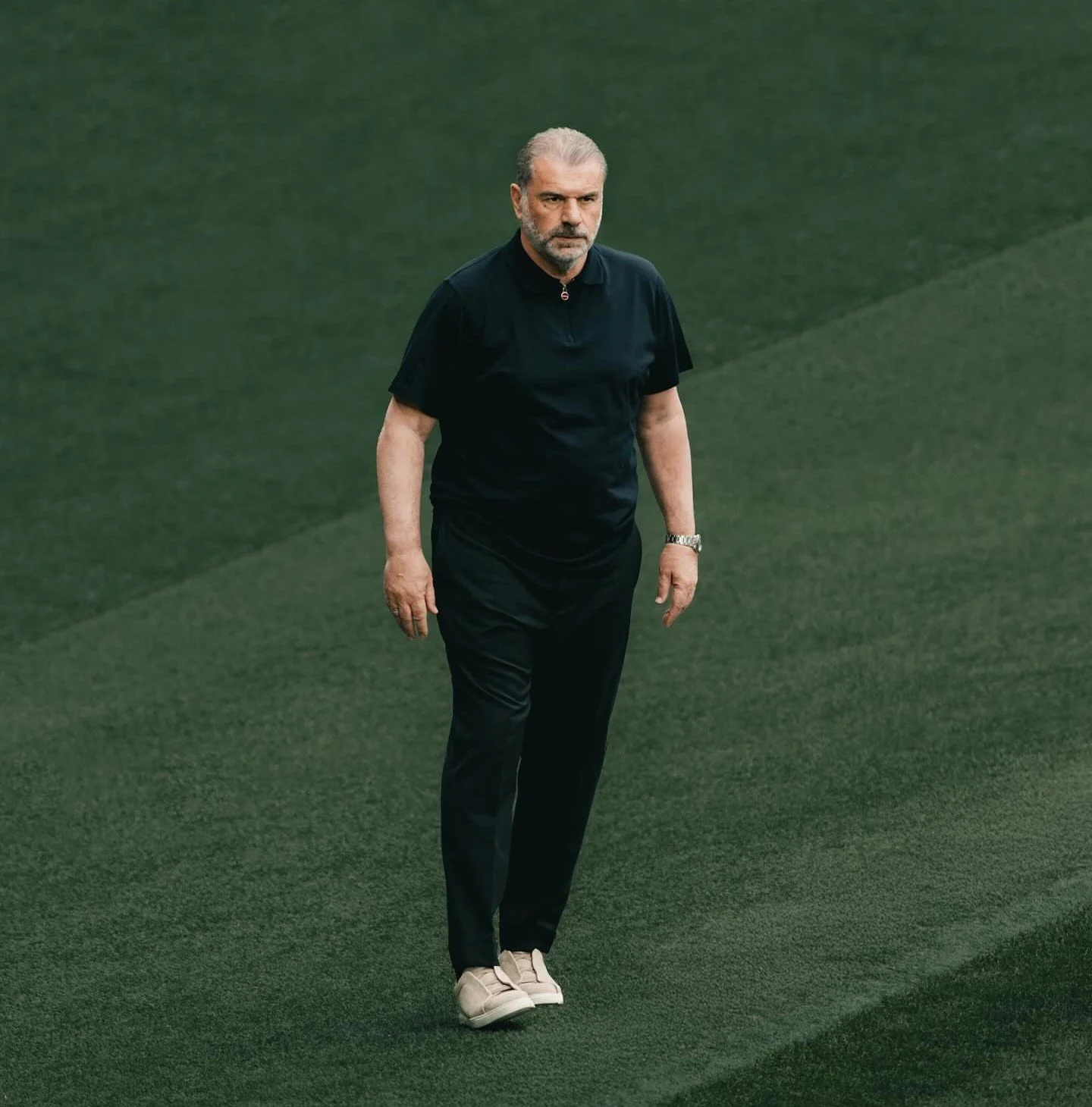
Ange Postecoglou is walking into unknown territory with Al-Nassr (Photo credit: Frederikke Hejbøl Jensen)
Failure Built the Coach Al-Nassr Wanted
The version of Postecoglou arriving in Riyadh was refined, paradoxically, in one of the darkest moments of his career.
Australia's failure to qualify for the 2007 FIFA Under-20 World Cup forced a period of self-examination that reshaped his coaching entirely.
During his time away from elite management, he immersed himself in Guardiola's Barcelona, Marcelo Bielsa's pressing structures and Dutch Total Football, emerging with a radically different understanding of how matches could be controlled.
Possession was no longer simply about keeping the ball. It became a means of controlling territory.
Pressing became the first attacking phase.
Structure became the mechanism through which players created superiority rather than security.
Postecoglou’s father, Jim, taught a young Ange to always “keep the ball down” as opposed to seeking comfort in long balls.
This principle would shape his playing career as a marauding full back. Inverting out of position decades before it became trendy.
Those ideas remain the foundations of his football today.
They also explain why Al-Nassr has not hired a motivational figurehead or celebrity coach.
They have hired a manager whose greatest strength is building a collective system capable of elevating individual talent.
For a squad often criticised for relying too heavily on moments of brilliance, that distinction matters.
Every Job Added Something Al-Nassr Now Needs
Brisbane Roar taught him that possession could become defense. The safest team was often the one that denied opponents the ball altogether.
For Al-Nassr, that lesson matters because Saudi football is increasingly defined by transition.
Many opponents defend compactly before breaking with speed through technically gifted forwards. The instinct is often to attack faster.
Postecoglou's instinct is to prevent transitions from existing in the first place.
Melbourne Victory introduced another lesson. Principles could survive even when systems changed.
The football became more vertical, more direct and slightly less rigid because the squad demanded it.
That flexibility matters now because Al-Nassr do not resemble any previous Postecoglou team.
Cristiano Ronaldo changes every tactical equation.
João Félix prefers ambiguity to fixed positioning.
Sadio Mané remains devastating when attacking space rather than circulating patiently.
The challenge is not imposing an existing blueprint.
It is applying familiar principles to unfamiliar players.
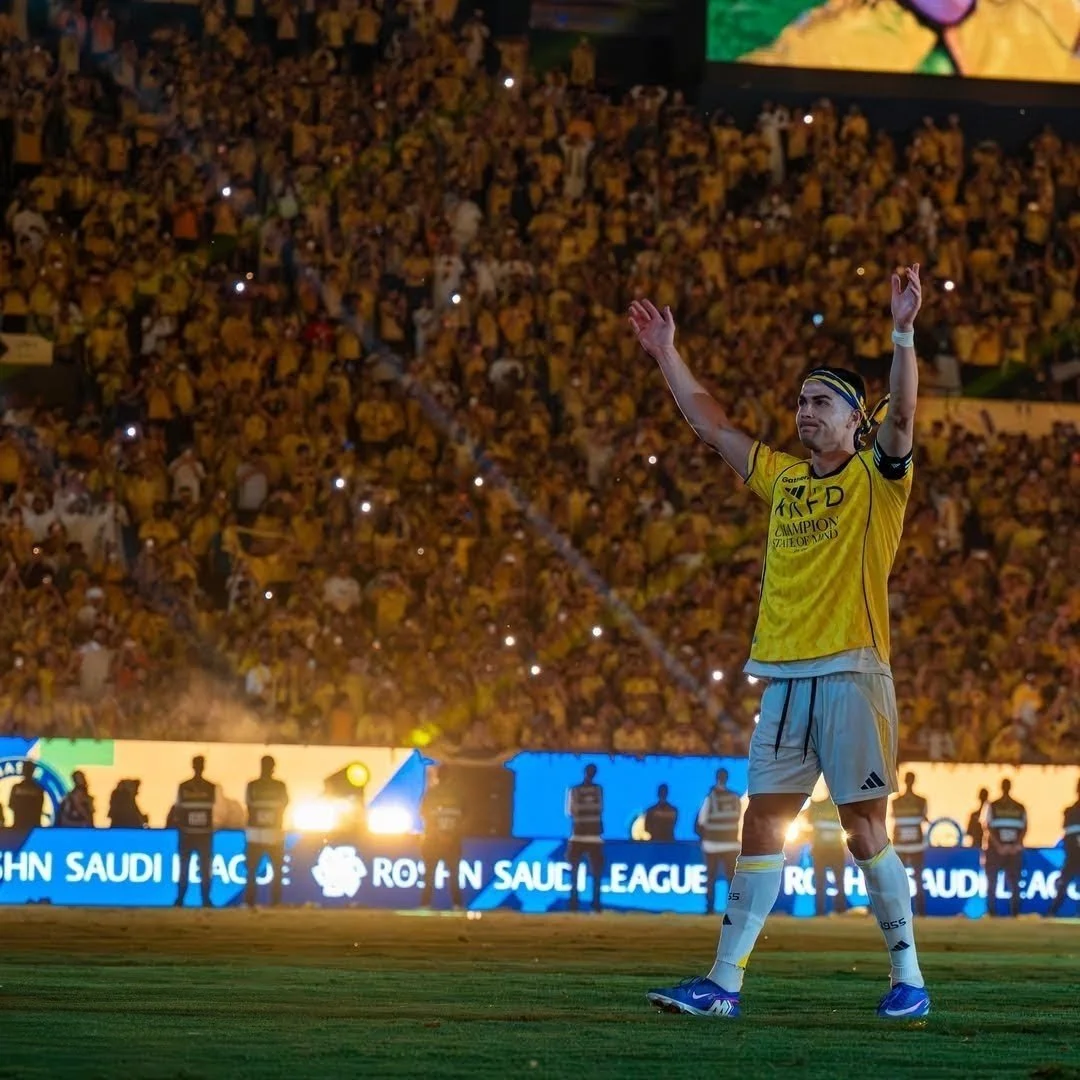
Cristiano Ronaldo’s current and former managers at Al-Nassr will now collaborate to mange the twilight of his career (Photo credit: Khalid Al Haj)
Australia and Europe Changed More Than His Reputation
International football exposed another limitation.
Managing the Socceroos meant living without daily training sessions, without transfer windows and without complete tactical control.
Postecoglou simplified rather than diluted his ideas, discovering that principles could survive even when intricate positional relationships could not.
That lesson returns in the AFC Champions League Elite. This is a challenge that Postecoglou acknowledged and simultaneously embraced.
Asian knockout football rarely resembles domestic league play. Opponents defend deeper, transitions become more decisive and patience often replaces rhythm.
His experiences at Brisbane, Melbourne, and Yokohama reinforced that reality.
Postecoglou has often mentioned that his early success did not come easy as a result of being in Asia.
Domestically, aggressive territorial football overwhelmed almost everyone.
In Europe, elite opponents punished every structural mistake.
Those experiences appeared to culminate at Tottenham. The Europa League triumph quietly challenged one of football's laziest narratives.
Postecoglou did not abandon his principles. He adjusted their expression. There is an important difference.
Al-Nassr may need precisely that version of their new manager.
The Football Al-Nassr Are Actually Buying
This is where biography becomes tactics.
Jorge Jesus generally sought control through balance. Postecoglou seeks it through territory.
The distinction sounds subtle. It transforms almost everything.
The defensive line advances. Midfielders become pressing triggers rather than passive screens. Full-backs step inside to overload central spaces instead of providing width.
Possession becomes an attacking weapon rather than simply a means of control. The objective is no longer to manage matches. It is to compress them.
Opponents are pushed backwards until the pitch itself feels smaller. When it works, attacks arrive in relentless waves. When it fails, enormous spaces appear behind the defense.
The margin between dominance and vulnerability becomes remarkably thin.
Saudi football will test that balance immediately.
The Squad Will Decide Whether It Works
This is less about formations than profiles.
Samú Costa possesses many of the qualities required to orchestrate build-up under pressure, but he cannot sustain the entire structure alone.
The midfield around him must provide constant angles, relentless movement and immediate counter-pressing.
João Félix may become the player who benefits most, operating between the lines where positional play creates the uncertainty his game thrives upon.
Ronaldo presents a different challenge. He will not press like Kyogo Furuhashi. He does not need to.
The more likely adaptation is collective rather than individual.
Pressing responsibilities shift around him, allowing Ronaldo to remain the final reference point while teammates initiate defensive pressure.
That makes recruitment less about replacing individuals than reinforcing functions.
Al-Nassr require defenders capable of protecting forty metres of space, full-backs comfortable becoming midfielders and physically resilient midfielders able to receive under pressure before recovering immediately after losing possession.
The names matter less than the profiles.

Kingsley Coman and João Félix are expected to play a big role in Ange Postecoglou’s system at Al-Nassr (Photo credit: Marei Al-Sharif)
An Unexpected Connection
There is another layer to this appointment that extends beyond tactics.
Jorge Jesus is now Portugal's national team coach. Postecoglou inherits Ronaldo. Their footballing philosophies differ, yet their interests unexpectedly align.
Postecoglou acknowledged the success left behind by Jesus while also seeking to build upon it.
Both now share responsibility, in different environments, for preserving the productivity of one of football's greatest forwards during the closing years of his career.
Managing Ronaldo's physical load, his minutes and his influence becomes a conversation rather than a handover.
Few managerial successions create that kind of continuity.
This one might.
The Real Question
Perhaps the biggest misconception surrounding Postecoglou is that he remains the coach who first arrived in Europe.
He isn't. Every setback has altered him. Failure with Australia's youth teams created the philosophy.
Brisbane taught control. International football taught simplification. Europe taught risk. Tottenham taught timing.
Al-Nassr are not receiving the purest version of Ange Postecoglou. They may be receiving the most complete.
The challenge is no longer convincing players that his football can work.
It is compressing twenty years of evolution into one Saudi summer, where expectations are immediate, patience is limited and success will ultimately be judged not by aesthetics but by silverware.
If Postecoglou succeeds in Riyadh, it will not simply confirm that his football travels. It will suggest that the defining quality of his career was never stubborn conviction.
It was the willingness to evolve without ever losing sight of the destination.
Sources:
John Walker, UEFA Licensed Coach and Scout, 11 May 2026 via Twitter @johnwalker_1986
Saudi Premier League, “'Ready to go to next level' - Postecoglou's first Al Nassr interview!”, 10 July 2026
Vince Rugari, AngeBall: The Definitive Biography of Ange Postecoglou, Headline, 2025
Photo Credits:
Coman and Felix, Marei Al-Sharif, 23 May 2026 - Photo courtesy of Marei Al-Sharif
Cristiano Ronaldo celebrating, Khalid Al Haj, 23 May 2026 - Photo courtesy of Khalid Al-Haj
Ange Postecoglou, Frederikke Hejbøl Jensen, 27 May 2025 - Photo courtesy of Frederikke Jensen
All photos are used with permission. All rights reserved to the creator.

Support PSP Media
Every contribution helps support independent research and reporting.