
Ange Postecoglou And Al-Nassr’s New Reality
By Nii Wallace-Bruce
Part Three of a three-part series surrounding the appointment of Ange Postecoglou at Al-Nassr
With financial flexibility no longer guaranteed, Ange Postecoglou's greatest test at Al-Nassr may be transforming what already exists rather than rebuilding from scratch.
The champions have started defending their title. The new manager has arrived. The biggest name remains. And yet the expected summer revolution hasn't happened.
Postecoglou did not inherit a blank canvas. He inherited a champion — and a club trying to work out what comes next. The most revealing measure of a coach is rarely what happens when everything is available. It is what happens when the conditions change. Ange Postecoglou has built his career around transformation.
Al-Nassr represents a different kind of challenge. At previous stops, Postecoglou was generally given the time and recruitment freedom to build his teams around his ideas.
The current project required Postecoglou to navigate a shortened offseason due to the 2026 World Cup as well as his late appointment as manager.
When Postecoglou arrived, it was reasonable to imagine that Al-Nassr could give him the same thing many elite Saudi clubs had been able to offer: the financial capacity to reshape a squad quickly.
The reality proved considerably more complicated.
The End of the Easy Rebuild
The SPL's Player Acquisition Centre of Excellence (PACE) has operated as a central mechanism for recruitment funding.
Reporting earlier this year indicated that the four Public Investment Fund (PIF) clubs received broadly comparable allocations from the centrally overseen player-acquisition fund. The league has also stressed that individual clubs retain responsibility for their own sporting and commercial decisions.
For 2026 onward, PACE allocations are being determined through a formula:
22% equal allocation;
22% based on sporting performance;
28% based on television viewership;
28% based on commercial performance.
The SPL explicitly describes the new model as a move toward governance, sustainability and long-term commercial development, rather than the market-opening phase of 2023–25.
To understand Al-Nassr's summer of 2026, it is necessary to go back to 2023, when Saudi football's financial model changed dramatically.
The PIF took a 75% stake in each of Al-Nassr, Al-Hilal, Al-Ittihad and Al-Ahli, with the associated non-profit organisations holding the remaining 25%.
But the league's player-acquisition system is not simply PIF depositing an unlimited amount into each club's transfer account.
The Saudi model is evolving. The model is entering a different phase. Al-Nassr's current financial problem did not appear from nowhere.
It followed a period in which the club had already committed heavily to maintaining its existing competitive level.
The club aggressively pursued Kingsley Coman and João Félix in the previous transfer window as it chased an elusive league title.
Cristiano Ronaldo’s contract extension reduced flexibility further, albeit with lucrative commercial benefits.
That pursuit of immediate success also left the club carrying greater commitments into the following season.
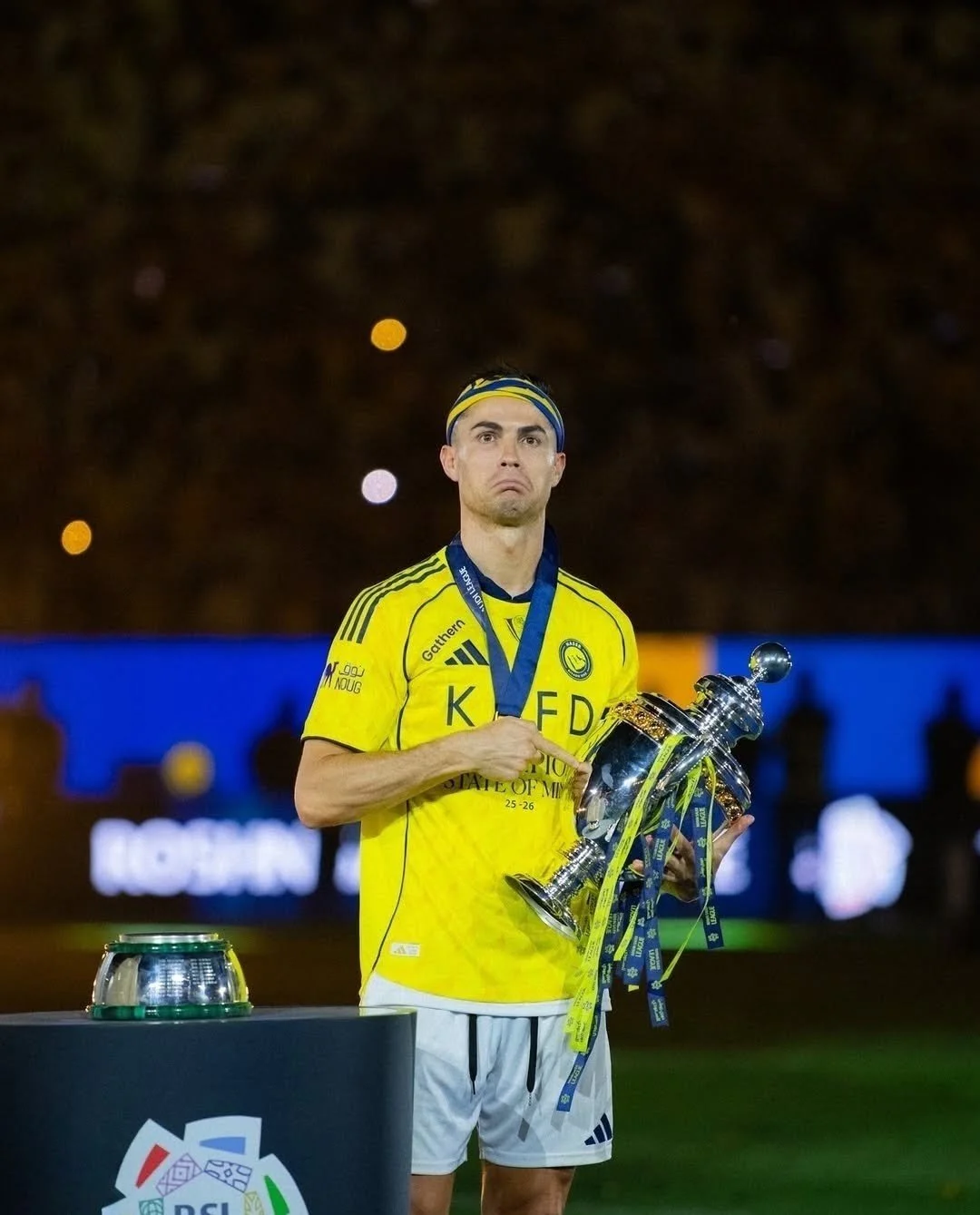
Ronaldo and his teammates would have no regrets after winning the league last season (Photo credit: Rakan)
Al-Nassr’s Conundrum
In July 2026, reports from Saudi Arabia revealed that Al-Nassr's debts had climbed beyond 800 million riyals — more than $200 million — prompting urgent intervention from PIF. The intervention went beyond transfer-market caution.
Some of Al-Nassr's executive financial powers were restricted, while independent financial, commercial and legal advisers were brought in to examine the club's finances and identify ways to increase revenue and reduce expenditure.
Most importantly for the football department, further registrations were tied to the availability of funds generated through sponsorship and other revenues.
Potential outside investment was also reportedly explored.
A Club Learning to Make Money
The commercial response was striking.
Al-Nassr entered the summer with its finances under scrutiny, yet its shirt became increasingly valuable real estate within the PIF ecosystem.
HUMAIN, a PIF company, became the club's principal sponsor for 2026–27, while AROYA Cruises, part of PIF-owned Cruise Saudi, renewed its existing partnership.
Gathern, meanwhile, has received investment led by Sanabil Investments, itself wholly owned by PIF.
The deals are not evidence that PIF simply transferred money to Al-Nassr, and their individual commercial values have not been disclosed.
Al-Nassr found another creative way to generate commercial revenue through a ground sharing agreement with fellow SPL club Diriyah FC, which gained promotion last season. Driyah will play their home games at Al-Awwal Park across all competitions. This includes the Kings Cup where the new co-habitants will face each other on August 18.
Commercial partners off the field. Cup adversaries on the field.
Overall, these deals illustrate a less glamorous side of the Saudi football project: the clubs are increasingly expected not merely to consume capital, but to generate commercial value.
Al-Nassr has to optimise its commercial assets. Ange Postecoglou has to optimise its footballing assets.
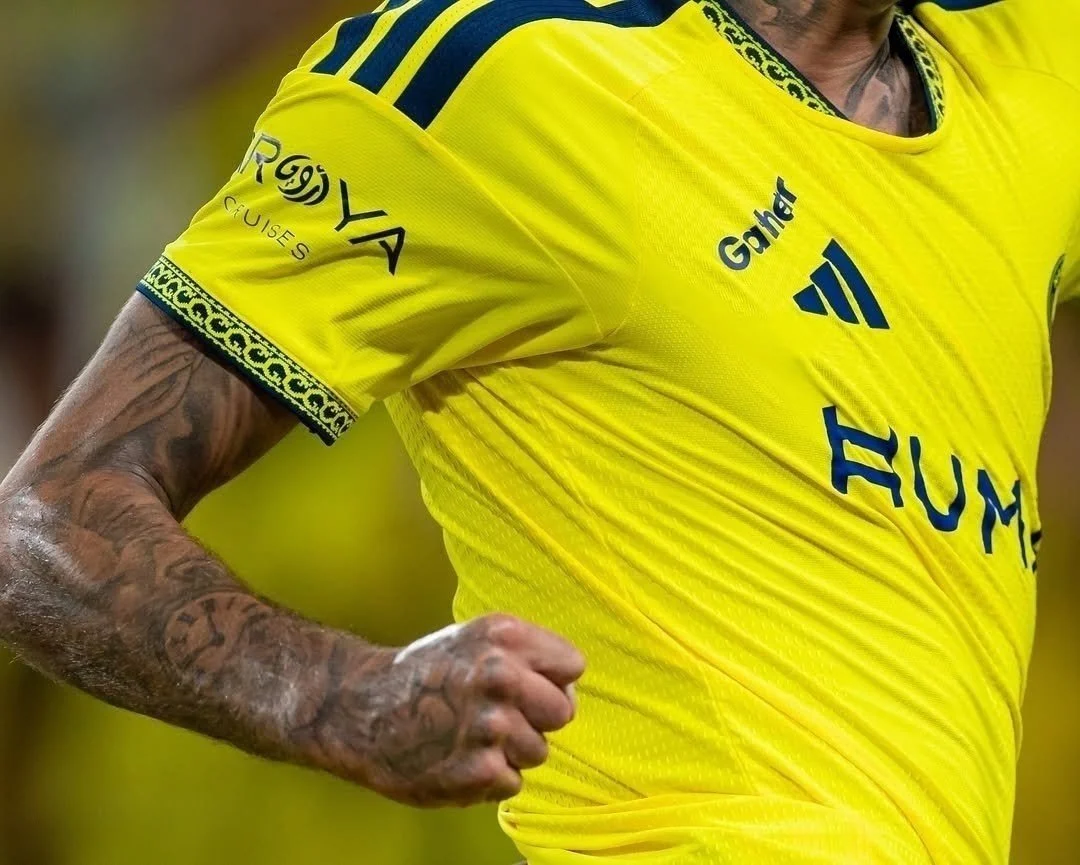
Al-Nassr’s jersey is a reflection of the revenue generating efforts of the club recently (Photo credit: Motim Al-Osaimi)
Why This Matters For Postecoglou
For Postecoglou, that matters because financial discipline changes the route to sporting improvement.
If recruitment can no longer be the answer to every problem, optimisation becomes more important.
The manager who had arrived at Al-Nassr expecting to shape a team now had to begin by determining how much of the team he already had could be shaped.
It represented a reversal of methodology that had brought success elsewhere.
From the very beginning at his beloved South Melbourne, he refurbished the club with local talent and experienced leaders, competing with Manchester United and Vasco de Gama at the Club World Cup.
Within a salary-capped A-League, he created the fabled “Roarcelona” with Thomas Broich and Matt McKay and a system that elevated them.
At Yokohama F. Marinos, he introduced a different footballing model rather than simply buying one.
While at Celtic, he inherited a broken team and restored its collective identity.
At Tottenham, he immediately lost Harry Kane and was still able to bring an attacking identity.
At each stop, he took notice of the potential in players and fostered an environment where they could become more than what others had previously seen in them.
His teams are defined by conviction: aggressive positioning, possession with purpose and a willingness to accept risk.
Al-Nassr’s financial crisis dramatically changed the conditions under which Postecoglou entered the summer.
It inadvertently made one of Postecoglou's oldest managerial qualities more important.
For much of Saudi football's recent evolution, the assumption was straightforward: elite ambition would be supported by elite spending.
That logic helped reshape the league. International stars arrived, domestic rivals accelerated their recruitment and Saudi clubs became a new force in the global market.
But financial power does not remove strategic decisions. It creates them. Al-Nassr must now balance immediate competitiveness with long-term planning.
The club remains one of Saudi Arabia's most visible sporting projects, but visibility creates pressure.
Every decision is viewed through the lens of Ronaldo's presence, the expectations of supporters and the ambitions of rivals.
The challenge for Postecoglou is that his usual method depends on alignment.
A coach arrives. A football identity is established. Recruitment follows.
At Al-Nassr, the sequence may have to change. The football idea must come first. And fast.
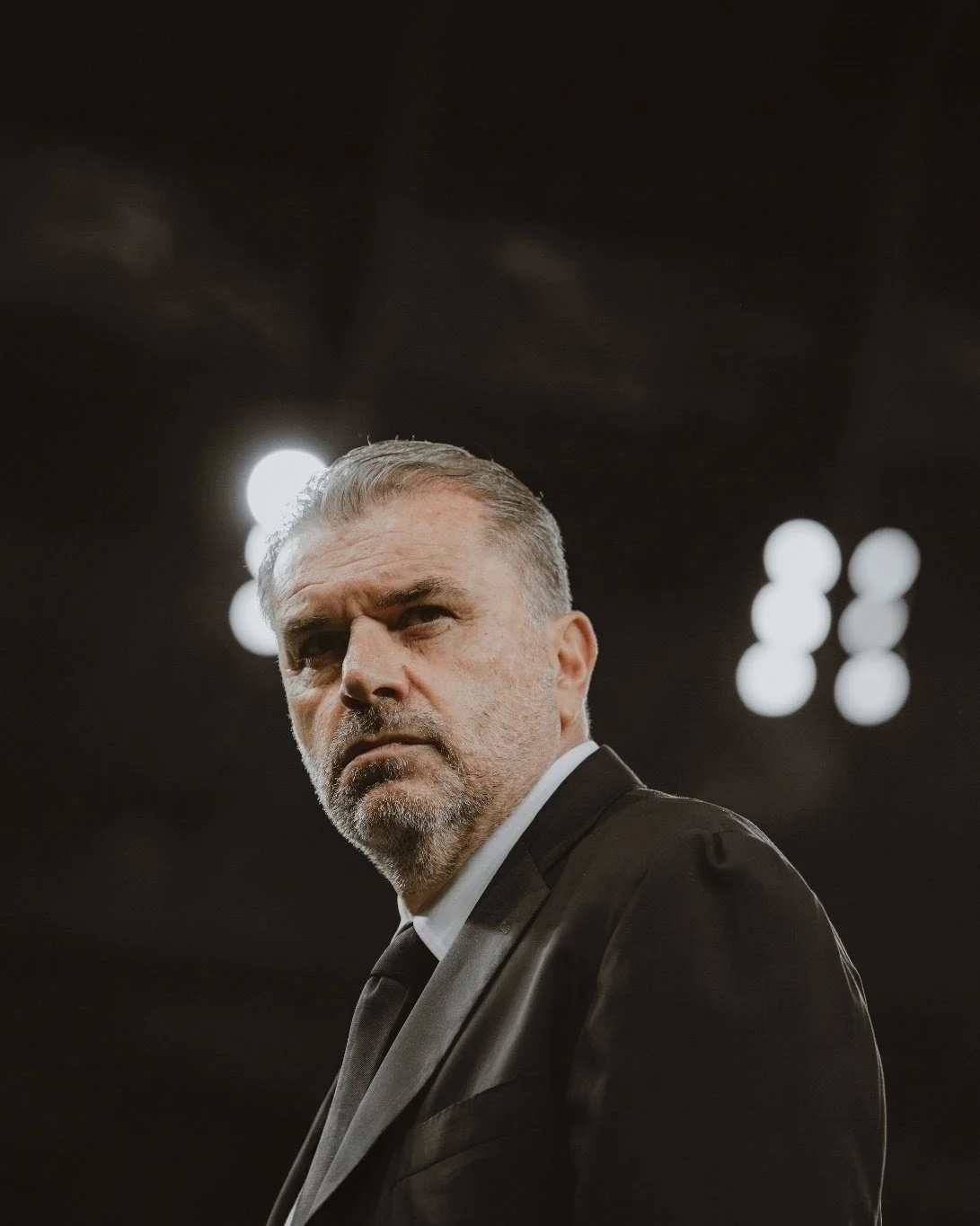
Ange Postecoglou will once again look to optimise the talent already available to him (Photo credit: Frederikke Hejbøl Jensen)
Ronaldo's Influence and the Question of Succession
Cristiano Ronaldo remains the defining fact of Al-Nassr’s present. Ange Postecoglou is trying to build what comes next.
Ronaldo's impact on Al-Nassr cannot be measured only through goals or commercial value. His arrival altered the club's place in world football.
He brought global attention, increased expectations and helped accelerate Saudi Arabia's sporting ambitions.
But every era built around one player eventually reaches a transition point. Ronaldo has made the question of time unavoidable.
For Al-Nassr, the challenge is managing two timelines simultaneously:
competing at the highest level today
preparing for the team that comes after Ronaldo
Those objectives are not always identical. Postecoglou's football requires collective responsibility.
His teams are built around systems rather than dependence on individual moments.
That does not mean removing star players; it means integrating them into a structure where the team identity remains clear.
The question is whether Al-Nassr can evolve while still preserving the advantages that Ronaldo provides.
The First Evidence
The first competitive evidence suggested that Postecoglou may not be waiting for the transfer market to begin his work.
The first game of the SPL season may also provide a window into the future beyond Ronaldo - who sat out after a late return to the training.
The squad may not yet resemble the one he would ideally construct. The football, however, already contained familiar fingerprints.
A 3-0 win over Al-Fateh will go some way to reassuring a fanbase that is excited yet also expectant for the coming months ahead.
João Félix, the 2025/26 SPL player of the season, was given license to create and make plays while rotating with Ângelo.
Senegalese captain Sadio Mane was dangerous in transition, assisting Felix’s goal while also being involved in pressing - key for pinning opposition full-backs.
The Al-Nassr full-backs were asked to contribute higher up the pitch rather than simply protect the structure behind the ball.
That is a small but meaningful indication of Postecoglou's desire to make the team more aggressive without changing its personnel wholesale.
Salem Al-Najdi was called upon early and yet he understood his role at right-back. In addition to defensive work, he assisted Ângelo for the game’s opening goal.
New signing Samú Costa came on and made an immediate impact with his pressing, positioning and distribution.
On the flipside, there were some uncharacteristic moments early on. Balls being passed backwards and defenders opting to go for a long clearance instead of a short pass. Certainly not traits of the Postecoglou Way.
After the game, Postecoglou acknowledged that this was a work in progress, with some players arriving late to training camp late and/or needing a rest.
He also recognised that fitness and cohesion would take time to manifest itself on the pitch.
Despite this, he was very happy with the character shown by his squad, particularly Costa and Al-Najdi.
What the team lacked in aggression, they made up for in attacking verve and control, with 59% of the ball on the night.
It was early — far too early to call it a transformation — but there were signs of the principles that have defined Postecoglou's best teams:
Full-backs being involved in the build-up
Significant pressing in the final third
Control through possession and (largely) keeping the ball down
Multiple players contributing to goals
The three goals are particularly useful because they represent different aspects of the evolving Al-Nassr, in addition to the method of scoring:
Ângelo — a young player already within the club's ecosystem, scoring the first goal of the Postecoglou era from Al-Najdi’s cross
João Félix — an established attacking talent and focal point who used his technical skill and creativity to advance through multiple defenders in the box to score.
Samú Costa — a new signing, entering from the bench and scoring on debut with Abdullah Al-Hamdan’s hold-up play in the box.
The significance was not that Al-Nassr had suddenly become an Ange Postecoglou team.
It was that the process had begun without the wholesale reconstruction many assumed would precede it.
That could yet mean redefining roles, improving pressing structures, adjusting possession patterns and developing players who were previously viewed as supporting pieces rather than foundations.
What is intangible is the mentality that he instils at every club - staying in the fight and never taking a backward step. That positive reinforcement cannot be bought.
It must be developed.
The best coaches are often those who recognise the difference between a weakness and an untapped resource. Al-Nassr may not have given Postecoglou the squad he expected.
But after one competitive match, there are early signs that he is already changing how the existing one plays.
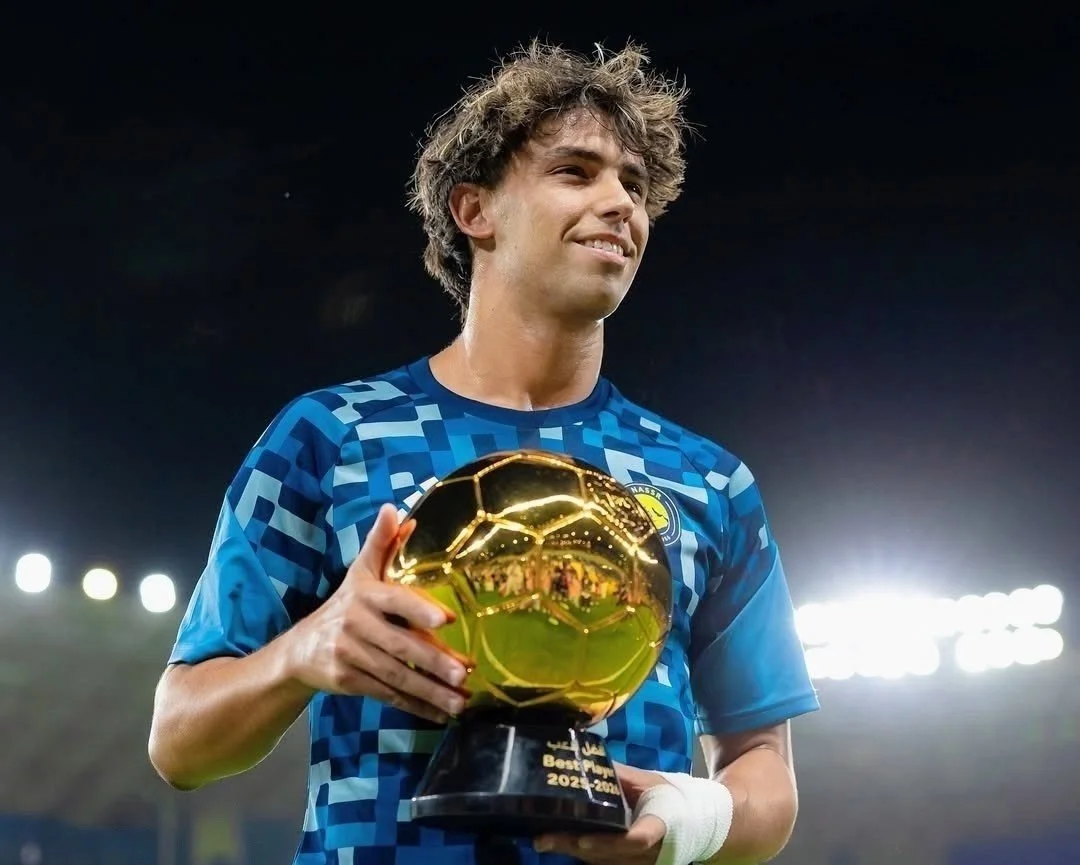
João Félix hopes to build upon individual and team success in the 2026/27 season with Al-Nassr (Photo credit: Motim Al-Osaimi)
Learning From Al-Hilal's Advantage
The contrast with Al-Hilal highlights the changing landscape.
While Al-Nassr faces questions over flexibility, Al-Hilal continues to demonstrate the ability to move aggressively in the market, including moves for emerging attacking talent such as Crysencio Summerville. A player who can represent the next phase for the club. This particular transaction was financed personally by Prince Al-Waleed bin Talal. Prince Al-Waleed is also the Chairman of Kingdom Holding Company, which bought 70% of Al-Hilal from PIF in April 2026.
The outside investment strategy suggested for Al-Nassr was already in motion for one of its rivals.
Al-Hilal can still use recruitment as a strategic lever. Al-Nassr has less room to rely on it. Recruitment gives clubs options. Options allow managers to accelerate their ideas. Without that freedom, coaches must extract more from existing players. That is where Postecoglou's reputation becomes particularly relevant.
His greatest successes have not come from assembling perfect squads. They have come from creating belief, improving players and imposing clarity.
Making More From What He Has
Postecoglou's career has been built on change.
But change does not always arrive through revolution.
At Al-Nassr, the Australian coach may have to prove another side of his managerial ability: the ability to construct without first replacing.
Postecoglou has spent much of his career finding ways to make more from what he inherits. At Al-Nassr, that may no longer be simply a virtue. It may be the requirement.
For Al-Nassr, the next chapter is not simply about finding the next superstar signing. Postecoglou has spent much of his career finding ways to make more from what he inherits.
At Al-Nassr, that may no longer be simply a virtue. It may be the requirement.
Sources:
Vince Rugari, AngeBall: The Definitive Biography of Ange Postecoglou, Headline, 2025
Saudi Pro League, “'Ready to go to next level' - Postecoglou's first Al Nassr interview!”, 10 July 2026
Ange Postecoglou, Al-Nassr Head Coach, press conference, 15 August 2026
Arab News, “Kingdom’s PIF to address Al-Nassr’s deep financial crisis: report”, Ali Khaled, 27 July 2026
Cadena SER, “El Al-Nassr desbloquea su crisis financiera y deja encarrilado el fichaje de Samu Costa”, Pedro Morlà, 29 July 2026
The Guardian, “Saudi Pro League tries to move on from era of ageing megastar but big names still loom”, John Duerden, 12 August 2026
The Guardian, “Cristiano Ronaldo warned by Saudi Pro League amid transfer spending dispute”, 5 February 2026
Saudi Press Agency, “Saudi Ministry of Sport Unveils the Clubs Privatization Project in Press Conference’, 6 June 2023
Reuters, “Al Nassr sign Portugal’s Costa from Mallorca”, Taha Abdel-Aziz, 9 August 2026
Al-Hilal Club, “Al-Hilal Signs Crysencio Summerville For Four Years”, 23 June 2026
Saudi Pro League, “SPL launches second phase of Player Acquisition Programme,” May 6, 2026
Public Investment Fund, “PIF and Kingdom Holding Company (KHC) Sign Agreement for KHC to Acquire 70% of Al-Hilal Club Company”, 16 April 2026
The National News, “Inside Saudi Arabia’s new sports strategy: World Cup 2034, Qiddiya and Esports”, Andy Lewis, 22 May 2026
World Soccer Talk, “Cristiano Ronaldo won’t be the only one at Al Awwal Park as Al Nassr agree to share stadium with Diriyah FC amid financial strain”, Dante Gonzalez, 10 August 2026
Photo Credits:
Cristiano Ronaldo, Rakan, 26 May 2026 - Photo courtesy of Rakan
João Félix Award, Motim Alosaimi, 15 August 2026 - Photo courtesy of Motim Al-Osaimi
Samú Costa tight jersey, Motim Alosaimi, 15 August 2026 - Photo courtesy of Motim Al-Osaimi
Ange Postecoglou, Frederikke Hejbøl Jensen, 27 May 2025 - Photo courtesy of Frederikke Jensen
All photos are used with permission. All rights reserved to the creator.

Support PSP Media
Every contribution helps support independent research and reporting.