
By Nii Wallace-Bruce
Part Two of a five-part series examining the connection between Northern Super League and international football
The Northern Super League (NSL) was founded to strengthen Canadian women's football, but its influence is already extending far beyond the country's borders.
As the race towards the 2027 FIFA Women's World Cup in Brazil accelerates, Canada's newest professional league has quietly become home to a number of players from Asian Football Confederation (AFC) nations.
Across the league, players representing Korea Republic, Australia, and the Philippines are balancing domestic ambitions with global aspirations, turning the NSL into another viable route on football's increasingly global pathway.
While this summer’s Africa Cup of Nations brings attention to the league's African contingent, the NSL's footprint across the AFC tells an equally compelling story.
With the 2026 AFC Asian Cup still a recent memory, several players remain firmly in contention for the biggest tournament in women's football.
Their preparation is no longer taking place exclusively in Seoul, Sydney, or Cebu City. Increasingly, it is happening in Calgary, Halifax, Vancouver, and Ottawa.
Korea's Next Generation Finds a New Stage
No Asian nation is better represented in the NSL than Korea Republic.
Three clubs entered the 2026 season with Korean internationals in their squads (Ottawa, Halifax, and Montréal).
They bring technical quality, tactical intelligence and international experience to each of those clubs. Their presence also reflects a broader moment in Korean women's football.
South Korea remains one of Asia's perennial challengers.
Third place at the March 2026 edition of the Asian Cup reaffirmed both their quality and the questions that continue to surround the programme.
The nation continues to produce technically gifted footballers capable of competing with the continent's best, yet consistency at the highest level has often proved elusive.
For years, Korea's story has been defined by outstanding individuals.
Ji So-yun's generation elevated the national team to unprecedented heights, but sustaining that success has required greater depth and broader professional opportunities for the players following behind.
The NSL now offers another environment where that next generation can develop. Off the field, their impact has extended beyond football.
Ottawa Rapid’s prolific striker DB Pridham and goalkeeper Melissa Dagenais described how Choo Hyo-joo, Lee Min-a & Jung Min-young have helped build connections with both local supporters and Ottawa’s Korean community.
Speaking to PSP Media, Jung said the welcome she and her teammates received had made settling into Canada significantly easier.
Regular competitive football, different tactical approaches and exposure to international teammates all provide valuable experience ahead of Brazil 2027, where collective organisation will matter as much as individual talent.
For Korean representatives, the NSL is more than another overseas league. It has become another piece of the national team's long-term development.
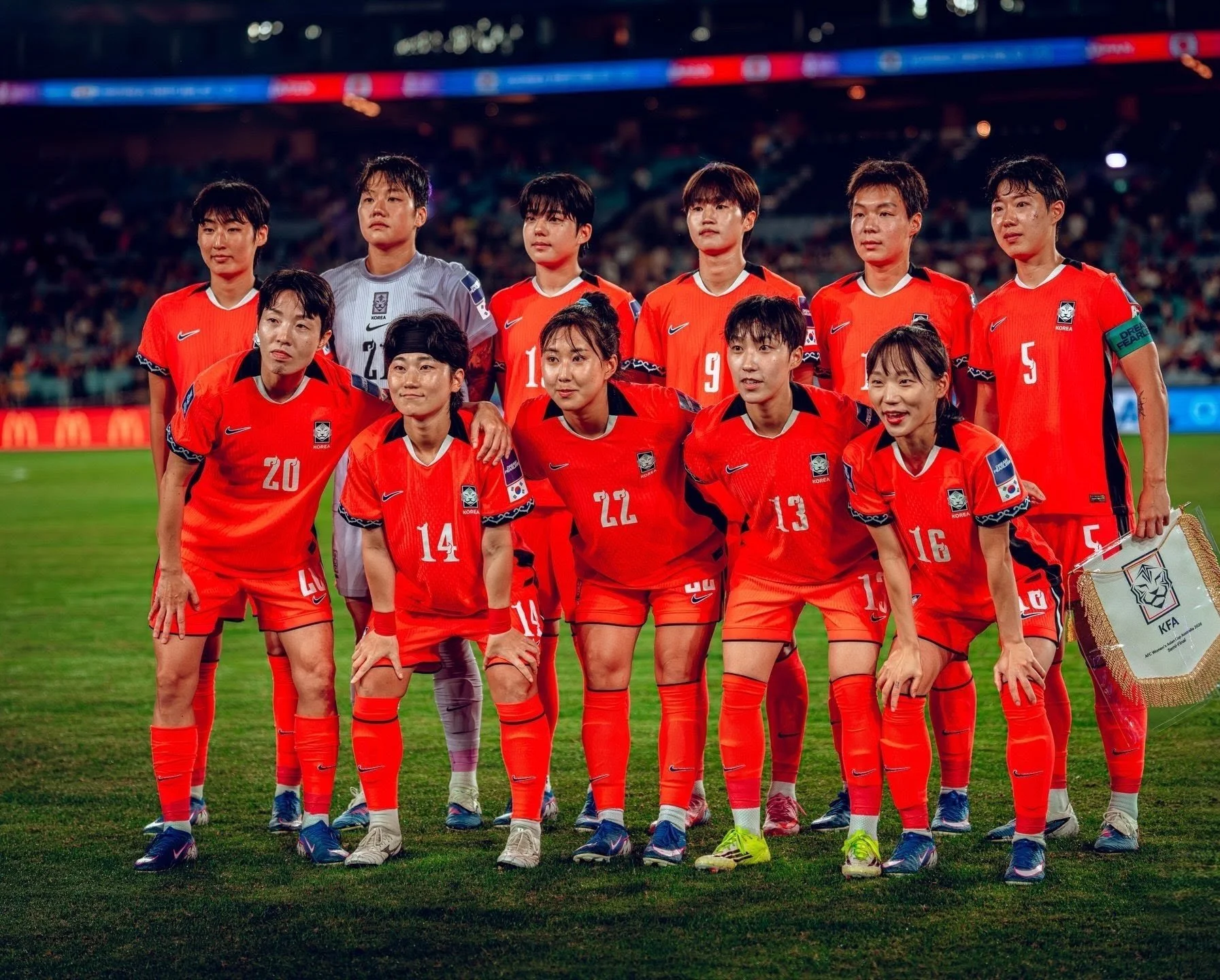
Ottawa teammates Jung Min-young (#14) and Choo Hyo-joo (#22) were front and centre for South Korea’s 2026 Asian Cup campaign (Photo Credit: Bismark Nii Kojo Adjei)
Established Internationals Across the Region
Korea are not alone.
Calgary Wild FC also feature players with significant international pedigree from elsewhere in the region.
Jaclyn Sawicki anchored the Philippines midfield at the 2026 AFC Asian Cup, while striker Kahli Johnson remains part of Australia's Matildas pool, one of the world's most consistently competitive national teams.
Vancouver Rise provide a similar example. Centre-back Jessika Cowart was also a part of the Filipinas campaign in Australia.
Cowart shares the backline with Tori Tumeth, who joined the Rise from Sydney FC in April and has represented Australia in recent years.
As the Matildas continue to regenerate after finishing second in the Asian Cup, players such as Johnson and Tumeth will be called upon to help keep the team among the world’s elite. Elsewhere, the March tournament resulted in the Philippines secured qualification for Brazil 2027 - their second World Cup after a memorable debut in 2023
Those experiences enrich the league in both directions.
Players arrive carrying the standards, tactical demands and expectations of global football, while the league itself provides another competitive environment to maintain those levels between international windows.
As qualification campaigns intensify over the next twelve months, clubs and countries will become increasingly interconnected.
Every league match serves as preparation for the next representative call-up.
A League Growing Beyond Canada's Borders
International representation has long been one of the clearest measures of a domestic league's strength.
The world's leading competitions are defined not simply by the quality of their clubs, but by the number of players trusted to perform on the world stage.
Every call-up reinforces both the player's standing and the league's reputation.
For the NSL, that process is already underway.
The presence of national-team members from Asia alongside players representing Africa, Europe, and the Americas reflects a competition that is expanding its recruitment horizons far beyond Canada. Rather than relying on one market, clubs are assembling increasingly diverse squads capable of raising standards across the league.
That diversity also benefits Canadian players, who train and compete alongside teammates bringing different football cultures, tactical perspectives and overseas experience into the dressing room every week.
Jung Min-young herself said she hopes not only to grow as a player in Canada, but also to help strengthen a Northern Super League she believes has tremendous potential.
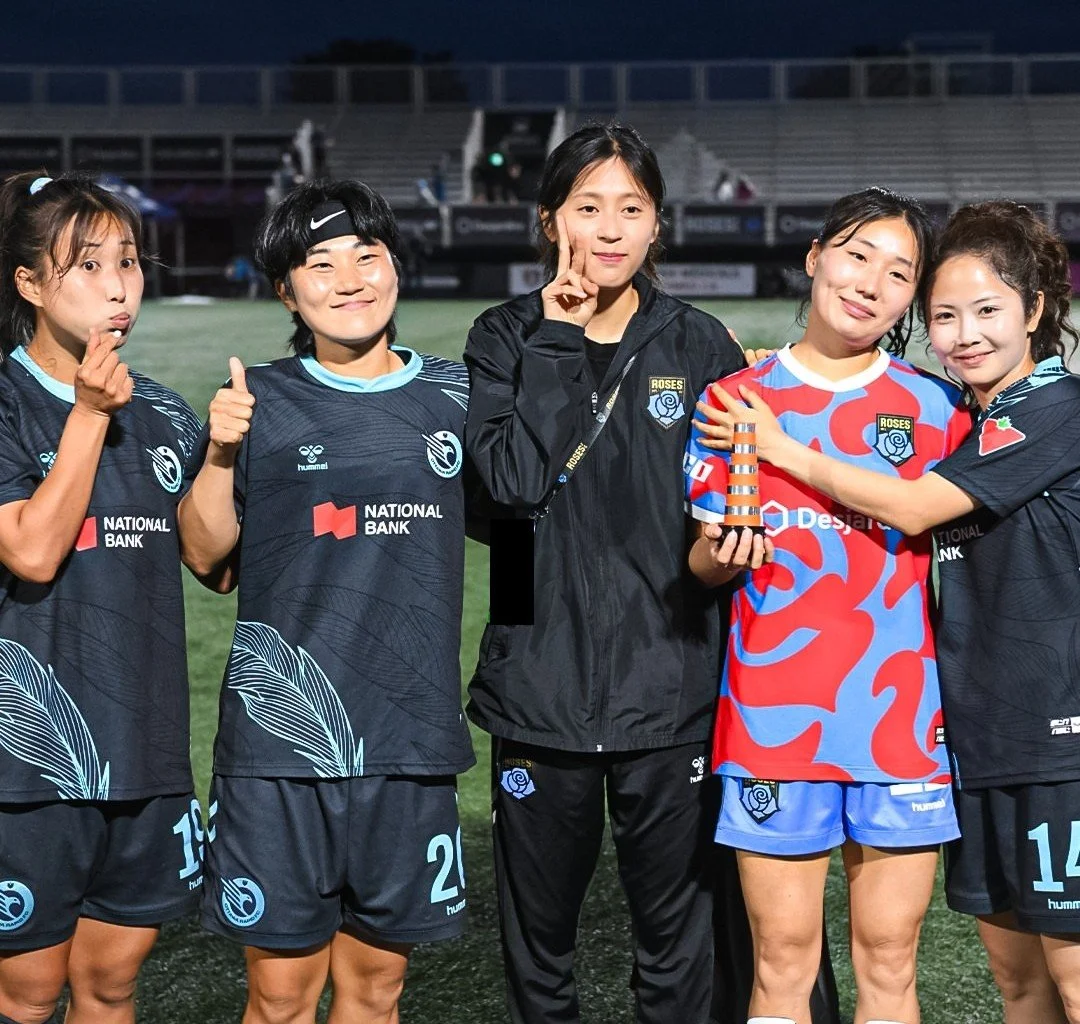
Ottawa’s Choo Hyo-joo (#19), Jung Min-young (#20), and Lee Min-a (#14) with then Montreal player, Kang Chae-rim (Photo Credit: Northern Super League)
Eyes on Brazil
The 2027 FIFA Women's World Cup remains the destination.
Between now and then, players will fight for places, nations will refine tactical identities and domestic leagues will play a crucial role in determining who arrives in Brazil ready to compete. Canada’s NSL cannot shape those journeys alone, but it is already becoming part of them.
For Korea Republic and Australia, it offers another platform for a generation seeking to transform potential into sustained success.
For the Philippines, it provides another environment in which established internationals can sharpen their game.
For the league itself, every representative appearance is another sign that the Canadian competition is earning recognition far beyond North America.
Less than two seasons into its existence, the Northern Super League is no longer simply developing Canadian football.
It is quietly becoming part of the global game.
Sources:
Jung Min-young, Ottawa Rapid player, personal interview, 18 July 2026
DB Pridham, Ottawa Rapid player, press conference, 11 July 2026
Melissa Dagenais, Ottawa Rapid player, press conference, 11 July 2026
Video Credits:
Kahli Johnson header, Northern Super League, 22 July 2026 - Video courtesy @northernsuperleague via X
Photo Credits:
Jung Min-young with fans, Northern Super League, 11 July 2026 - Photo courtesy of Northern Super League
Ottawa players with Chae-rim, Northern Super League, 25 June 2026 - Photo courtesy of Northern Super League
South Korea National Team, Bismark Nii Kojo Adjei, 18 March 2026 - Photo courtesy of Bismark Nii Kojo Adjei
All photos are used with permission. All rights reserved to the creator.

Support PSP Media
Every contribution helps support independent research and reporting