
How Haiti Overcame Instability and Restrictions to Reach World Cup 2026
By Nii Wallace-Bruce
Haiti Earned Their Place
There will be people who look at Haiti’s return to the men’s FIFA World Cup and reduce it to arithmetic. Forty-eight teams instead of 32. Three CONCACAF giants already qualified as hosts.
An easier pathway. It is the kind of shallow accounting soccer often produces when it tries to explain away uncomfortable stories of resilience. Because Haiti did not stumble into this World Cup. They survived their way into it. And there is a difference.
The casual narrative surrounding smaller CONCACAF nations has been shaped by proximity to power. If the United States, Mexico and Canada vacate qualifying places as co-hosts, then someone else inevitably benefits. The assumption follows that nations like Haiti simply emerged from an administrative vacuum for 2026. With Costa Rica, Honduras and Jamaica all missing the expanded World Cup format, that narrative does not hold. More importantly, it ignores what Haiti has had to overcome merely to function as a national team.
This is not a federation operating under normal circumstances. This is not a country playing qualifiers with political stability, logistical certainty, or even guaranteed access to home soil. Haiti has spent more than 15 years attempting to build a competitive soccer identity while enduring overlapping crises: hurricanes, security concerns, economic strain, and the lingering aftershocks of the 2010 earthquake catastrophe. And yet, through it all, the team endured.
The Resolve of Sébastien Migné
Sébastien Migné has quietly overseen Haiti’s project since 2024. That work has taken place remotely, under conditions that would test even established federations.
For comparison, Canada Head Coach Jesse Marsch continues to reside in Europe, commuting to North America for home and CONCACAF fixtures. Migné, by contrast, has been unable to travel to Haiti at all due to the security situation in Port-au-Prince and surrounding areas. The Haitian Football Federation (FHF) was forced to abandon its headquarters in 2021 due to encroaching gang violence. Further, training facilities were attacked and burned down in February 2026 after clashes between gangs and law enforcement.
There is something distinctly modern about Haiti’s setup. Players arrive from clubs across Europe, North America, and the Caribbean. Logistics shift constantly. Matches are relocated.
Ahead of the 2025 CONCACAF Gold Cup, Migné was candid about the difficulties of securing visas for Haitian-based players to participate in a tournament hosted in the United States.
And still, he managed to create coherence. Not glamour. Not tactical mythology. Coherence. Haiti became difficult to beat in qualifying. Competitive. Emotionally connected.
Capable of surviving difficult moments without collapsing into chaos. That psychological resilience became tactical resilience.
The easy assumption is that smaller nations qualify because stronger ones decline. But Haiti’s campaign reflected something else entirely: structure, discipline, and accumulated trust. Those things are not accidental. They are built.
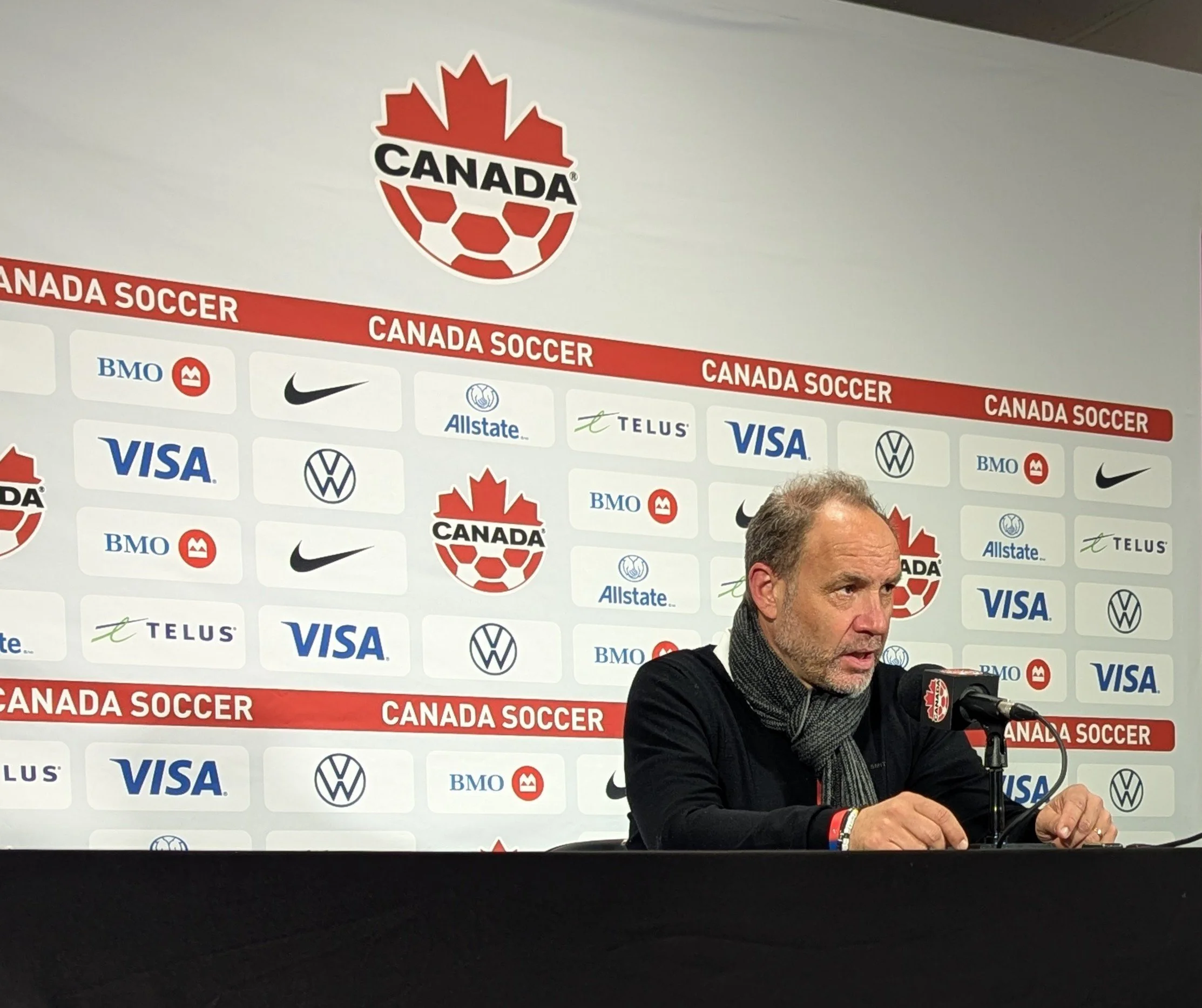
Haiti Head Coach Sébastien Migné has managed the team entirely from abroad. (Photo credit: Nii Wallace-Bruce)
A Team Without a Home
Perhaps the clearest symbol of Haiti’s qualification journey is this: they never played at home. World Cup qualifying is often discussed through atmosphere.
The emotional force of national support. Haiti largely navigated the process without that advantage. Home matches were relocated to Willemstad, Curaçao. Haiti
A neutral venue became necessity rather than choice. “Hosting” became symbolic. And yet the players still carried the emotional burden of representing millions of Haitians across the world.
Haiti were similar to Ukraine, Belarus, Israel and Palestine in this regard. However, only one of those nations made it to the 2026 FIFA World Cup.
After a friendly against Iceland in Toronto, Wolverhampton midfielder Jean-Ricner Bellegarde described that reality to PSP Media:
“We don’t play at home, but we can feel the energy from the fans and we need to fight for them.”
That sentence captures the duality of Haitian soccer. The team has often been geographically displaced, but emotionally present. The diaspora became the home crowd.
From San Diego to Toronto to Miami and beyond, Haitian support followed the team across borders, because borders have increasingly defined the Haitian soccer experience.
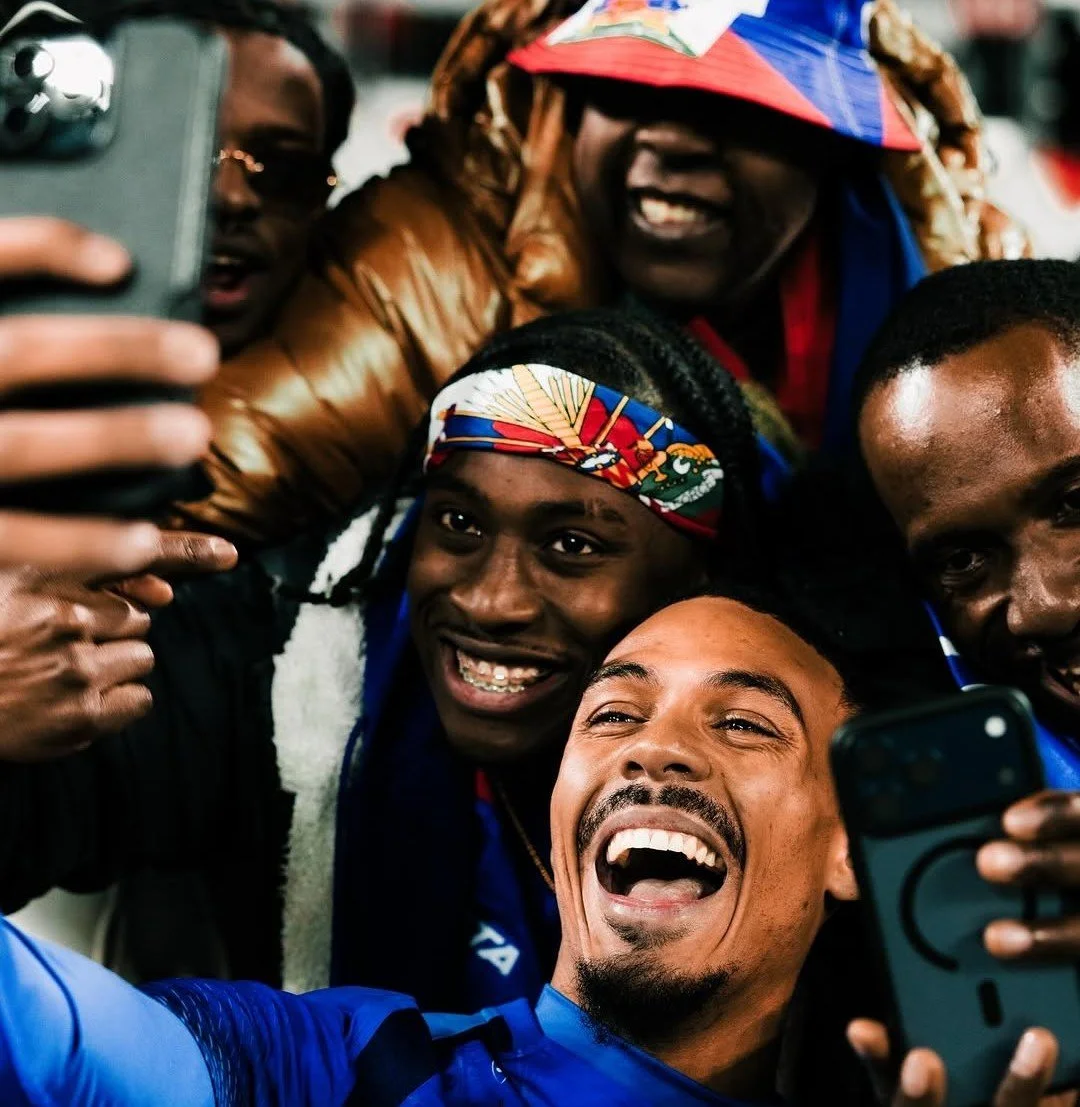
A passionate Haitian diaspora helps to make the team feel at home wherever they play. (Photo credit: Ayoub Ghariani and NoussourTN)
The Administrative Battle Behind the Squad
The 26-man squad selected for World Cup 2026 may not be Haiti’s strongest possible group. That is the cruellest layer of the story.
For many soccer nations, selection is a technical question: form, fitness, tactics. For Haiti, it can become an administrative and geopolitical negotiation. Haitian officials and players have repeatedly faced difficulties travelling to the United States for regional competitions. CONCACAF tournaments become entangled with visa realities, shifting policies, and administrative delays.
In March 2026, Jamaican club Mount Pleasant were forced to field academy players against Major League Soccer Club LAFC in the CONCACAF Champions Cup after seven Haitian players were denied visas to the United States, linked to travel restrictions introduced earlier that year. The irony is stark. A World Cup is supposed to represent global inclusion. Yet for Haiti, inclusion often remains conditional long before a ball is kicked. There is a legitimate argument that the strongest Haitian men’s team may never assemble under equal conditions, because movement itself is unevenly distributed.
At the same time, this visibility has encouraged some dual nationals to commit. Sunderland striker Wilson Isidor switched allegiance from France in March 2026. Conversely, former Celtic and current Lens forward Odsonne Édouard declined a call-up for the World Cup squad, having not featured in qualifying, feeling that a late commitment was not legitimate. Like Isidor, Édouard came through France’s youth system and he still harbours hopes of senior international soccer with Les Bleus.
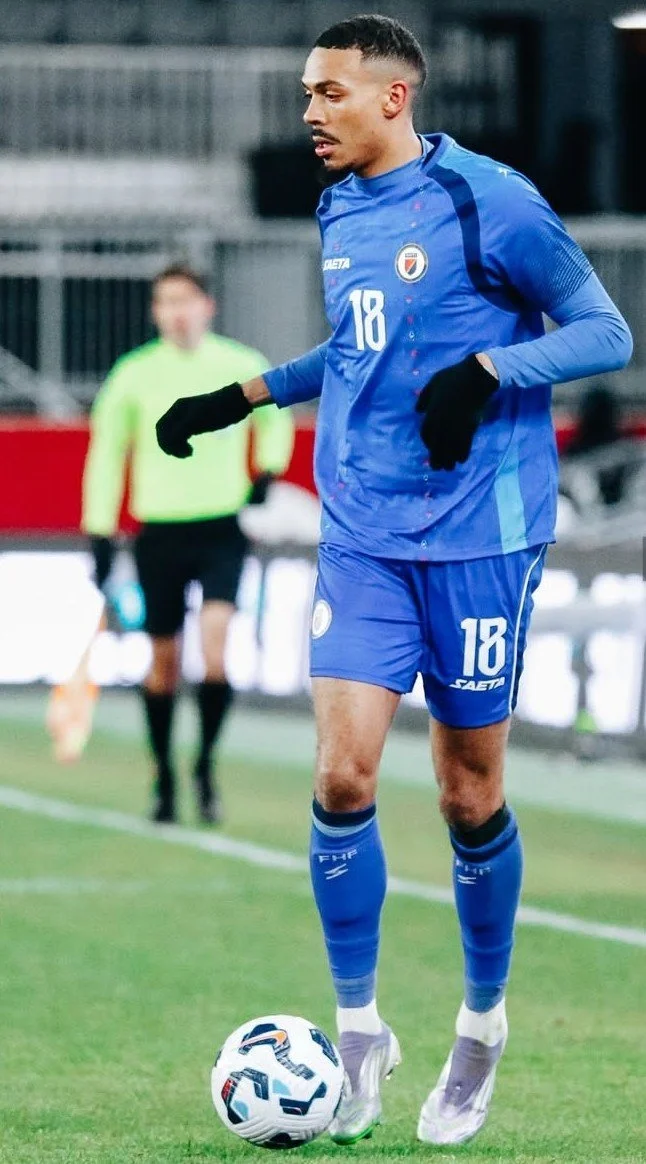
New recruit Wilson Isidor will look to carry the hopes of Haiti forward at the 2026 FIFA World Cup. (Photo credit: Lentini Theodore)
More Than Expansion
None of this suggests the 48-team World Cup did not alter opportunity structures. Of course it did. That is true globally, not just in CONCACAF. But expansion alone does not create resilience. It does not create tactical discipline. It does not create emotional cohesion. And it certainly does not create a national team capable of carrying the weight Haiti’s players have carried over the last several years. Qualification pathways can open doors. Teams still have to walk through them. Haiti did. And they did so while navigating conditions many national programs would struggle to survive.
The Meaning of the World Cup
Soon enough, attention will turn to results.
Brazil. Scotland. Morocco.
That is the machinery of the FIFA World Cup. But for Haiti, the significance may already exist independent of what happens on the pitch. This qualification is not merely sporting achievement.
It is continuity amid fragmentation, representation amid displacement, and national presence amid instability. Jean-Ricner Bellegarde alluded to that broader meaning when speaking about what the tournament could represent: “I hope more Haitians can come to the World Cup and enjoy recovery now.”
Recovery, not victory. That word says almost everything.
Because Haiti’s qualification is not a fairy tale about underdogs benefiting from format expansion. It is the story of a nation that remained assembled long enough to reach soccer’s biggest stage. And in many ways, that human triumph may matter more than what happens against Brazil, Scotland, or Morocco.
Sources:
Jean-Ricner Bellegarde, Haitian international player, personal interview, 31 March, 2026
Sébastien Migné, Haiti Head Coach, press conference, 28 March, 2026
Sébastien Migné, Haiti Head Coach, media availability, 20 May, 2025
Reuters, Haiti coach leading country he has never been to, Mark Gleeson, 17 November 2025
BBC Sport, Ten players from Jamaican club denied entry to US, Alisa Cowen, 10 March 2026
The Glasgow Times, I'm ex-Celtic star and here's why I've rejected World Cup chance, Martin McMillan, 23 May 2026
The Haitian Times, Gangs set fire to Haiti’s national soccer training center in Croix-des-Bouquets, 4 February 2026
Photo Credits:
Wilson Isidor controls possession, Lentini Theodore, 28 March 2026 - Photo courtesy of Lentini Theodore - @lentini_965 via Instagram
Sébastien Migné post-match, 28 March 2026 - Photo courtesy of Nii Wallace-Bruce
Wilson Isidor and Haitian fans, Ayoub Ghariani, 28 March 2026 - Photo courtesy of Ayoub Ghariani and NoussourTN - @NoussourTN via Instagram
All photos are used with permission. All rights reserved to the creator.

Support PSP Media
If this article resonated with you, consider supporting PSP Media.
Every contribution helps support independent research and reporting.