
Marcelo Flores’ Canada Switch Explained: Talent, Identity and Tactical Value
By Nii Wallace-Bruce
Part Five of The Shape of Canadian Soccer, a five-part series on identity, infrastructure and the legacy of the 2026 FIFA World Cup.
From Arsenal Wonderkid to International Question Mark
Long before Marcelo Flores committed his international future to Canada, he had already become a symbol of modern football’s borderless identity. Born in Canada to an English mother and eligible for Mexico through his father, Flores existed inside three footballing conversations at once. He was not merely a prospect. He was a referendum.
Mexico viewed him as the next elegant attacking technician capable of restoring imagination between the lines. Canada saw him as evidence of the program’s changing gravitational pull — a young elite talent choosing a rising football nation over a traditional regional power. England, meanwhile, lingered quietly in the background, another pathway theoretically available to a player shaped inside its academy system.
That complexity only intensified after Flores was named in The Guardian’s prestigious “Next Generation 2020” list, recognizing the best young talents in world football. At Arsenal, his close control, balance and improvisational instincts made scouts and supporters pause. There was a softness to the way he manipulated space, the kind of tempo control often associated with street footballers rather than academy products. But modern development is rarely linear. Especially for creative players.
The gap between youth-level promise and senior-level influence is littered with footballers who were once described as inevitable. Flores spent years suspended awkwardly between projection and production — too talented to ignore, yet still searching for the tactical maturity and physical consistency international football demands.
That is why his recent emergence with Canada feels different. Not because he suddenly became more gifted. But because his game is becoming more complete.
Dual-national players often exist inside impossible conversations. Every touch becomes geopolitical.
The Emotional Weight of Choosing Between Mexico and Canada
For dual-national players, international football is rarely just tactical. It becomes emotional shorthand for identity, belonging and expectation. Every appearance is interpreted through the lens of what was chosen — and what was rejected.
Flores understood that long before he ever fully broke into senior football. Mexican supporters viewed him as one of their own, particularly when he moved from Arsenal to Tigres in 2023. Canadian supporters saw him as a landmark recruitment victory. Social media transformed ordinary developmental inconsistency into something heavier, with every performance reframed as evidence for one side or the other. Yet the most interesting part of Flores’ story may be how quietly he has handled the noise.
There has been no manufactured controversy. No performative declarations. No attempt to inflame the conversation around his decision. Instead, his football increasingly reflects a player trying to earn trust rather than attention. That matters for Jesse Marsch.
Canada’s current evolution is not simply about collecting talent. It is about assembling players capable of functioning inside a demanding collective structure built on pressing intensity, transitional aggression and tactical discipline. Flair alone does not guarantee inclusion. Work rate does. And Flores appears to understand that.
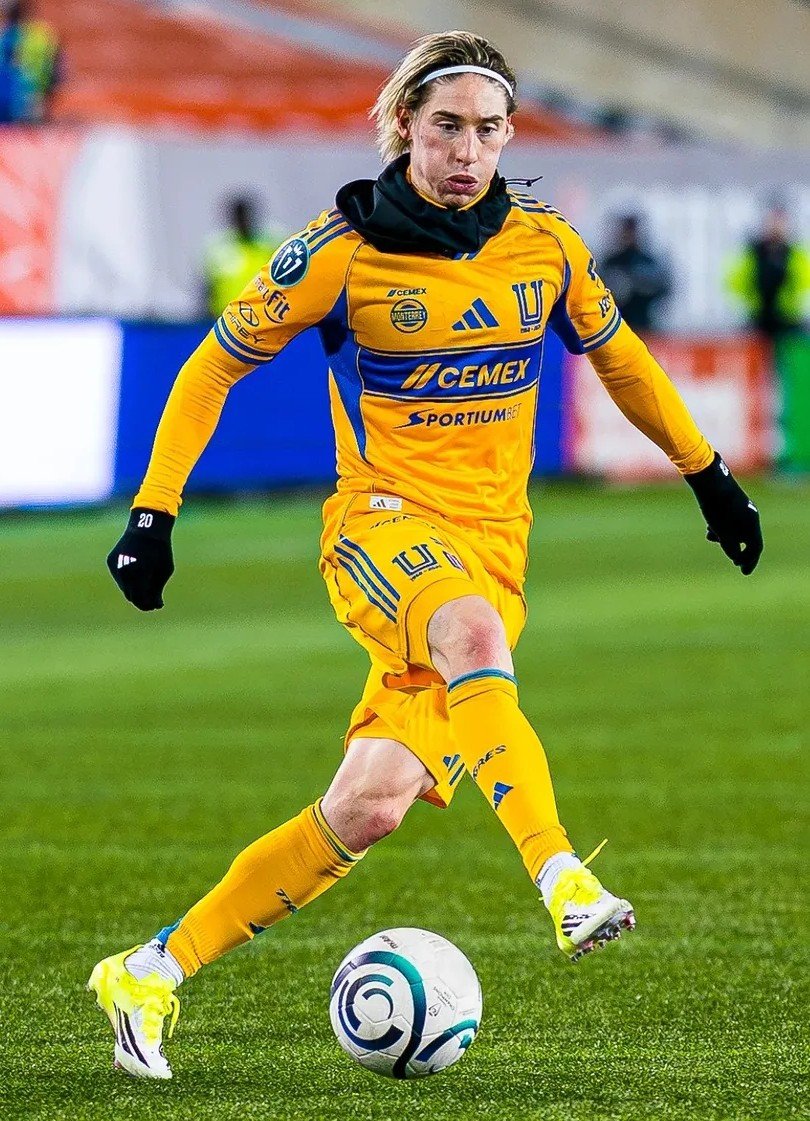
Marcelo Flores recently played in his home province, when Tigres faced Forge FC in the CONCACAF Champions League. (Photo credit: Marc Eyme)
What Marcelo Flores Showed Against Iceland
His debut performance against Iceland in Toronto on 28 March 2026 was revealing precisely because it was so restrained. There were flashes of the technical quality observers already knew existed — the half-turns under pressure, the willingness to receive possession in crowded areas, the subtle pauses before releasing the ball. But the more important takeaway was his energy without possession.
Flores pressed aggressively. He tracked runners. He accelerated transitions rather than slowing them unnecessarily. At times, he looked less like a traditional luxury playmaker and more like a modern pressing attacker capable of functioning inside Marsch’s system. After the match, Flores offered an answer that unintentionally revealed where his mentality currently sits.
“I just try to get on the ball, try to be more energetic,” he said. “I was just trying to make the most of the first opportunity.”
It was not the language of a young player chasing viral moments. It was the language of somebody trying to become reliable. That distinction could define his international future.
Later, reflecting on Canada’s response under pressure at 2-0 down, Flores added: “The mentality never went down.” Again, the phrasing mattered. Canada scored twice after Flores entered the match, despite playing with ten men following Tajon Buchanan’s red card.
Canada’s best recent performances under Marsch have not simply been athletic. They have been emotionally durable. Flores increasingly looks like a player beginning to understand that surviving at international level requires emotional discipline as much as technical imagination.
What Marcelo Flores Showed Against Tunisia
Three days later, the picture became fuller.
Starting against Tunisia, the mercurial talent flashed brilliance on the ball. Flores showcased the qualities that once made him one of Arsenal’s most intriguing academy prospects: close control, composure and the ability to receive possession comfortably in crowded attacking spaces. The match itself finished goalless, but Canada emerged with something arguably more valuable: confirmation that Flores can contribute within the emotional and tactical demands of Marsch’s system.
However, there was a sense of optimism that Jesse Marsch had found an additional option for set pieces and build up play in possession. Further, Marcelo Flores also displayed a willingness to get involved off the ball, winning ground duels and blocking a shot. With the high-energy system that Marsch deploys, every player will be required to protect difficult results at the 2026 FIFA World Cup.
Having completed a rigourous apprenticeship under Per Mertesacker and Mikel Arteta at Arsenal, Flores has what it takes to meet the requirements of another red and white team under Jesse Marsch with the Canadian men’s national team.
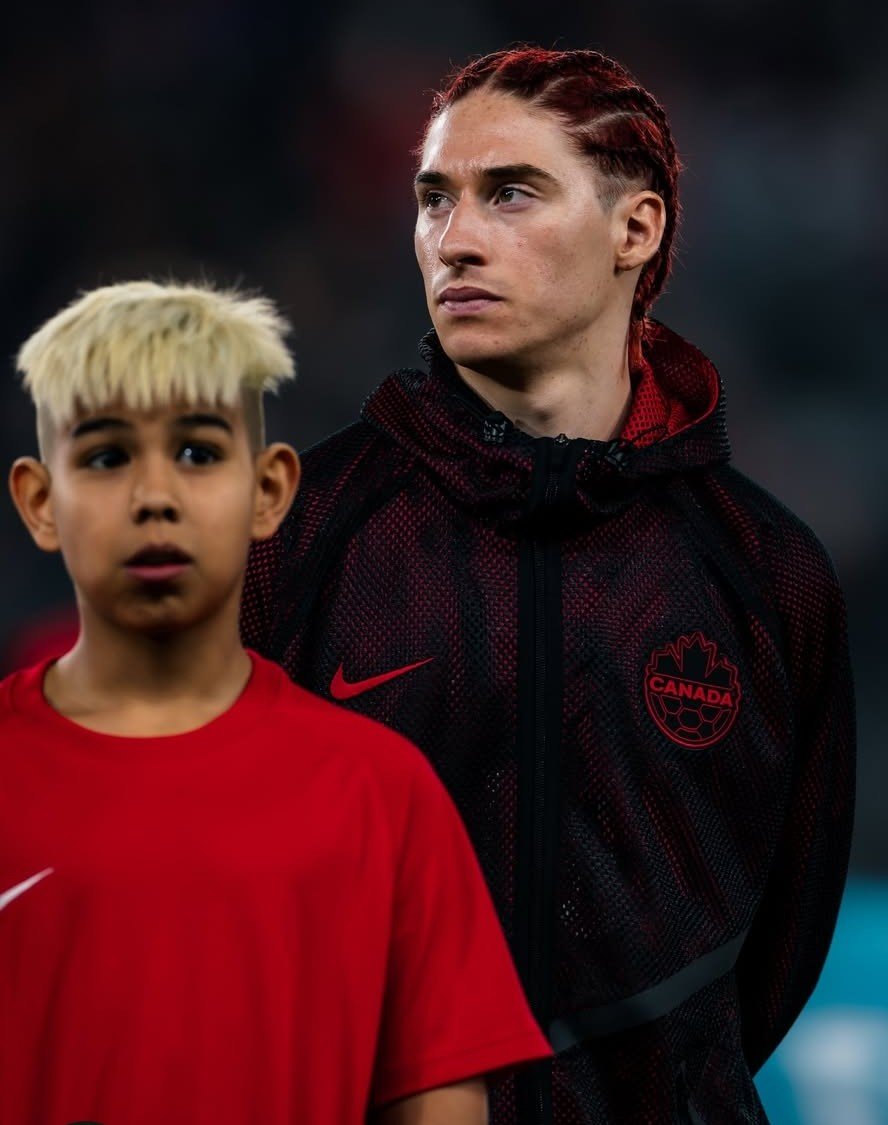
Flores made his starting debut for Canada on home soil against Tunisia (Photo credit: Canada Soccer/CanMNT)
Why Canada Needs His Creativity Now
Timing matters in football. Canada enter the summer balancing ambition with uncertainty. Questions surrounding the fitness and availability of players like Alphonso Davies and Richie Laryea inevitably alter the emotional and tactical landscape of the squad. Even when available, tournament football demands secondary creators — players capable of relieving pressure when matches become chaotic or compressed.
That is where Flores becomes particularly intriguing. In March, Flores was deployed on the left wing, a position usually occupied by Davies. After recent news of another injury suffered at Bayern Munich, the Canadian captain faces a race against time to be available for the first two group stage matches of a World Cup on home soil. Enter Flores.
Canada’s attack has often thrived through directness: speed in transition, vertical running and aggressive pressing triggers. But against deeper defensive blocks, the team can occasionally lack pause and manipulation between the lines. Flores introduces another rhythm.
He slows the picture just long enough to distort defensive shape before accelerating the move again. Those micro-delays matter. Elite chance creation often emerges not from constant speed, but from understanding when to interrupt it.
Canada do not need Flores to become their superstar this summer. They may simply need him to become connective tissue.
A player capable of linking transitions, carrying possession through pressure and giving the attack a layer of unpredictability that cannot always be coached structurally.
More Than Flair: Flores’ Defensive Work Rate Stands Out
Creative players are often judged almost exclusively by what they produce with the ball. Marsch’s football demands evaluation without it. This is where Flores’ development may be most significant.
Against Iceland and more so against Tunisia, his defensive reactions were immediate. When possession was lost, he counter-pressed rather than drifting emotionally out of the sequence. He closed passing lanes with urgency. He recovered into shape quickly. Those details determine trust at international level, particularly for attacking midfielders competing for minutes inside physically demanding systems.
There is still refinement required, of course. Decision-making in the final third can sharpen. Physical duels remain an area of growth. But the overall profile now looks far more compatible with high-level tournament football than it did even a year ago.
Canada may finally be getting something better than a wonderkid — a complete footballer.
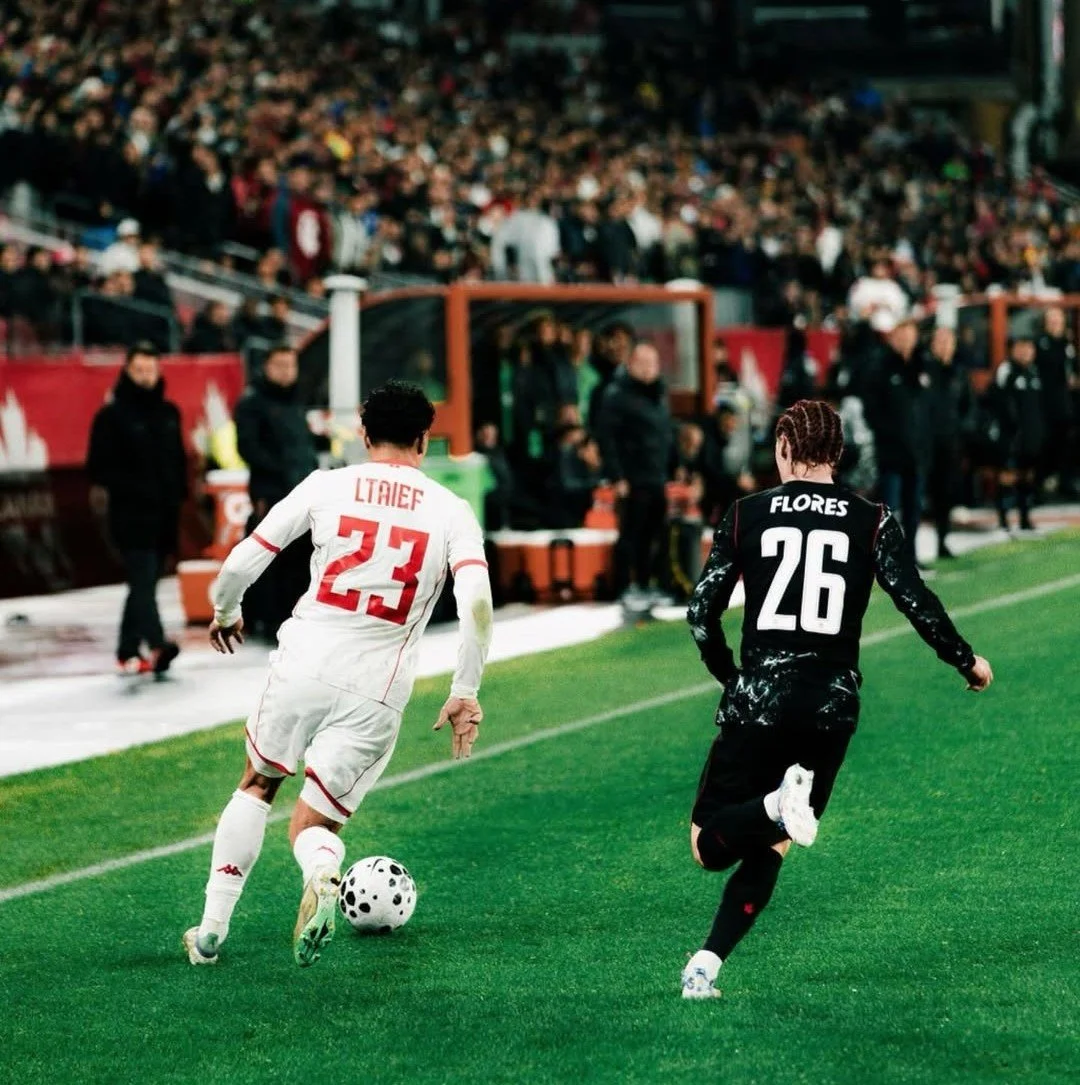
The World Cup will ask a lot of Marcelo Flores, on and off the ball. (Photo credit: Canada Soccer/CanMNT)
How Jesse Marsch Could Use Marcelo Flores This Summer
Marsch’s tactical flexibility creates several possible roles for Flores.
He can operate as an inverted wide creator drifting inside from the flank. He can function underneath the striker in transitional moments. In matches where Canada expect sustained possession, he may even become useful as a connective midfielder positioned between opposition lines.
More importantly, his versatility allows Marsch to alter game rhythm without dramatically changing structure.
That flexibility becomes invaluable during tournament football, where matches often swing unexpectedly between controlled possession and transitional chaos.
Flores may not begin every match. He may not always dominate statistically. But players capable of changing emotional tempo often become decisive over the course of condensed competitions.
Particularly in tournament football, where control can disappear in seconds.
What Canadian Fans Should Watch For
The temptation with Flores will always be to watch exclusively for moments of brilliance. The sharper indicator may be everything surrounding them.
Watch how often he demands the ball under pressure. Watch his defensive recovery runs after turnovers. Watch whether teammates continue trusting him in tighter spaces. Watch how frequently he scans before receiving possession.
Those are the details separating prospects from international contributors.
For years, Marcelo Flores represented potential — a footballer projected endlessly into the future. This summer may finally offer something more concrete.
Not the arrival of a saviour. Not the coronation of a prodigy.
Something potentially more valuable than either: a gifted young player beginning to understand exactly who he is.
Sources:
The Guardian, Next Generation 2020: 60 of the best young talents in world football, Marcus Christenson, Jim Powell and Garry Blight, 8 October, 2020
Marcelo Flores, Canadian international player, media scrum, 28 March, 2026
Sabri Lamouchi, Tunisia Head Coach, press conference, 31 March, 2026
Photo Credits:
Marcelo Flores Tigres action, Marc Eyme, 4 February, 2026 - Photo courtesy of Ayoub Ghariani and NoussourTN - Photo courtesy @midnightn6ix via Instagram
Marcelo Flores national anthem, Canada Soccer, 31 March, 2026 - Photo courtesy of Canada Soccer/@CanMNT via Instagram
Flores pursuing Ltaief, Ayoub Ghariani, 31 March, 2026 - Photo courtesy of Ayoub Ghariani and NoussourTN - Photo courtesy of @NoussourTN via Instagram
Video Credits:
Marcelo Flores in action, Canada Soccer, 31 March 2026 - Video courtesy of Canada Soccer/@CanMNT via Instagram
All photos are used with permission. All rights reserved to the creator.

Support PSP Media
If this article resonated with you, consider supporting PSP Media.
Every contribution helps support independent research and reporting.