
Toronto, the World Cup, and the City’s Summer of Renewal
By Nii Wallace-Bruce
Part One of The Shape of Canadian Soccer, a five-part series on identity, infrastructure and the legacy of the 2026 FIFA World Cup.
The streets of Toronto have carried a quiet weight since 2020. Neighbourhoods once brimming with activity and conversation now echo. Buses, streetcars, and subways hum with fewer passengers. Human interactions have been reduced to transactional discussions. The city’s glittering, familiar skyline feels subdued.
And yet, this summer, the FIFA World Cup will arrive like a pulse of light, a chance to exhale, to celebrate, to reclaim the city’s energy. The stadium at Exhibition Place will host matches that carry the weight of nations, and the streets and neighbourhoods beyond the stadium will vibrate with possibility.
“Toronto is well known for being a bit nonchalant about these things until they actually happen. I saw it with the Pan Am (Games in 2015) which happened during my time, and I'm seeing it a bit here now, compared to some other places. But it's going to be great, and it always was going to be great, and we'll be very glad we did it.”
- Former Toronto mayor John Tory, speaking to PSP Media about the 2026 World Cup in Toronto
As mayor of Toronto, John Tory was influential in bringing the world’s biggest sporting event to Canada’s most populated city. He also had to lead the city through the uncertainty of the Covid pandemic. Toronto still bears the emotional aftershocks of the pandemic. However, from empty sidewalks to packed terraces, Toronto is poised for a summer of rebirth, with the beautiful game as its centerpiece.
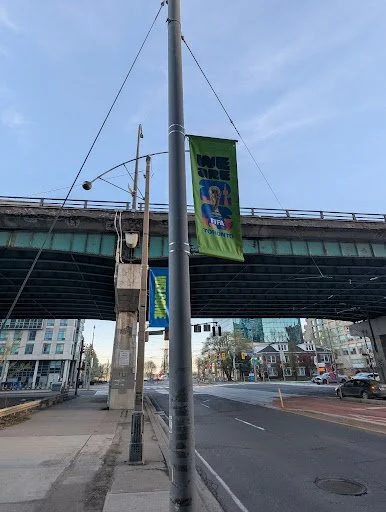
The 2026 FIFA World Cup could make the streets of Toronto filled with life again.
(Photo Credit: Nii Wallace-Bruce)
From Silence to Celebration: A City’s Reawakening
Toronto’s quiet streets have become a canvas for hope. The World Cup isn’t just a sporting event. A city of almost 200 languages can speak freely when there is a ball in play. In parks across Scarborough and North York, floodlights stay on late into the evening as children recreate goals they watched in league games hours earlier. Parents linger on folding chairs long after training sessions end. The city feels outside again.
Tourism and hospitality are anticipating a surge of visitors, while local communities prepare to welcome teams and fans from across the globe. During previous tournaments, one could spot at least 25 different flags of participating nations on the highways. With an expanded 48-team format for 2026, Toronto’s streets may resemble a rolling atlas this summer. For many, the tournament represents a return to shared experience, a chance for Torontonians to once again crowd cafés and bars, gather in parks, and chant in unison.
“We are so proud that the FIFA World Cup is coming to the city. The world is coming to Toronto. We are so ready.”
- Incumbent Toronto mayor Olivia Chow speaking to PSP Media

Toronto Mayor Olivia Chow says the city ready to welcome the world this summer.
(Photo credit: Nii Wallace-Bruce)
On the Pitch: Inspiration for a New Generation
For Dwayne De Rosario, the World Cup’s arrival in Toronto carries the weight of memory. Long before Canada qualified for the modern tournament, football lived in schoolyards, indoor centres, and community pitches across Scarborough and the city’s inner suburbs. The former Canadian captain sees 2026 not simply as spectacle, but recognition for generations who built the game quietly in Toronto long before the world started paying attention.
“Just embrace the whole culture. Embrace everything that the game brings. Walk to the game with the fans. You don’t have to go into the stadium. There’s so many great things going on for free that you could be involved in. Learn different cultures, laugh, smile. Have a great time. It’s going to be a real special time. We are a world in a city and we truly reflect that.”
- Dwayne De Rosario
Jonathan Osorio understands what this summer could mean to the city because he grew up inside its football culture. The Toronto-born midfielder may walk out for Canada in his hometown on June 12, opening a World Cup in the same city where his own football journey began — on his birthday. The tournament is more than spectacle; it’s a launchpad for Canadian soccer development, inspiring the next wave of talent.
“We’ve seen what host countries have been able to do in most cases,” Osorio said. “When you have the support of the whole country behind you, it’s always a boost. It’s always an advantage. We plan on using that.”
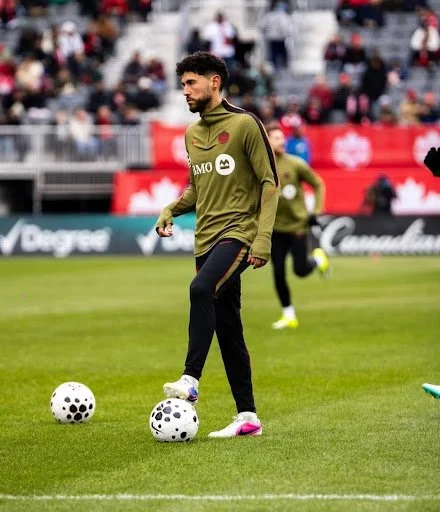
Toronto FC and Canada midfielder Jonathan Osorio has a unique opportunity when the national team starts their campaign in Toronto on June 12
(Photo credit: Alisa Tran)
Economic and Cultural Impact: More Than Goals
Large sporting events such as the FIFA World Cup and summer Olympic Games are seen as a boost to host cities in the form of revenue for hotels, restaurants, and tourism. In the aftermath of Covid, Toronto has seen many restaurants, bars and cafes shut their doors. Unemployment has been on a steady rise too. Toronto may need the World Cup’s economic injection as much as an injured player needs treatment. However, the broader benefit is cultural: Toronto becomes a stage where its diversity, pride, and the human spirit is celebrated.
“There's going to be excitement in the city. I mean long before we had a World Cup game here, there was huge excitement in the city, almost, no matter who was playing and I think we needed that. And when you are the most diverse city in the world, you need to do things that bring people together all the time”
- John Tory on the motivation to bid to bring 2026 FIFA World Cup matches to Toronto
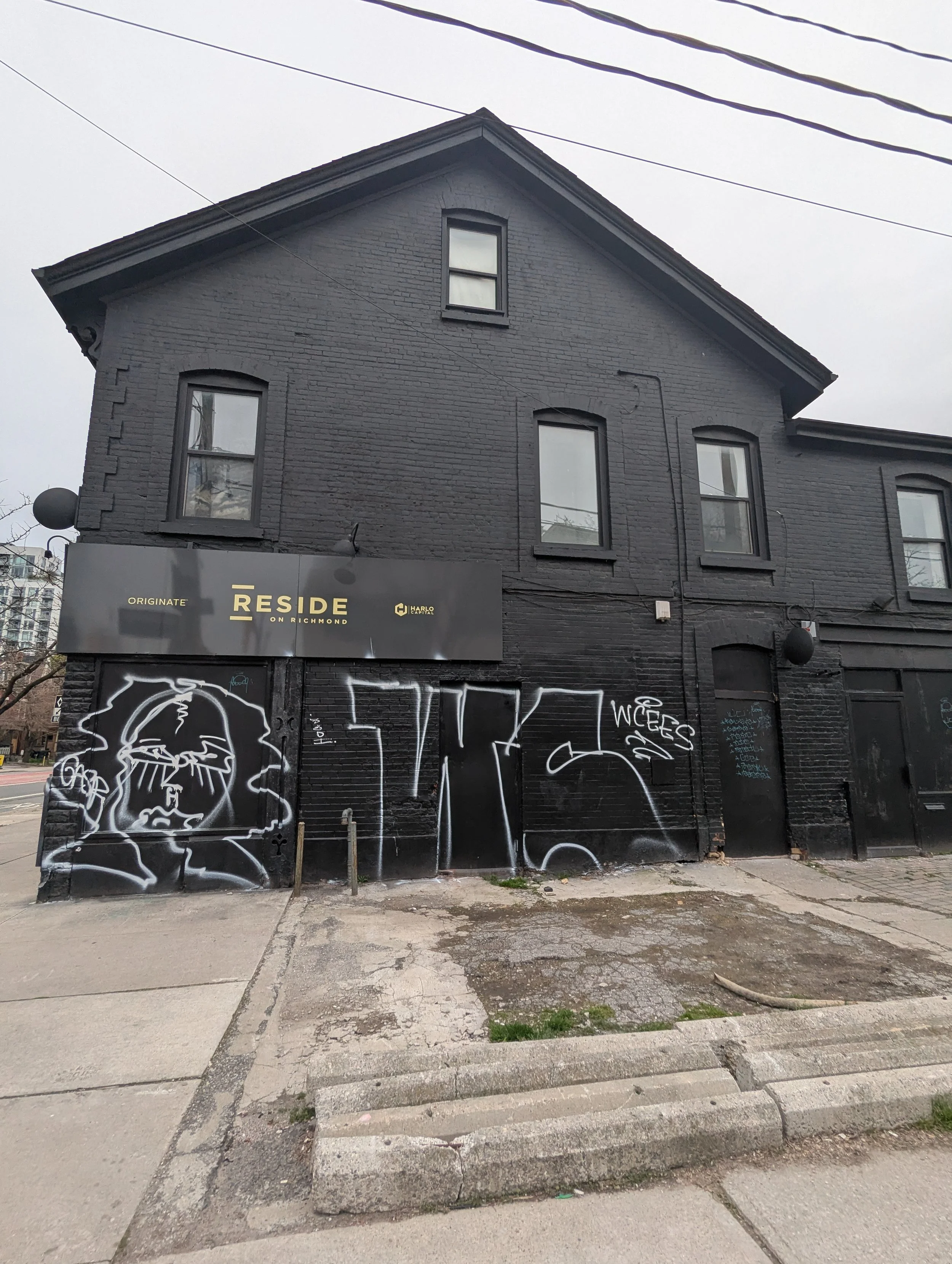
Once a popular venue for fans of the beautiful game in Toronto, The Football Factory closed in 2022. (Photo credit: Nii Wallace-Bruce)
The Human Pulse: Toronto Lives Soccer Again
As March and April clouds give way to May sunshine, there is optimism in Toronto. Along Dundas Street West, shop windows are already beginning to change. Portuguese flags hang beside Canada scarves. Televisions flicker in barbershops. Restaurant owners debate which matches will fill patios first. In a city that often keeps to itself, football has started drawing people back into conversation. Conversations swirl around teams, group matches, and potential heroes. The World Cup is more than logistics. Like the matches themselves, it is impossible to predict the actual legacy and impact for a host city. However, the ingredients are there to create a moment for Toronto to feel alive again.
“It's going to be a jolt of hope and happiness that we kind of need, I think right now, especially in Toronto.”
- John Tory
Sources:
John Tory, Former Toronto mayor, personal interview, 12 December, 2025
Canadian Broadcasting Corporation, “Tory says he supports proposal for Toronto to co-host 2026 FIFA World Cup”, Muriel Draaisma, 22 January, 2018
Olivia Chow, Toronto mayor, media scrum, 12 December, 2025
Dwayne DeRozario, FIFA World Cup 2026 Ambassador - Toronto, public lecture, 8 May, 2026
Jonathan Osorio, Canadian international player, media scrum, 12 December, 2025
Photo Credits:
Flags under Expressway, 15 May 2026 - Photo courtesy of Nii Wallace-Bruce
Mayor Chow talks to media, 12 December, 2025 - Photo courtesy of Nii Wallace-Bruce
Jonathan Osorio warming up, Alisa Tran, 28 March 2026 - Photo courtesy of assignment by PSP Media
Artistic Ball Sculpture, 12 May 2026 - Photo courtesy of Nii Wallace-Bruce
The Old Football Factory, 14 May 2026 - Photo courtesy of Nii Wallace-Bruce
All photos are used with permission. All rights reserved to the creator.

Support PSP Media
If this article resonated with you, consider supporting PSP Media.
Every contribution helps support independent research and reporting.