
How Benfica, Sporting and Porto built competing institutions that came to define a nation's game. These Portuguese giants are unusually connected by the recent run of a club from outside of the top flight.
Portugal's footballing power is often measured by the players it produces. Cristiano Ronaldo, Luís Figo, Bernardo Silva, Bruno Fernandes.
The names have become familiar exports of a country whose influence on the international game far exceeds what its population or domestic economy might suggest.
But behind the players are institutions. Three, in particular, have shaped the country's footballing identity for more than a century.
SL Benfica, Sporting CP, and FC Porto are more than successful football clubs. They are competing expressions of Portuguese identity, shaped by different histories, geographies and institutional ambitions.
Their influence extends beyond trophies and supporters into the development of players, the economics of the domestic game and Portugal's position within the international football market.
Their histories also intersect with those of the country itself: the fall of the monarchy, the establishment of the First Republic, the authoritarian Estado Novo, the Carnation Revolution and the emergence of modern democratic Portugal. Football did not exist outside these transformations.
Football became one of the places where Portuguese society expressed its regional loyalties, social identities and competing ideas of national belonging.
To understand Portuguese football, it is necessary to understand these three institutions. And occasionally, to understand their influence, it helps to look beyond them.
In May 2026, Torreense defeated Sporting 2–1 after extra time to win the Taça de Portugal, becoming the first club from outside the top division to lift the trophy.
It was an extraordinary result, but also a useful reminder: Portuguese football has a wider geography than its established hierarchy suggests.
The three republics remain powerful. They are not the whole country.
Benfica: The People's Institution
On 22 November 2026, Torreense’s reign as Taça de Portugal champions came to an end when Benfica won 3-1 in the fourth round.
The match took place in Lisbon’s Estadio Nacional, the same venue where Torreense experienced their finest hour, six months earlier, against Benfica’s bitter rivals.
Founded in 1904, Sport Lisboa e Benfica emerged from Lisbon's early football culture and developed into one of Portugal's defining sporting institutions.
Lisbon was the country's political capital, commercial centre and principal gateway to the wider world.
As football took hold among different sections of urban society, Benfica developed an identity rooted in popular reach.
Its support extended beyond the capital, eventually encompassing working communities throughout Portugal and the Portuguese diaspora.
The red shirt, the eagle and the Estádio da Luz became symbols of a sporting institution whose influence was no longer confined to Lisbon.
Its European triumphs transformed that domestic identity into an international reputation.
Consecutive European Cup victories in 1961 and 1962 established Benfica among the continent's elite, while Eusébio became one of the defining footballers of his generation.
Born in Mozambique, then under Portuguese colonial rule, Eusébio represented something more complicated than sporting excellence.
His career reflected the relationship between Portugal and its empire, and the movement of African talent into European football.
He became an international symbol of Portuguese football at a time when the Estado Novo was keen to project national prestige abroad.
It would be reductive to define Benfica through its relationship with the authoritarian regime.
Its popular identity and sporting achievements developed through much broader social relationships. But the political environment in which the club became internationally prominent remains part of its history.
Benfica's enduring strength has been its ability to translate popular identity into institutional scale.
The Benfica Campus in Seixal, inaugurated in 2006, illustrates that ambition.
It brings youth development and senior football into an integrated structure, providing a pathway for players to progress towards the first team and, potentially, the international market.
Bernardo Silva, João Félix, Rúben Dias and João Cancelo all passed through Benfica's development system, although their individual pathways and first-team experiences differed.
The significance of Seixal, however, is not simply the production of recognisable names. It is the institutional understanding that player development can create both sporting and commercial value.
The economic returns have been extraordinary. According to the CIES Football Observatory's April 2026 study of the world's 100 most profitable football academies, Benfica generated €589 million in transfer revenue from academy-trained players between July 2016 and April 2026, the highest figure of any club in world football.
It is a remarkable achievement for an institution operating outside Europe's wealthiest domestic leagues.
Benfica has turned its capacity to identify and develop talent into an international commercial advantage, creating a model in which sporting ambition and the transfer market are not necessarily competing interests. They can sustain one another.
For Benfica, the challenge is maintaining the balance between those ambitions. A club built to win championships cannot treat its academy exclusively as a production line.
Equally, an institution competing against Europe's wealthiest clubs cannot ignore the economic value of developing and selling talent.
Benfica's particular achievement is its ability to pursue both objectives while retaining an identity rooted in something older than the modern transfer market: the idea of a people's club.
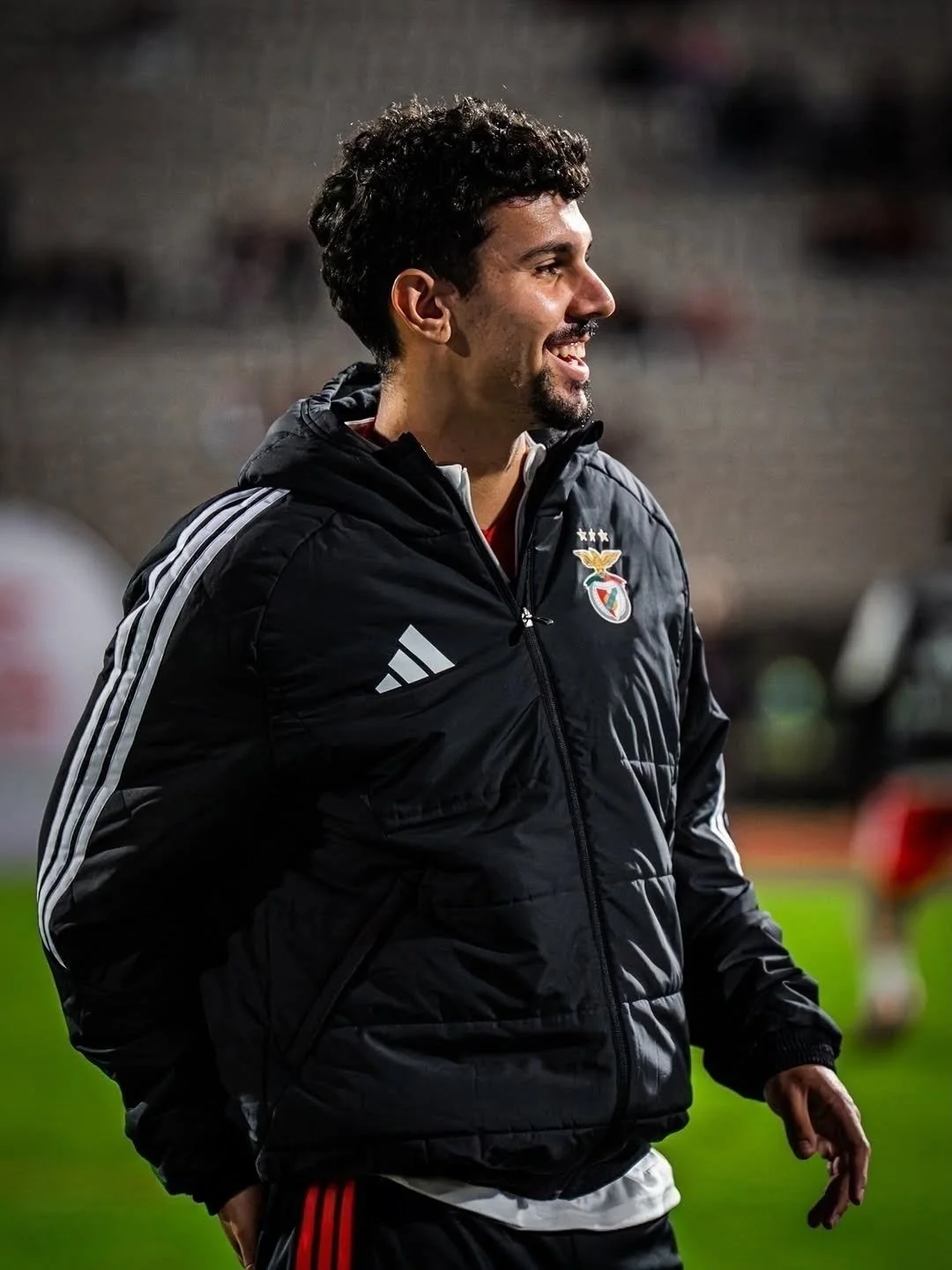
Tomás Araújo is another local talent who came through Benfica’s academy (Photo Credit: Dylan Inacio)
Sporting: The Education of Talent
Many Benfica fans experienced the schadenfreude of seeing their rivals lose to unfancied opposition when Stopira’s 113th minute penalty carried Torreense to their domestic cup victory.
Despite this blip, Sporting Clube de Portugal occupies a different place in the imagination of Portuguese football.
Founded in 1906, Sporting emerged from the sporting ambitions of José Alvalade and his contemporaries, who sought to establish an organisation whose ambitions extended beyond football.
Its institutional culture placed considerable emphasis on sporting education, technical development and the cultivation of young athletes. Sporting’s home ground bears Alvalade’s name.
The distinction between Sporting and Benfica should not be overstated. Both clubs have supporters across Portuguese society, and their identities have evolved considerably over more than a century.
But Sporting's reputation for developing young footballers became one of its defining characteristics.
Its academy at Alcochete, inaugurated in 2002, is among the most recognisable development environments in European football.
Its graduates include Luís Figo, Cristiano Ronaldo, Nani, Rui Patrício and João Moutinho. Few institutions can point to a development history with comparable international visibility.
That educational tradition also has a considerable economic dimension. CIES ranked Sporting fifth worldwide for academy-generated transfer revenue, with €417 million over the decade to April 2026.
The figure places the club among the most productive talent-development institutions in world football.
Sporting's achievement is not simply that it has produced some of Portugal's greatest footballers. It has developed an institutional capacity to identify, educate and prepare players whose value extends well beyond the domestic game. Alcochete is both a sporting environment and an important economic asset.
Yet the academy's importance lies in more than the names it has produced. Identifying a talented teenager is one thing. Preparing him for the tactical, physical and psychological demands of senior football is another. Providing a meaningful pathway into the first team is harder still.
Sporting has repeatedly demonstrated an ability to connect youth development with professional football.
Figo and Ronaldo illustrate how that system has operated across different generations. Figo emerged during a period in which Portuguese football was becoming increasingly integrated into the European game. Ronaldo developed in an era shaped by global media, international recruitment and the commercialisation of elite football.
Both passed through Sporting's development system, but entered a professional environment that was changing around them.
The challenge for Sporting is ensuring that Alcochete remains connected to sporting ambition rather than becoming an identity in itself.
An academy's reputation can become a considerable asset in the transfer market, but its ultimate value should be measured by what it contributes to the first team.
For Sporting, the question is not simply whether Alcochete can produce another superstar. It is whether the institution can continue producing footballers capable of sustaining its competitiveness.
Where Benfica's identity has been built around popular reach, Sporting's institutional reputation rests heavily on education: the belief that elite footballers can be developed, rather than simply purchased.
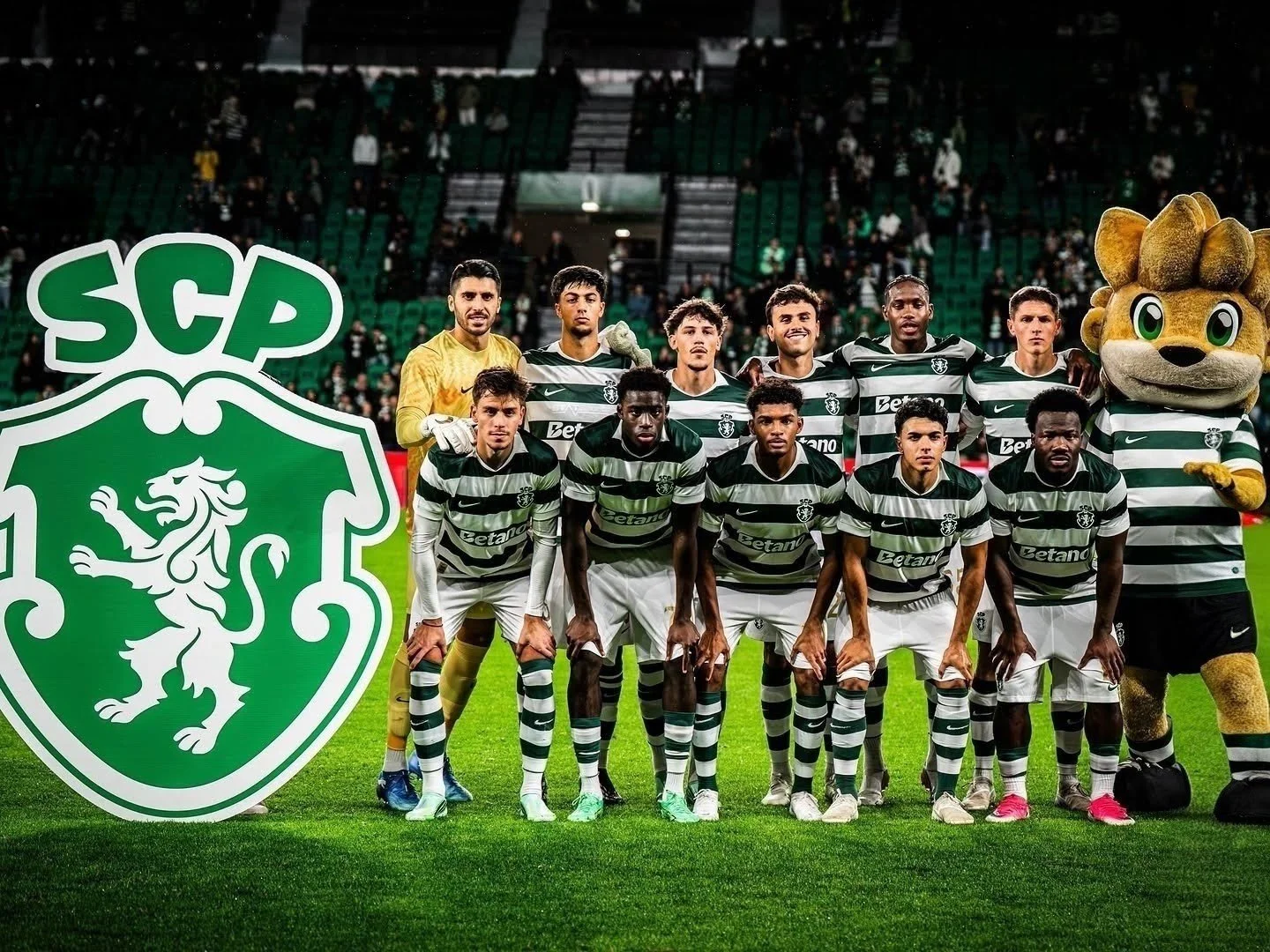
The proof of Sporting’s education is in its current squad as well as its former players (Photo Credit: Dylan Inacio)
Porto: The Northern Challenge
The immediate reward for Torreense’s Taça victory was a Super Cup match against 2026 Liga Portugal winners FC Porto.
Victor Froholdt’s 38th minute goal would be the difference as Porto added another trophy to an impressive cabinet.
If Benfica represents the national reach of Lisbon and Sporting its tradition of sporting education, FC Porto's history is inseparable from the identity of Portugal's north.
Originally founded in 1893 and re-established in 1906, Porto developed into an institution that challenged the concentration of footballing power around the capital.
Lisbon was the political centre of the country. Porto, meanwhile, was the historic centre of an important commercial and industrial region.
The relationship between the two cities reflected longstanding differences in economic activity, regional influence and political representation.
Football became another arena in which those differences could be expressed.
Porto's identity was built partly around the conviction that national sporting authority should not belong exclusively to Lisbon. Its rivalry with Benfica and Sporting consequently carried a significance beyond the pitch. It was a contest over geography, recognition and the distribution of power within Portuguese football.
European success gave that regional challenge an international dimension.
The 1987 European Cup victory under Artur Jorge established Porto as a genuine continental force. José Mourinho's side went further, winning the UEFA Cup in 2003 and the Champions League in 2004.
The 2011 Europa League triumph under André Villas-Boas provided another demonstration of the club's ability to construct outstanding teams without the financial resources available to Europe's wealthiest institutions. Villas-Boas has since returned to the club as President after managerial stints abroad.
These victories were not simply sporting achievements. They established a model.
Porto developed a reputation for identifying undervalued players, recruiting intelligently in international markets and improving them within a demanding competitive environment.
Its connections with South America became particularly important, while its own development system continued to contribute to the first team.
Porto's academy has also contributed to a substantial transfer economy. CIES placed the club 18th worldwide, with €284 million generated through transfers of academy-trained players over the previous decade.
The figure is particularly interesting when considered alongside Porto's wider recruitment strategy.
The club's international reputation has often been built on its ability to identify and improve talent from outside Portugal.
Its academy adds another dimension to that operation: an institution capable of producing valuable players while supporting the competitive ambitions of the first team.
Deco, Ricardo Carvalho, Mario Jardel, Pepe and Luis Díaz illustrate different aspects of that operation.
Their routes to Porto were not identical, but collectively they demonstrate the club's capacity to attract, develop and expose players to elite competition.
Its training infrastructure at Olival provides the institutional foundation for that work.
Porto's competitive advantage has rarely depended on a single academy or recruitment philosophy.
It has emerged from the relationship between scouting, coaching, tactical organisation and a willingness to operate intelligently in the international market.
For a club outside of Europe's wealthiest financial centres, those qualities have been essential.
Porto's story is ultimately one of competitive resistance: the determination to challenge the established order and remain relevant at the highest level.
Its European successes did more than bring trophies to the north. They challenged the assumption that Portuguese football's greatest achievements had to emerge from the capital.
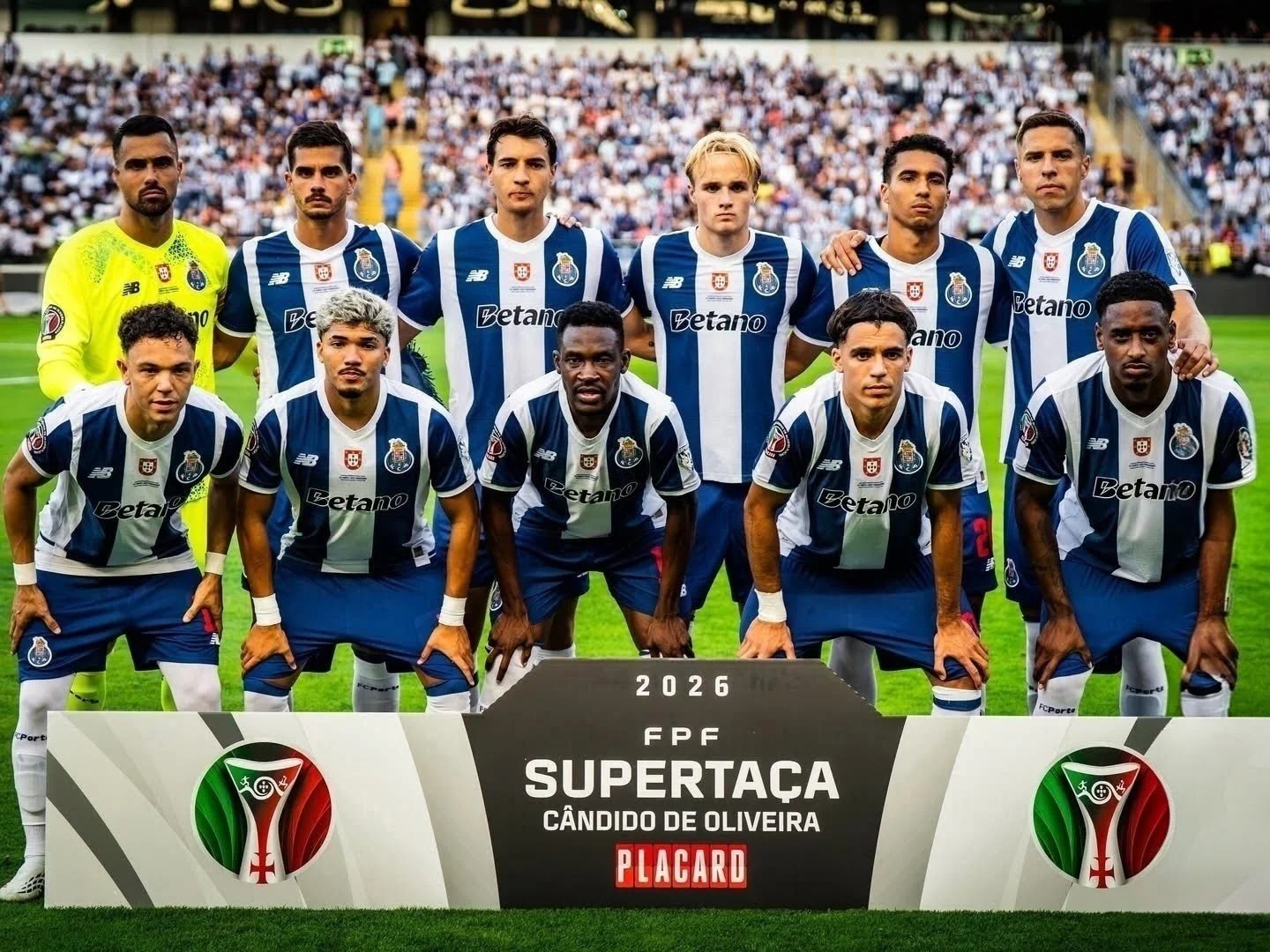
FC Porto’s distance from the capital has not been a barrier to success (Photo Credit: Dylan Inacio)
The Economics of Education
There is another way to measure the influence of Portuguese football: the value of the players it develops.
A study published by the CIES Football Observatory in April 2026 placed four Portuguese clubs among the world's 100 most profitable academies, measured by revenue generated through the transfer of academy-trained players over the preceding decade.
Benfica led the global rankings with €589 million. Sporting ranked fifth with €417 million, Porto 18th with €284 million and SC Braga 35th with €173 million.
Together, the four clubs generated approximately €1.46 billion in academy-related transfer revenue.
The figures reveal something important about the structure of Portuguese football. Talent development is not simply a sporting tradition or a source of national pride. It is an economic model.
For clubs operating outside Europe's wealthiest domestic leagues, the ability to identify, develop and sell players has become an important means of sustaining competitiveness.
An academy graduate can strengthen a first team, attract international attention and eventually generate a transfer fee capable of financing several subsequent recruitment decisions.
The process is not without its contradictions.
Selling a leading young player can weaken a team in the short term, while the expectation of future transfer income can encourage clubs to view development through an increasingly commercial lens.
Nor does transfer revenue automatically translate into profit: academy infrastructure, coaching, recruitment and player development all carry costs.
Nevertheless, the CIES figures demonstrate the scale of the opportunity.
What makes Portugal particularly interesting is that this model is not confined to its traditional centres of power.
Braga's inclusion alongside Benfica, Sporting and Porto suggests that the country's talent-development economy extends beyond the Big Three.
The academies are therefore doing more than producing footballers.
They are helping sustain an interconnected domestic football economy, one in which smaller institutions develop talent, larger clubs provide pathways to elite competition and the international transfer market supplies much-needed financial resources.
Portugal has become particularly effective at converting footballing education into economic value. Its challenge is ensuring that the financial rewards continue to serve the sporting institutions that made that success possible.
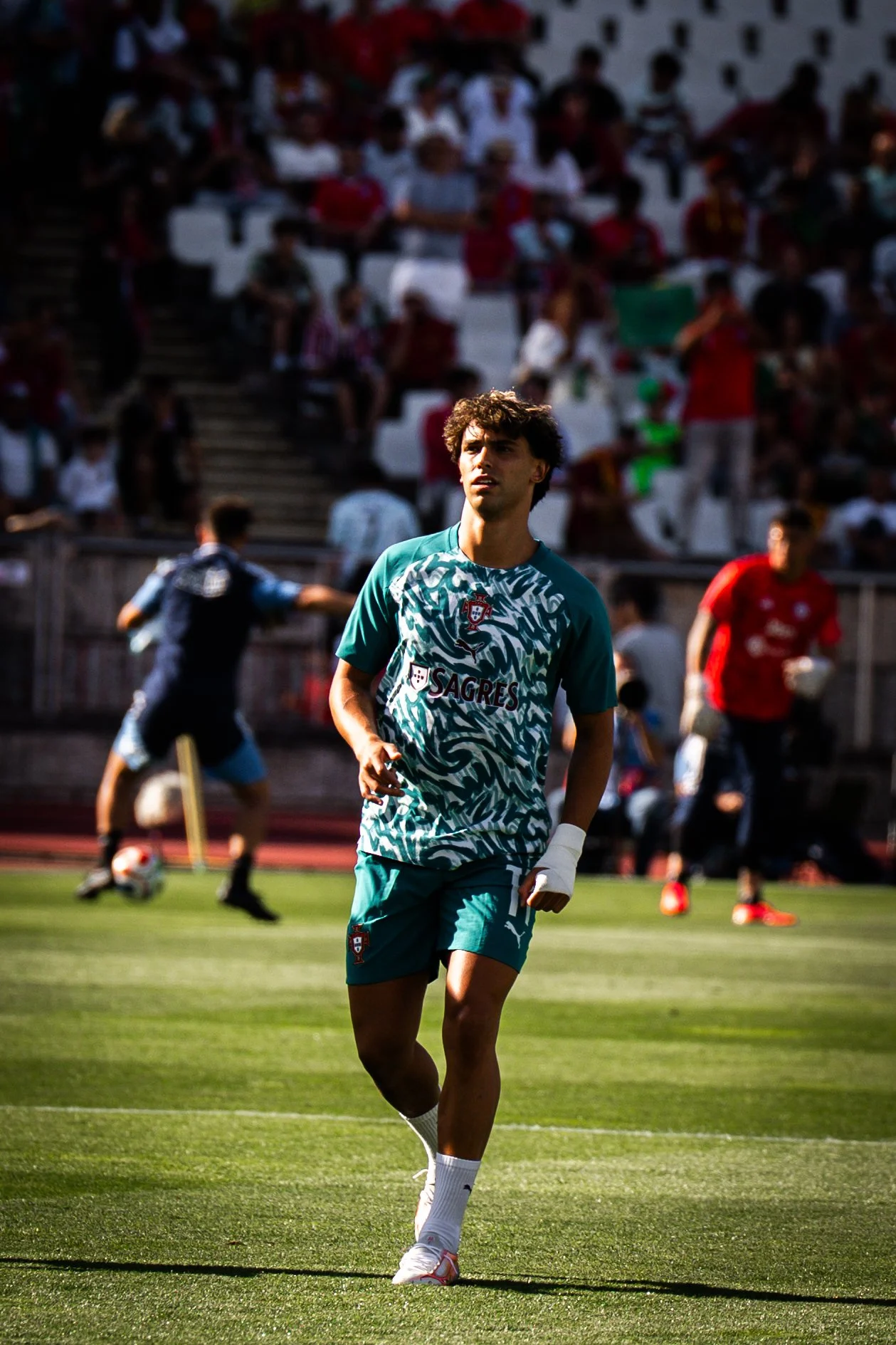
Former Benfica (and Porto) prospect Joao Felix’s move to Atletico Madrid for €127 million was a significant boost for Benfica (Photo Credit: Dylan Inacio)
The Territory Beyond the Big Three
The dominance of Benfica, Sporting and Porto is remarkable. Only Belenenses in 1946 and Boavista in 2001 have interrupted their monopoly of Portuguese league championships in the modern national championship era.
That concentration of power raises an important question: does the strength of the three institutions elevate Portuguese football, or does it limit the opportunities available to everybody else?
Torreense's historic Taça de Portugal victory in May 2026 offers an interesting perspective.
Based in Torres Vedras, north of Lisbon, the club represents a footballing geography that exists outside the traditional centres of power. Its victory over Sporting was more than an upset.
Nevertheless, their celebrations were shortlived with the Taça de Portugal final sandwiched between a relegation/promotion playoff against Casa Pia.
The incumbent top flight side survived for another season, winning 2-0. Despite this, Torreense captured attention outside of Portugal as the club had earned a spot in the Europa League.
By eventually reaching the 36-team league phase, the second division club had unlocked earnings of at least €4 million in combined prize money and television revenue, with the figure set to rise based on their final position. At home, it was a moment in which the wider Portuguese football landscape briefly occupied the centre of the national conversation.
That landscape includes Braga, Vitória de Guimarães, Famalicão, Rio Ave and numerous smaller institutions whose importance cannot be measured solely through trophies.
Braga has established itself as a significant sporting institution, offering an alternative centre of influence in the north.
Vitória de Guimarães carries a different kind of regional significance, closely connected to the historical identity of Guimarães and the surrounding Minho region.
These clubs operate with different resources and ambitions, but they contribute to the same footballing ecosystem.
Their relationship with the Big Three is complicated. They compete against them, recruit from similar markets and sometimes benefit from the transfer opportunities created by their financial power.
For smaller clubs, developing a player can represent both a sporting achievement and a future financial transaction.
For the larger institutions, identifying that player represents an opportunity to strengthen their squads and secure an asset whose value may appreciate.
The relationship is mutually beneficial, but structurally unequal.
The international dimension makes the system more complicated still.
Portugal's historical connections with Brazil and Portuguese-speaking African countries have shaped the movement of footballers, coaches and sporting ideas for generations.
These relationships are rooted in a shared language but also in complicated histories of migration, colonialism and postcolonial exchange.
They have helped Portuguese clubs become important points of connection between different football markets.
The movement of players from Brazil, Angola, Mozambique and Cape Verde reflects that wider history.
Portugal's position within the international game cannot be understood exclusively through the quality of its domestic academies or the achievements of its leading clubs.
Its footballing influence is also geographical, cultural and historical.
The Big Three are the most powerful representatives of this system, but they are not its only architects.
The Republics Endure
Benfica, Sporting and Porto have survived different generations of football, changing political systems and successive transformations of the professional game.
Their longevity is not simply a consequence of success. It is a product of their ability to become institutions that mean something beyond the ninety minutes.
Benfica built its influence through popular reach, Sporting through the education of talent, and Porto through the assertion of regional identity and competitive resistance.
These distinctions are not absolute, nor have the clubs remained unchanged.
Modern football has brought them closer together, forcing all three to confront the same realities of global recruitment, commercial expansion and financial competition.
Yet their collective influence reveals something remarkable about Portuguese football.
The country does not possess the financial resources of England, Spain or Germany. Its domestic league cannot compete with Europe's wealthiest competitions in broadcasting revenue or purchasing power.
Yet Portugal has developed an institutional capacity to identify, educate and export footballing talent that gives it an influence far beyond its economic means.
The CIES Football Observatory's April 2026 figures provide an indication of that achievement.
Benfica, Sporting, Porto and Braga collectively generated approximately €1.46 billion in transfer revenue from academy-trained players over the preceding decade.
These are not simply successful youth development programmes. They are institutions that have turned footballing education into an internationally competitive economic model.
There is, of course, a contradiction. The same system that allows Portuguese clubs to compete through talent development also makes them vulnerable to the financial power of Europe's major leagues.
Their best players are frequently developed for competitions they may eventually leave to join. Sporting ambition and commercial necessity are therefore in constant negotiation.
And the benefits are not distributed equally. The dominance of the Big Three has helped establish Portugal's international reputation, but it has also concentrated resources, attention and opportunity.
Torreense's historic cup victory was a reminder that the country's footballing identity extends well beyond its most powerful institutions.
Braga, Vitória de Guimarães and the many smaller clubs that sustain the domestic game are part of the same story.
Perhaps that is the most important distinction. Benfica, Sporting and Porto did not create Portuguese football on their own.
They became its most powerful expressions because they emerged from a country whose footballing culture was already rich with regional loyalties, social contradictions and international connections.
They represent three different answers to the question of what a football club can mean: a people's institution, an education in sporting excellence and a challenge to the established order.
For more than a century, those answers have competed for the soul of Portuguese football.
In doing so, they have helped build something that extends far beyond the rivalry between them: a national footballing system capable of producing extraordinary talent, sustaining competitive institutions and influencing the global game.
The three republics endure. But their greatest achievement may be what they have built beyond themselves.
Sources:
Video Credits:
Stopira winning penalty, Sport TV Portugal, 24 May 2026 - Video courtesy of Sport TV Portgual via X
Torreense winning goal in Armenia, UEFA Europa League, 6 November 2026 - Video courtesy of Europa League via X
Photo Credits:
Schelderup tackled by Stopira, Dylan Inacio, 22 November 2026 - Photo courtesy of assignment by PSP Media
Tomas Araujo profile, Dylan Inacio, 22 November 2026 - Photo courtesy of assignment by PSP Media
Sporting team photo, Dylan Inacio, 21 November 2026 - Photo courtesy of Dylan Inacio
Porto team photo, Dylan Inacio 16 November 2026 - Photo courtesy of Dylan Inacio
Joao Felix training, Dylan Inacio, 16 November 2026 - Photo courtesy of Dylan Inacio
All photos are used with permission. All rights reserved to the creator.

Support PSP Media
Every contribution helps support independent research and reporting.