
Paris Saint-Germain Finally Stopped Performing Greatness
By Nii Wallace-Bruce
Part Two of a two-part preview of the 2026 UEFA Champions League Final, involving Arsenal FC and Paris Saint-Germain.
This installment examines the reigning champions, Paris Saint-Germain.
For years, Paris Saint-Germain played like a club conscious of being watched.
Every match felt staged for confirmation. Every Champions League night carried the same underlying demand: prove yourselves important. The football often reflected it. Possession became performance. Attacking talent became branding. Even victory sometimes felt strangely anxious, as though PSG were attempting to imitate what European greatness was supposed to look like rather than fully inhabiting it.
And perhaps that was inevitable.
The Disappearance of Heirachy
No modern club has pursued visibility more aggressively than Paris Saint-Germain. Since the Qatari takeover, PSG assembled football’s most recognisable collection of names: Zlatan Ibrahimović, Neymar, Lionel Messi, Kylian Mbappé. Some of the finest players of their generation passed through Paris. Yet the team itself frequently remained elusive.
They were famous long before they became convincing.
That is what makes this current side so fascinating.
For the first time in the modern PSG era, the club appears uninterested in appearing extraordinary. And, in abandoning the performance of greatness, they may finally have become great.
The obvious temptation is to frame this transformation around absence. No Neymar. No Messi. No Mbappé. But that interpretation misses the deeper shift underway under Luis Enrique. A rare alumnus of both Real Madrid and Barcelona, Enrique is very familiar with the benefits and costs of a team put on a global pedestal. The reward eventually arrvied in Munich, where Internazionale were dismantled with an efficiency previous PSG sides rarely sustained.
The change is not simply who left.
It is what disappeared with them.
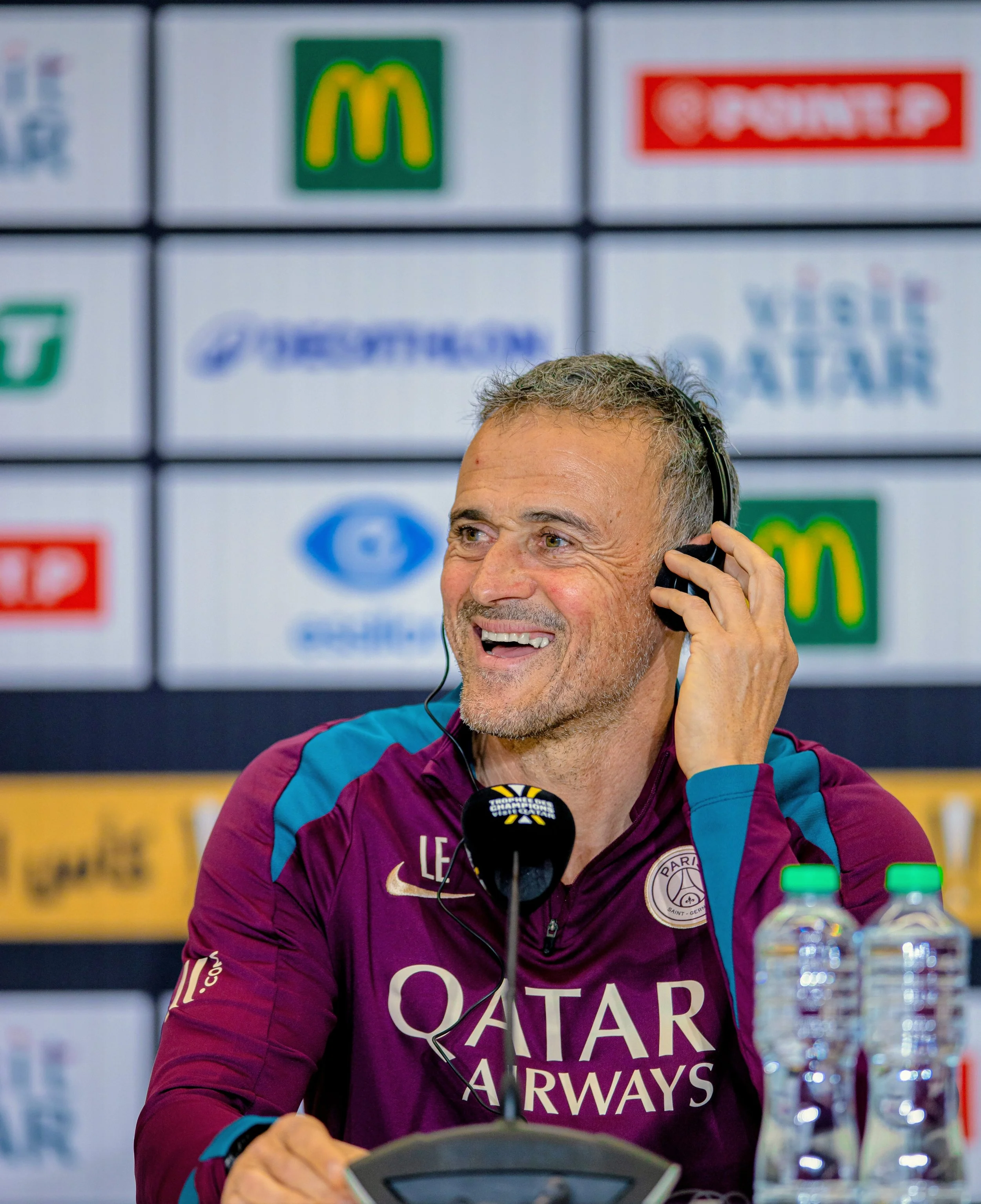
Luis Enrique has listened and learned at PSG. Now he is implementing his system of play. (Photo Credit: Bismark Nii Kojo Adjei)
Collective Gravity
For years, PSG functioned like a hierarchy of celebrity. Matches often bent toward preserving the status of stars rather than sustaining the collective demands of elite football. Out of possession especially, the imbalance became difficult to hide. The team could dominate weaker opponents through talent alone, but the latter stages of the Champions League exposed the structural fragility underneath.
Too often, PSG looked like a side carrying fame rather than pressure.
The difference now is visible immediately.
This PSG side runs first and poses later.
Previous versions of the club often treated pressing as a temporary inconvenience between attacking sequences. Luis Enrique has transformed it into identity. The forwards defend aggressively. The midfield compresses space instinctively. Full-backs step forward without hesitation because the distances behind them are protected collectively rather than individually.
Most importantly, responsibility now appears shared. Players now improvise inside collective responsibility rather than outside it.
That sounds simple. It is not.
Equilibrium
The great contradiction of PSG’s superstar era was that assembling elite individuals frequently weakened the emotional infrastructure required to survive elite competition. The talent remained undeniable. The suffering rarely did.
Champions League football is not simply about technical superiority. Eventually every tie descends into stress, fatigue and emotional disorder. The teams that survive are usually those capable of remaining coherent when matches stop resembling performances and start resembling endurance tests.
For years, PSG struggled precisely there.
Not because they lacked quality. Because they lacked equilibrium.
This version feels different.
After Celebrity
Ironically, they have become harder to notice individually and far harder to control collectively.
Ousmane Dembélé embodies the transformation better than anyone.
For years, Dembélé represented footballing excess in its purest form — breathtaking talent untethered from consistency. Entire matches seemed to unfold at the speed of his impulses. He could destroy opponents or destabilise his own side within the same sequence.
Under Luis Enrique, that chaos has been refined without being extinguished. Dembélé provided more defensive contributions and covered more ground this season in the Champions League, compared to 2025 which culminated in him winning the Ballon D’Or.
Dembélé still plays with volatility, but now within a framework capable of absorbing it. The dribbling remains explosive. The improvisation remains intact. Yet the team underneath no longer depends exclusively on moments of individual liberation to function.
That distinction matters.
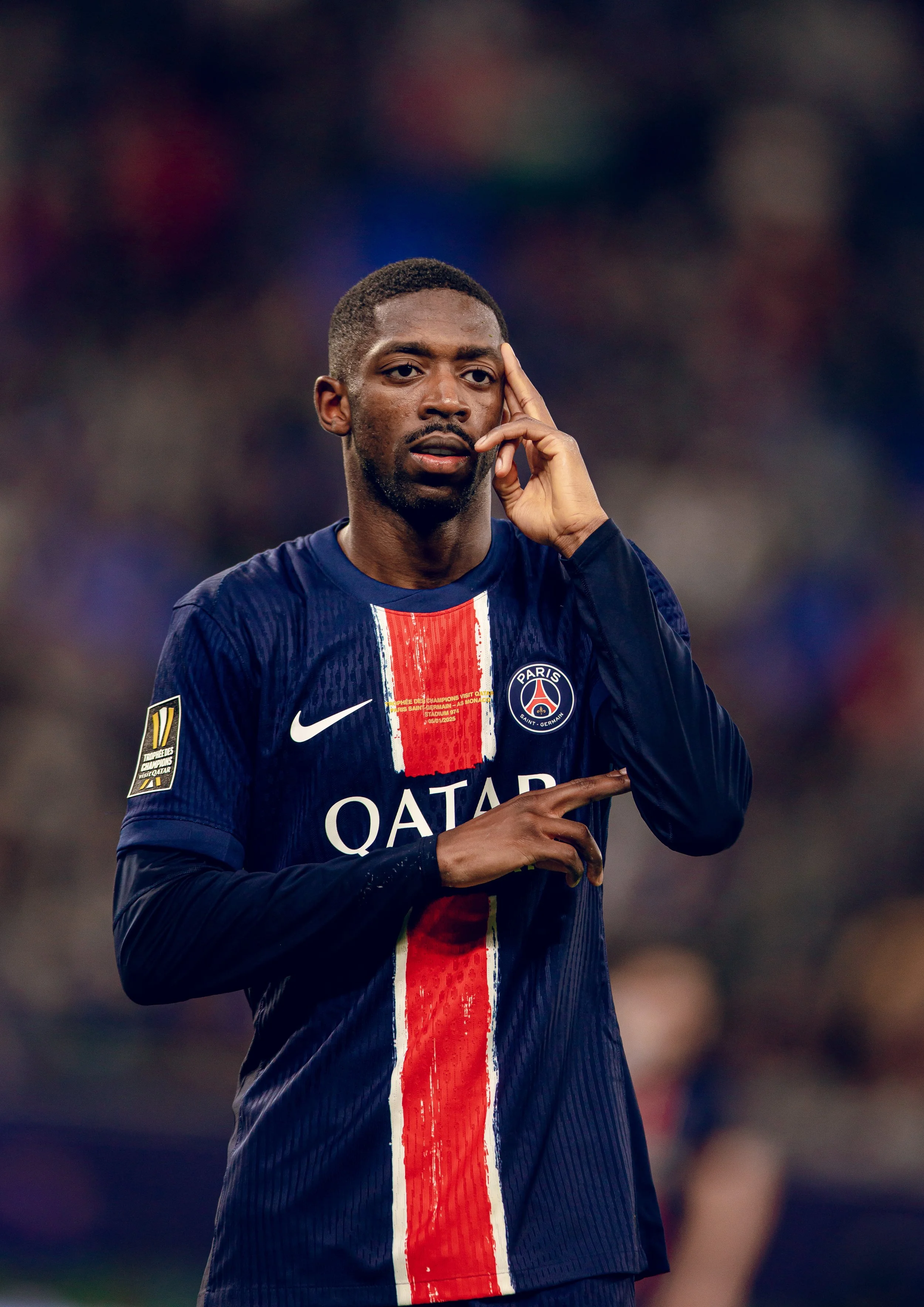
Ousmane Dembélé is tapping into Enrique’s system with remarkable results. (Photo credit: Bismark Nii Kojo Adjei)
Without Orbit
Previous PSG sides often resembled collections of solutions searching for a structure. This one resembles a structure amplifying solutions.
The midfield reflects the same evolution.
Vitinha, once dismissed in parts of England as lightweight and decorative, now looks essential to PSG’s rhythm. Warren Zaïre-Emery plays with the assurance of someone educated entirely inside modern positional football. Even the side’s younger players appear liberated by the disappearance of hierarchy. They no longer feel like supporting actors orbiting established superstars. They look like participants inside a collective idea.
And perhaps that has been Luis Enrique’s greatest achievement. He has removed the burden of performance from the club itself.
PSG no longer enter major European nights looking desperate to convince the continent of their legitimacy. There is less theatrical urgency now. Less emotional noise.
The football carries itself differently.
So does the crowd.
For years, the atmosphere surrounding PSG often felt suspended somewhere between celebration and expectation. The Parc des Princes became one of football’s great stages without always becoming one of its most emotionally connected stadiums. Supporters arrived to witness brilliance. Increasingly, they now arrive to sustain effort.
That shift matters more than tactics.
Because the strongest modern sides are usually those where supporters recognise themselves inside the team’s behaviour. Running, suffering, recovering shape, pressing after losing possession — these are not glamorous qualities, but they create emotional credibility. Supporters rarely demand perfection. They demand evidence of sacrifice.
This PSG side finally feels trustworthy.
Which is why the irony surrounding this project feels unavoidable.
The club spent a decade chasing football aristocracy through celebrity, visibility and individual stardom. Yet the moment PSG began resembling Europe’s most complete side arrived only after they abandoned the obsession with looking like one.
The superstars gave Paris Saint-Germain attention.
Their absence gave the club balance.
And balance, in elite football, is usually what survives longest after the lights dim.
Sources:
Luxury Tribune, “How Paris Saint-Germain became one of the most desirable brands in the world”, Aymeric Mantoux, 19 August 2025
Le Monde, “How Paris Saint-Germain became a team”, Alexandre Lemarié, May 31, 2025
Photo Credits:
Luis Enrique Press Conference, Bismark Nii Kojo Adjei, 4 January 2025 - Photo courtesy of Bismark Nii Kojo Nii Adjei
Paris Saint Germain Flags, Bismark Nii Kojo Adjei, 5 January 2025 - Photo courtesy of Bismark Nii Kojo Nii Adjei
Ousmane Dembélé, Bismark Nii Kojo Adjei, 5 January 2025 - Photo courtesy of Bismark Nii Kojo Nii Adjei
All photos are used with permission. All rights reserved to the creator.

Support PSP Media
If this article resonated with you, consider supporting PSP Media.
Every contribution helps support independent research and reporting.