
Canada Soccer’s Rise: World Cup 2026 and the Challenges Ahead
By Nii Wallace-Bruce
Part Two of The Shape of Canadian Soccer, a five-part series on identity, infrastructure and the legacy of the 2026 FIFA World Cup.
On an unseasonably cold March afternoon, Canadian fans braved lake-effect wind and snow to cheer their national team in Toronto. The warmth of their chants and drums cut through the chill, turning a frozen stadium into a cauldron of hope. With the 26-man squad soon to be finalised for the men’s national team ahead of World Cup 2026, excitement is building. Fans, sponsors, and young players are all watching. For Canada Soccer President Peter Augruso, this period is about more than results. It is a test of ambition.
“Right now we've got a team that's prepared. A team that's strong. A team that's physically fit. We’re looking to challenge the very best, when it comes to the World Cup.”
— Peter Augruso, Canada Soccer President, speaking to PSP Media
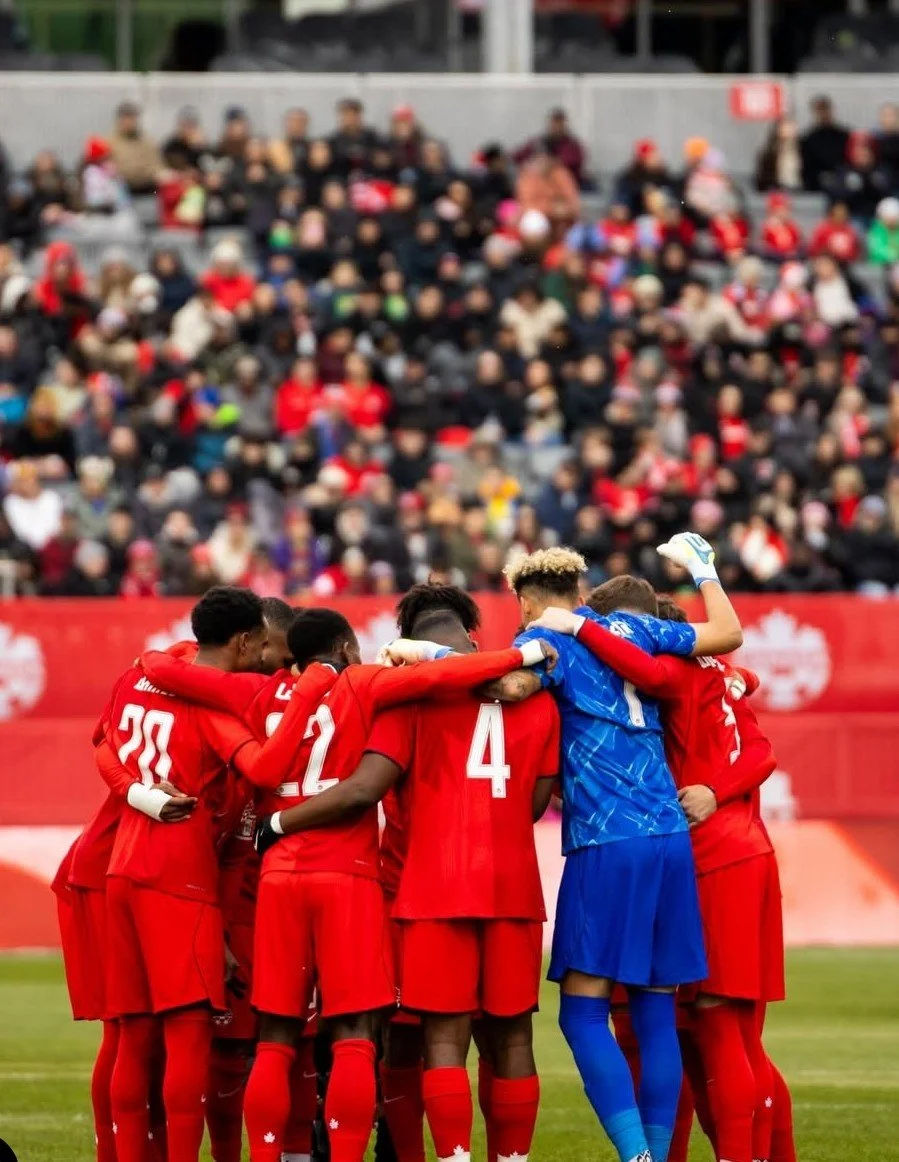
Canada’s Men’s National Team will look to ride a wave of home support at the 2026 FIFA World Cup. (Photo credit: Alisa Tran)
A New Era for Canadian Soccer
For decades, hockey defined Canadian sports. Soccer existed in the shadows, played on weekend fields, cheered by small pockets of passionate fans. That began to change in 2021, when the women’s national team brought home Olympic gold, and again in 2022, when the men qualified for the World Cup for the first time in decades. Suddenly, young Canadians were not only dreaming big. They were leaving for Europe and proving they belonged.
At home, the Canadian Premier League (CPL) and the Northern Super League (NSL) emerged as more than competitions - they became pathways, keeping local talent close and giving the next generation a stage to prove themselves. Across the country, youth players could finally see a trajectory: park pitches to pro stadiums to the national team. History suggested this was the way forward: every World Cup host nation since 1998 maintained a domestic professional league. For Canada, building that league was no formality. It was a statement of intent.
Peter Augruso sees the national teams as more than squads - they are mirrors of the country itself.
“We want to mobilise the entire country to say, ‘Wow! Look at these guys,’” he says.
“The Canadian national team is the fabric of our society - every race, gender, and creed. I get goosebumps when I think about it.”
For Augruso, the teams are not just about trophies; they are about bringing Canadians together, on and off the field.
Participation is soaring. Soccer is now the fastest-growing sport in Canada, edging past hockey in sheer numbers of young players. But numbers alone are not enough; visibility matters. For years, the beautiful game struggled under opaque agreements with Canada Soccer Business, limiting revenue and curbing support for national team players. Today, that is changing. Broadcast deals through Canada Soccer and Media Entertainment (CSME) are putting Canadian soccer on screens across the nation. Augruso is clear about why it matters:
“It's really important. What you see is what you want to be.”
- Canada Soccer President Peter Augruso on visibility
Every goal, every save on the national stage now becomes inspiration for a kid dreaming of wearing red and white.
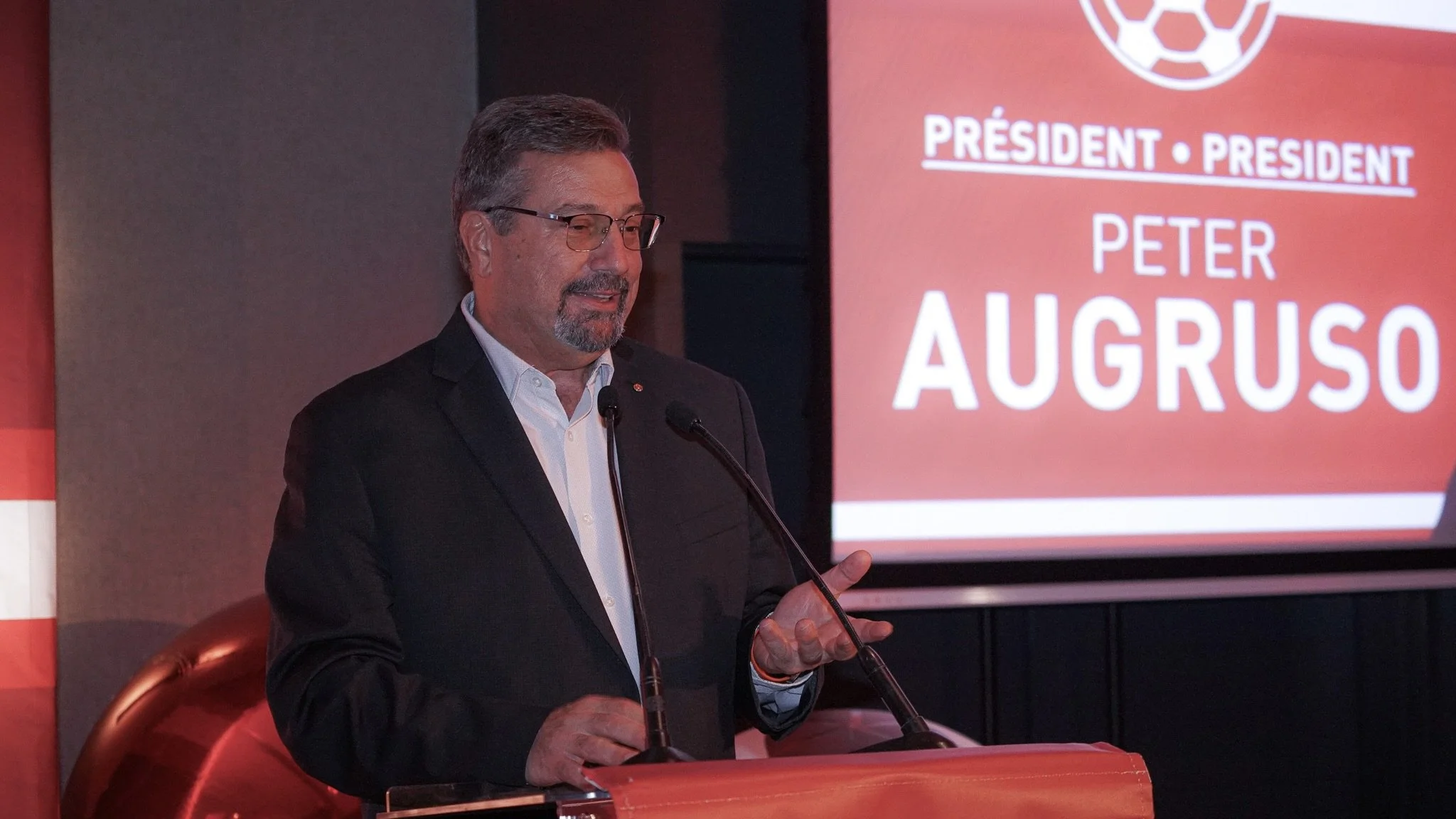
Canada Soccer President Peter Augruso sees the 2026 FIFA World Cup as a chance to bring people together. (Photo credit: Canada Socce
Growth Comes With Challenges
Participation is one thing; infrastructure is another. Canada still faces a shortage of coaches, referees, and high-quality fields. Augruso has repeatedly cited the need for federal adoption of recommendations from the Future of Sport Commission. The government responded swiftly. On 1 May 2026, Canada announced $9.8 million in funding for a National Training Centre, designed to develop athletes, coaches, referees, and administrators alike.
“The development of a National Training Centre represents an important legacy project for the country,” says Victor Montagliani, President of CONCACAF and Vice-President of FIFA.
“It is always a positive sign when our members invest in infrastructure across the region.”
This centre is part of a broader $755 million federal commitment to sports over the next five years. Canada is building a blueprint similar to Germany, Belgium, and Japan, pairing youth investment with infrastructure to create elite pipelines. The aim: grow youth soccer alongside the men’s and women’s national teams, creating a culture of sustained competitiveness.

The growth of soccer in Canada is being held back by a lack of pitches (Photo credit: Barry McCluskey)
Vision for the Future
For Peter Augruso, legacy is measured not in medals, but in fields built, coaches trained, and young players given a chance to dream big. Pitches in every community, programs to nurture talent at every level, and competitive teams across the country - these are the foundations he wants to leave behind.
“I want the men in the top 15, the women in the top five, and our youth teams at every World Cup - consistently, not sporadically,” he says, eyes bright with determination.
“But above all, I want more kids playing in the park, more pitches for those kids, and a culture where soccer is part of everyday life.”
Success on the world stage is important, but for Augruso, the heart of the game beats in Canadian backyards, schoolyards, and community fields.
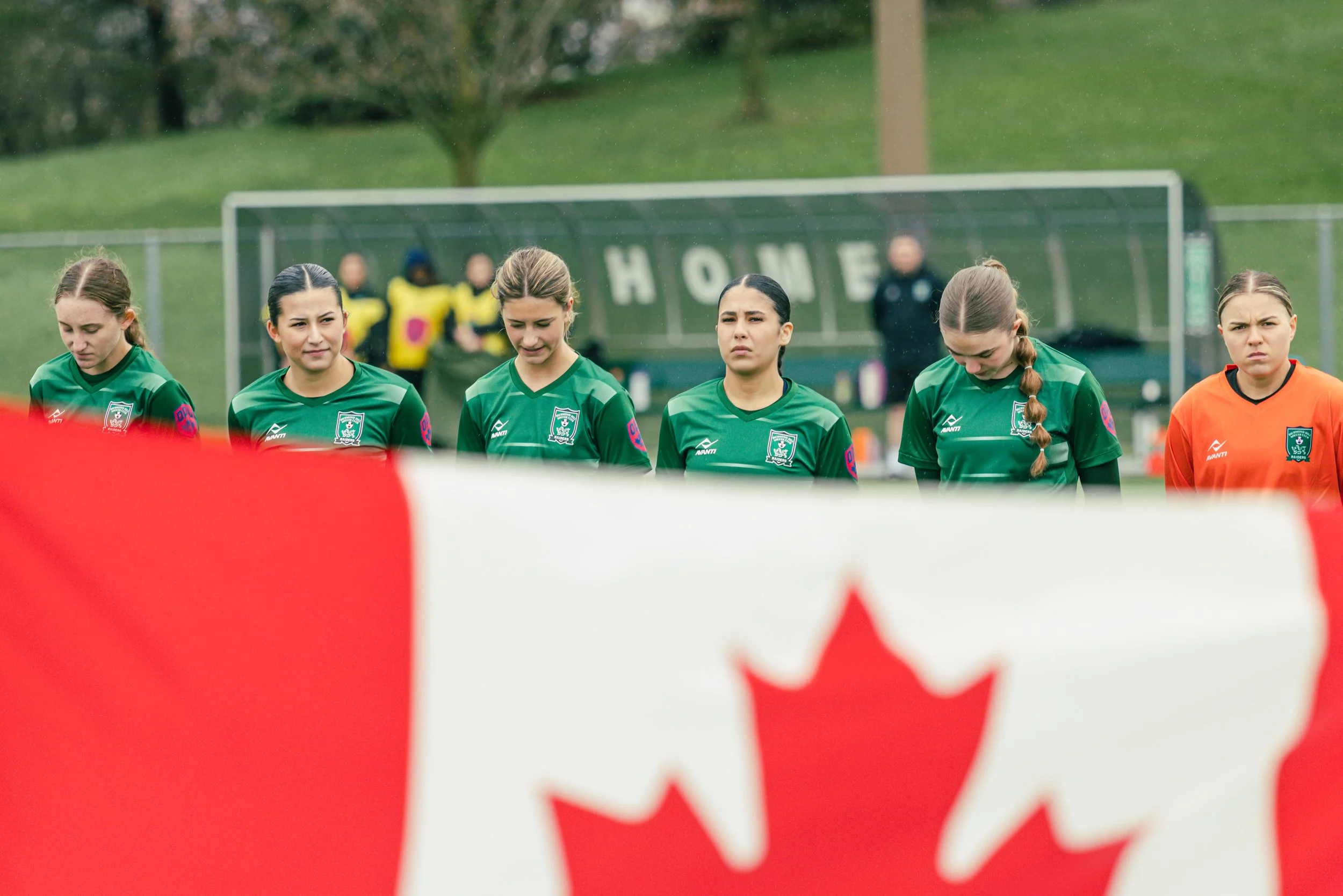
Added opportunities for youth players are a part of Augruso’s intended legacy at Canada Soccer. (Photo credit: Curtis Wong)
The Legacy Challenge: Beyond the Final Whistle
Hosting the World Cup is more than logistics - it is a test of ambition and imagination. Paulo Senra, Canada Soccer’s chief communications officer, knows the importance of capturing hearts as well as scores. He spearheads the initiative “Our Game Now”, designed to embed soccer into the cultural conversation long before the first whistle blows.
One stunt drew smiles from fans and headlines alike: Italian supporters, fresh from their national team’s playoff disappointment, were invited to swap jerseys for new Canadian ones - and left with gifts in hand. The event was staged outside of Cafe Diplomatico in Toronto’s Little Italy neighbourhood. A well-known venue for soccer viewing parties.
“It’s about declaring to Canadians that soccer is no longer on the sidelines,” Senra explains.
“The game has been built and supported passionately, by communities across this country - including Italian Canadians. So we wanted to say thank you.”
Moments like this, small but vivid, signal a broader shift: soccer is staking its claim, not just on the field, but in the imagination of a nation.
Senra, a veteran of DAZN and Olympic communications campaigns, describes “Our Game Now” as a mission to insert soccer into Canada’s cultural DNA. Running alongside Rogers’ NHL campaign, it signals that soccer is no longer tentative - it is assertive, vibrant, and impossible to ignore. The sleeping giant of Canadian sport, long overshadowed by rinks and arenas, is finally stirring.

The “Jersey Swap” for Italian fans, ended up being gift from Canada Soccer ahead of the FIFA World Cup (Photo credit: Nii Wallace-Bruce)
From Participation to Contender
Canada’s upcoming friendlies against Uzbekistan and Ireland are more than warm-ups - they are proclamation. No longer an afterthought, Canadian soccer is emerging as a contender, with momentum that must be translated into fields, coaches, and sustained development. If the nation gets it right, it won’t just participate on the world stage - it will challenge the best.
For a country long defined by ice rinks and winter arenas, soccer is staking its claim: vibrant, ambitious, and unmistakably alive.
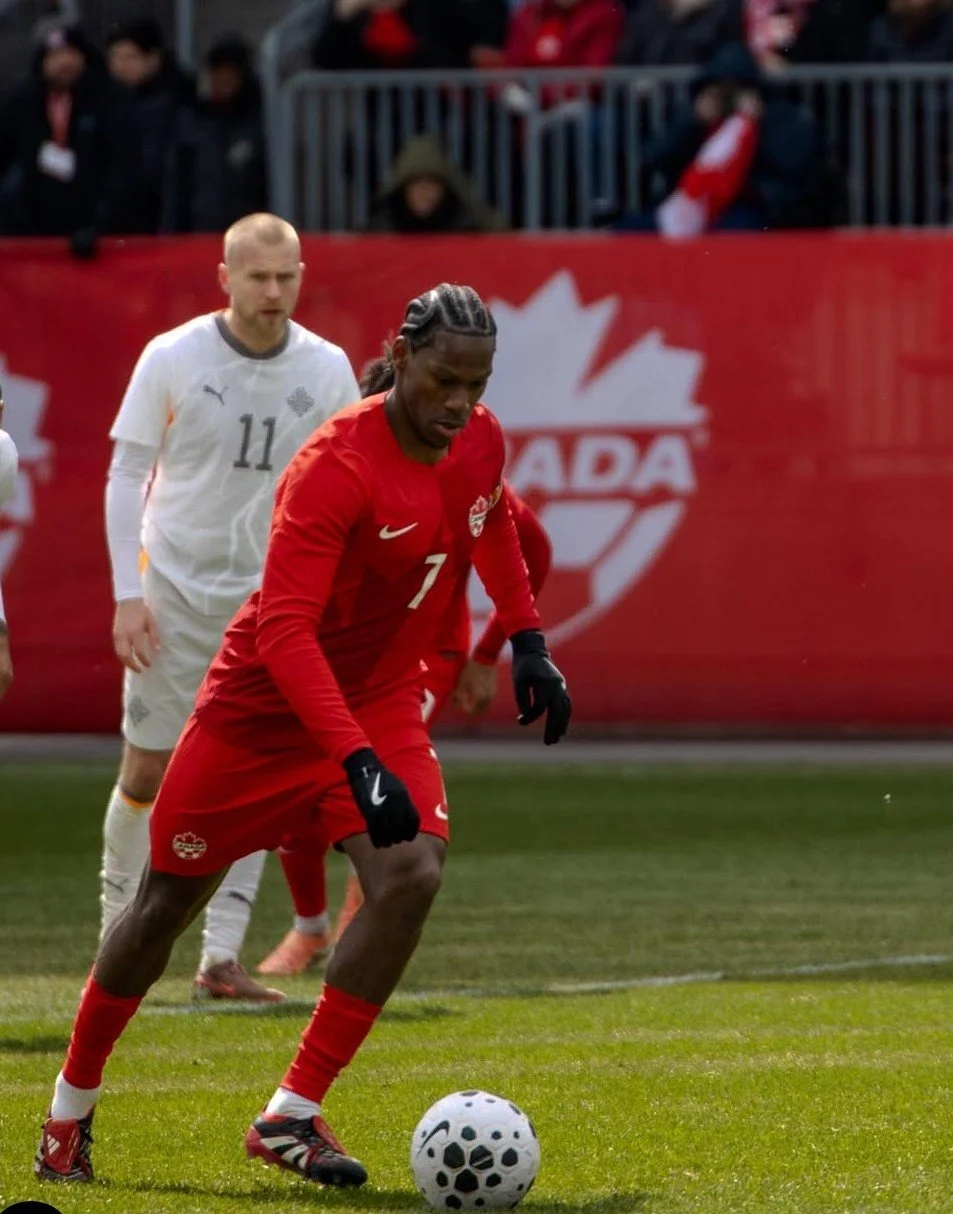
CanMNT forward Jonathan David will be looking to lead his team at the 2026 FIFA World Cup. (Photo credit: Alisa Tran)
Sources:
Peter Augruso, Canada Soccer President, personal interview, 27 March 2026
Canada Soccer Association, “Canada Soccer - CSME Binding Agreement”, 12 February, 2026
Paulo Senra, Canada Soccer Chief Content & Communications Officer, personal interview, 4 April, 2026
Canada Soccer Association, “Canada Soccer to receive $9.8 million from Government of Canada for National Training Centre project”, 1 May, 2026
Goverment of Canada, “Making Generational investments in the future of Soccer and Sport in Canada”, 1 May 2026
Photo Credits:
Team huddle - CanMNT, Alisa Tran, 28 March 2026 - Photo courtesy of assignment by PSP Media
Peter Augruso speaking, Canada Soccer, 4 May 2024 - Photo courtesy of Canada Soccer
Soccer pitch, York Lions Stadium, Barry McCluskey, 11 May 2025 - Photo courtesy of assignment by PSP Media
National anthem, Richmond Hill Soccer Club, Curtis Wong, 26 April 2026 - Photo courtesy of @dw_sportsmedia on Instagram
Italian jersey swap, 4 April 2026 - Photo courtesy of Nii Wallace-Bruce
Penalty kick by Jonathan David, Alisa Tran, 28 March 2026 - Photo courtesy of assignment by PSP Media
All photos are used with permission. All rights reserved to the creator.

Support PSP Media
If this article resonated with you, consider supporting PSP Media.
Every contribution helps support independent research and reporting.